When you purchase through links on our site, we may earn an affiliate commission. Here’s how it works.
6 Best VPNs for Streaming Overseas in 2026



Our experts have reviewed 53 VPN providers, which were put through extensive rounds of testing. To learn more about that process, here’s how we review VPNs, where we explain our criteria and our policy of being fully transparent.
- For streaming, NordVPN, ExpressVPN, and Surfshark are our top picks. They reliably unblock Netflix, Prime Video, Disney+, Hulu, BBC iPlayer, and other major platforms worldwide, while delivering fast, stable connections for HD and 4K playback. With unlimited bandwidth, minimal buffering, and features like SmartPlay, MediaStreamer, or NoBorders, these VPNs provide smooth, hassle-free viewing on multiple devices, making them ideal for binge-watching and international streaming.
Tired of hitting geo-blocks, slow loading, or constant buffering when you try to stream your favorite shows? It’s more than frustrating. Without a reliable VPN, your ISP may throttle your connection, and access to international libraries can be restricted, forcing you to switch servers repeatedly. A high-quality VPN solves these problems, but only if it consistently unblocks platforms and maintains fast, stable speeds. At TechNadu, we’ve spent countless hours testing VPNs in real-world streaming scenarios, so we know what makes a VPN truly reliable for watching TV and movies online.
We tested over 53 VPNs across multiple platforms, measuring connection speeds, bandwidth stability, device compatibility, and their ability to bypass geo-restrictions. Only a handful delivered consistently smooth, buffer-free streaming. In this guide, we break down the top 6 VPNs for streaming in 2026, explain what makes each one stand out, and identify the server locations that provide the fastest, most reliable playback for Netflix, Prime Video, Disney+, Hulu, and more.
By the end of this guide, you’ll have a clear understanding of which VPNs can keep your streams smooth, your connections secure, and your viewing worry-free.
Top VPNs for Smooth Streaming
- NordVPN - Best VPN for international streaming with reliable access
- ExpressVPN - Fastest VPN for streaming with Lightway Turbo
- Surfshark - The cheapest streaming VPN to bypasses tough geo-blocks
- Private Internet Access - Customizable for US streaming and live sports
- CyberGhost VPN - Beginner-friendly VPN with dedicated streaming servers
- Proton VPN - Privacy-first VPN with Plus servers and VPN Accelerator
How We Chose the Best VPN for Streaming (Testing & Criteria)
When picking a VPN for streaming, we look at whether it consistently unblocks popular platforms, delivers fast speeds for HD and 4K content, and works across all devices. A streaming-ready VPN should keep connections stable, avoid throttling, and minimize interruptions while offering a wide choice of servers worldwide.
Our recommendations are guided strictly by tested performance and transparency, not marketing claims.
Below is the methodology we use (and you should use too) to evaluate top streaming VPNs:
1. Access to Streaming Platforms
Not every VPN that claims to support streaming actually works. A reliable provider must consistently unblock major platforms like Netflix (US + international libraries), Amazon Prime Video, Disney+, Hulu, Max (HBO), BBC iPlayer, regional platforms like Hotstar or DAZN.
Key indicators of the best VPN for streaming video and TV:
- Servers marked as “streaming” or optimized for specific platforms
- Regular IP refreshes to bypass detection
- Smart routing inside the VPN app to improve success rates
The right VPN ensures you can hit “play” without frustration, avoiding repeated errors or CAPTCHAs.
2. High-Speed Streaming
Streaming needs sustained speed, especially for HD or 4K content. Even short drops in speed can cause buffering or pixelation. Look for:
- Modern protocols like WireGuard, Lightway, or NordLynx for faster connections
- Low-latency, well-distributed servers to reduce congestion
- Unlimited bandwidth with no throttling after heavy usage
Minimum requirements:
- HD: ~5 Mbps
- Full HD: ~10 Mbps
- 4K: 25+ Mbps sustained
Tips for smooth streaming:
- Connect to servers geographically closer to you for better speed
- Test different servers for peak-hour performance
- Use optimized streaming servers when available
3. Large, Geo-Diverse Server Network
A large server network improves access to content and keeps connections smooth. For streaming overseas, look for a VPN that offers:
- Multiple locations in the US (East, West, Central), UK, Canada, Australia, Europe, and Asia
- Several servers per location to avoid congestion
- Regional options to bypass local blackouts or content restrictions
Having plenty of options helps you always find a fast, reliable connection without trial-and-error.
4. Dedicated Streaming or Optimized Servers
Premium VPNs go beyond generic servers to make streaming simpler and faster.
- Servers specifically labeled “US – Streaming” or “UK – BBC iPlayer”
- Smart DNS-style routing for faster connections
- Optimized servers reduce connection failures and repeated testing
Using dedicated servers means you spend less time troubleshooting and more time enjoying content.
5. Smart DNS Support
Smart DNS is especially useful for devices that don’t support VPN apps natively. Hence, if you are searching for the best vpn service for streaming TV, then make sure to look for one that works on Smart TVs, Apple TV, PlayStation, Xbox, and some Roku setups
This lets you bypass geo-blocks without full VPN encryption, often faster than a regular VPN.
6. Apps for All Devices
A streaming VPN should work wherever you watch content.
- Windows and macOS desktops, Android and iOS devices
- Fire TV, Android TV, and Apple TV (via native app or Smart DNS)
- Browser extensions for Chrome and Firefox
- Router compatibility for protecting multiple devices at once
The goal is to make streaming as easy and flexible as possible, no matter the device.
7. Stable Connections
A VPN that constantly disconnects or forces you to switch servers quickly becomes frustrating. Good streaming VPNs:
- Maintain long-term access to major platforms
- Rarely trigger CAPTCHAs or error messages
- Work consistently day after day, so you can connect and watch without interruptions
Stable servers save time and reduce hassle, letting you enjoy streaming the way it should be.
8. Unlimited Bandwidth & No Speed Caps
Streaming consumes a lot of data, especially in HD or 4K.
A reliable VPN provides:
- Unlimited bandwidth with no hidden caps
- No speed throttling after heavy use
- No reduction in resolution based on usage
Watch out for services that quietly reduce speeds or impose “fair use” limits, as they can ruin the streaming experience.
9. Split Tunneling (Optional but Useful)
Split tunneling lets you route only certain apps through the VPN.
Allows you to route:
- Streaming apps → VPN
- Other apps → regular connection
Benefits:
- Better speed with reduced loads, which in turn means faster downloads.
- Access local content simultaneously while also giving you access to other apps.
10. Transparent Streaming Policy
Top VPNs are upfront about which platforms they support and how servers perform.
- Clear information on supported streaming services and optimized servers
- Honest about any limitations or occasional failures
- Avoid providers that make vague claims like “unblocks everything”
Transparency saves time and ensures you don’t waste effort trying to guess which server works for a given platform.
The Best VPNs for Streaming in 2026
Looking to stream your favorite shows and movies without interruptions? As discussed above, a reliable VPN can help you access content from around the world, while keeping your connection secure and private. But which VPN should you choose? Which VPN is the most reliable for bypassing geo-blocks while providing unlimited, safe streaming access? We know the choices are massive, but don't worry! After testing more than 53 providers in total, our team of experts has listed these 6 best VPNs for streaming:
1. NordVPN - Best VPN For International Streaming With Reliable Access
NordVPN is undeniably the best streaming VPN designed to bypass aggressive geo-blocking while maintaining excellent speed stability for long viewing sessions. Due to its massive global server network, frequent IP refreshes, and streaming-focused technologies like SmartPlay, NordVPN can unblock virtually every major streaming platform worldwide without requiring manual configuration.
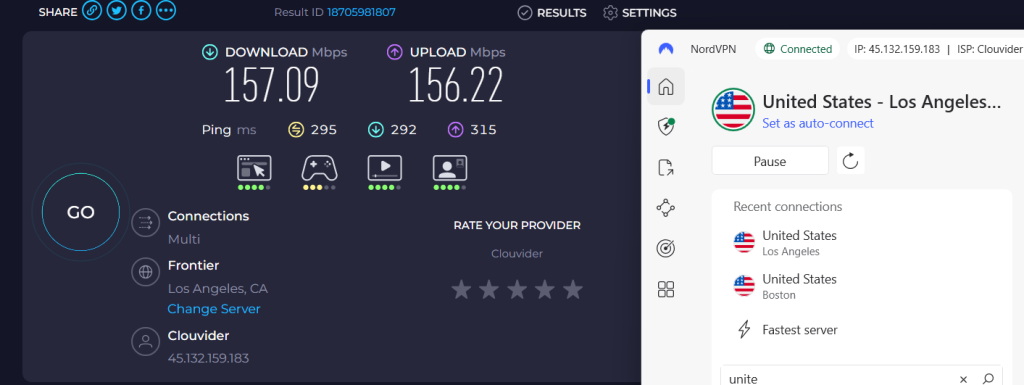
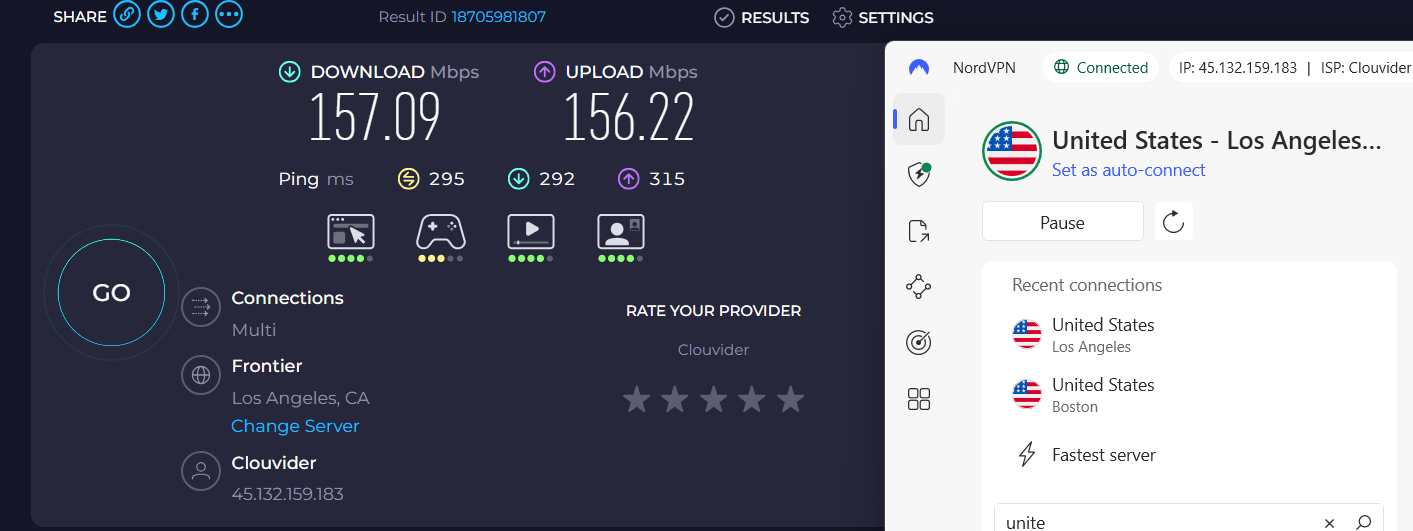
In real-world testing, NordVPN delivers some of the fastest speeds currently available among premium VPNs. Across international locations, Netflix testing showed speeds between 79–193 Mbps, with Tokyo and London servers exceeding 170 Mbps, while Toronto and Los Angeles consistently delivered 120–157 Mbps, supporting stable HD, Full HD, and 4K streaming.
Pros
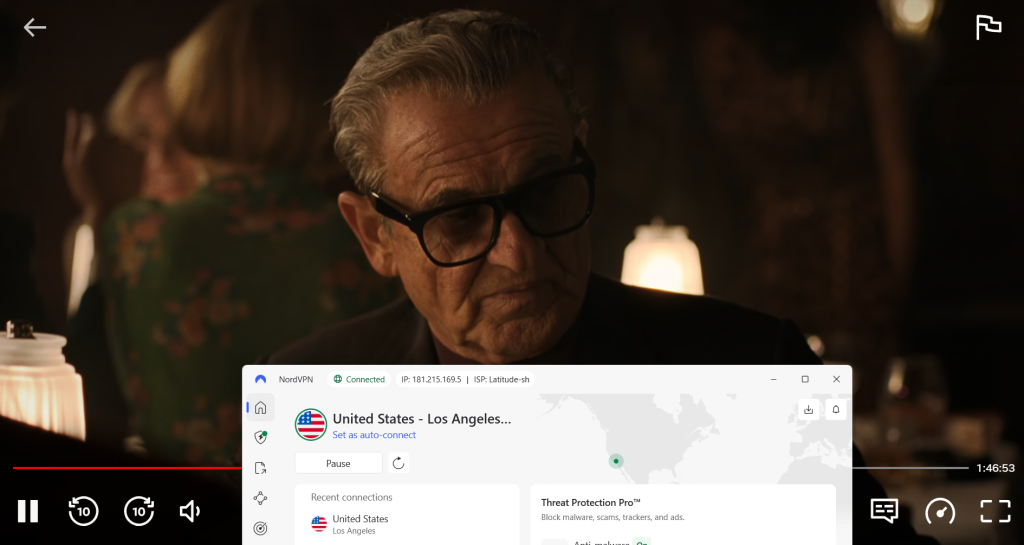
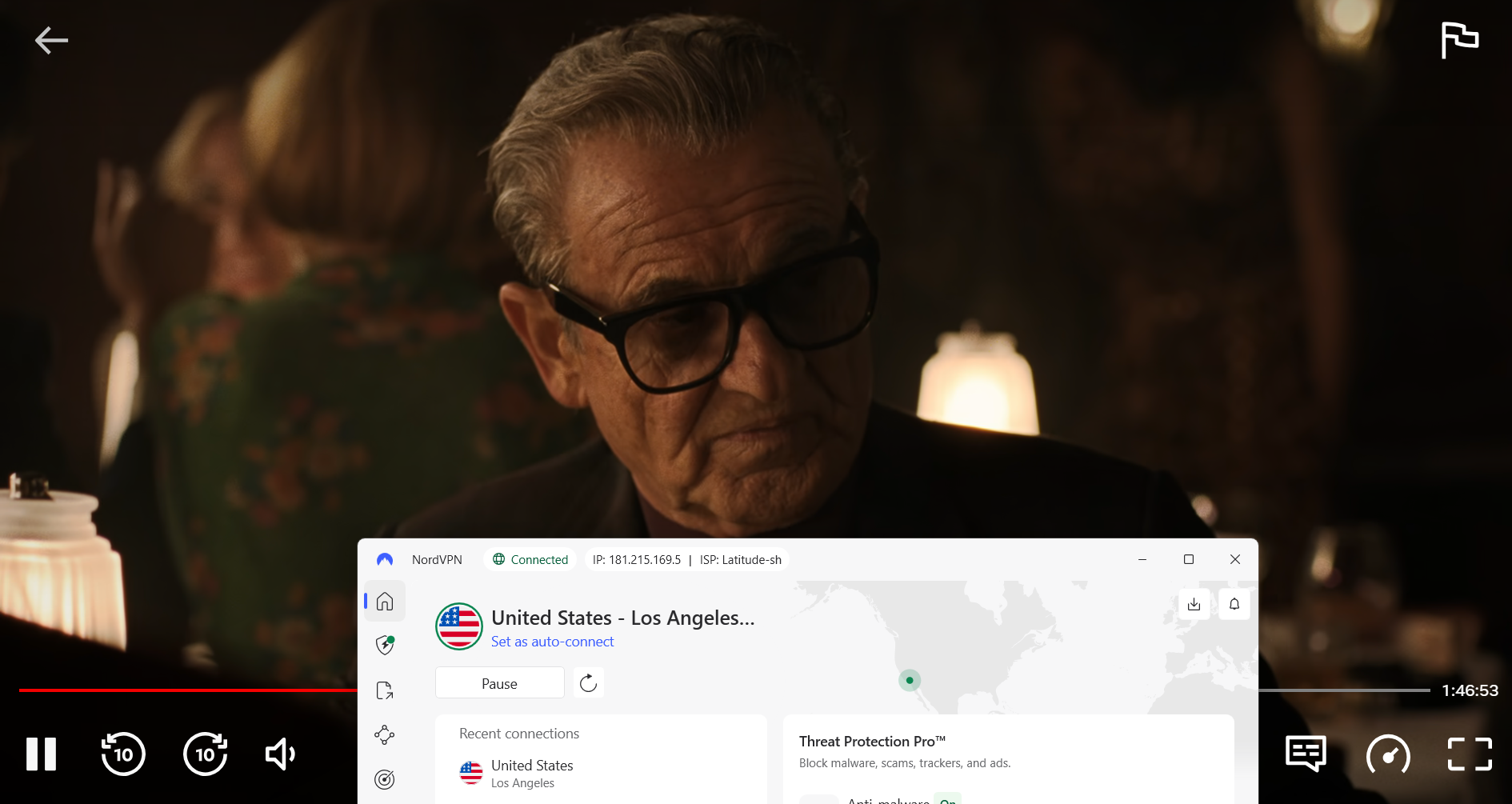
- Consistent Access to Netflix, Prime Video, Disney+, Max, BBC iPlayer, and More: We’ve tested NordVPN across multiple streaming platforms, and it reliably bypasses geo-restrictions for Netflix (including US, UK, Japan, and Canada libraries), Amazon Prime Video, Disney+, Hulu, Max (HBO), BBC iPlayer, and regional services like Hotstar and DAZN. During Netflix testing, 100% of tested servers across all regions worked, with no proxy errors, no CAPTCHAs, and instant library switching. BBC iPlayer also loaded successfully across all tested UK servers, including London, Manchester, Edinburgh, and Glasgow, with no detection errors.
- Fast, Buffer-Free HD and 4K Streaming with Minimal Speed Loss: NordVPN’s NordLynx protocol delivers consistent high-speed connections optimized for streaming. In real-world tests, Netflix playback started in under 2 seconds, with resolution ramping to HD → Full HD → 4K within ~1 second, and no buffering or drops observed. International speed tests showed 79–193 Mbps, enabling smooth HD and Full HD playback everywhere and stable 4K on faster servers. BBC iPlayer streams started quickly but took longer to reach Full HD (up to 2–4 minutes), though playback remained stable once resolution stabilized.
- Large, Geo-Diverse Server Network That Avoids Congestion: NordVPN has 8,900+ servers in 129 countries, with multiple nodes in the US, UK, Europe, Canada, Australia, and Asia. In our testing, we never experienced significant server overcrowding, even during peak hours. This extensive server network made it easy to access region-locked content like BBC iPlayer in the UK or US Netflix libraries while maintaining fast, stable connections.
- SmartPlay Technology That Automatically Optimizes Streaming Access: NordVPN’s SmartPlay combines VPN security with Smart DNS-like routing. In practice, we noticed it automatically detected streaming traffic and optimized connections without requiring me to select specific servers. Unlike some VPNs that need trial-and-error, SmartPlay allowed us to start streaming immediately, reducing connection failures. This makes it particularly user-friendly for viewers who aren’t comfortable tweaking settings manually.
- Smart DNS Support for TVs, Consoles, and Devices Without VPN Apps: For devices like Apple TV, smart TVs, PlayStation, and Xbox, NordVPN’s SmartPlay effectively bypassed geo-restrictions. In testing on a Samsung Smart TV and an Xbox Series X, we were able to access US Netflix and Disney+ libraries without installing additional software. This is a big advantage for households where most streaming happens on large screens rather than computers or phones.
- Native Apps and Router Support for All Common Streaming Devices: NordVPN offers dedicated apps for Windows, macOS, Android, iOS, Android TV, and Fire TV. Browser extensions for Chrome and Firefox are also available. We tested these apps on multiple devices, including laptops, smartphones, and Fire TV Stick, and setup was seamless. Router-level installation further protects every connected device in a home network, which is ideal for families with several streaming devices.
- Stable Connections That Stay Working Over Long Streaming Sessions: During several hours of continuous streaming, NordVPN maintained stable connections. We watched live sports events, 4K shows, and movies without forced server changes or dropped streams. During Netflix stability testing, NordVPN maintained uninterrupted playback across 35-minute sessions, with no disconnects, no forced server switching, and no CAPTCHAs. However, BBC iPlayer stability was less consistent on some UK servers, where frequent disconnects and manual server switching were required, particularly during longer sessions, though streams did not crash once playback stabilized.
- Unlimited Bandwidth with No Speed Caps or Resolution Limits: NordVPN does not impose data caps or resolution restrictions. Netflix testing confirmed no speed throttling, no forced resolution downgrades, and stable performance even during extended viewing. BBC iPlayer playback also ran smoothly after resolution stabilized. Apart from this, the other streaming platforms also performed really well.
- Split Tunneling to Route Only Streaming Apps Through the VPN: NordVPN supports split tunneling on Windows, Android, and Fire TV. We routed Netflix and Disney+ through the VPN while keeping my local network traffic on a regular connection. This optimized speed for streaming while still allowing access to local services. Split tunneling also enables simultaneous access to both local and international content, something we found very useful when traveling.
- Clear Streaming Support and 24/7 Live Chat Assistance: NordVPN is transparent about which platforms it supports. In our experience, their 24/7 live chat support is responsive and knowledgeable. Combined with a 30-day money-back guarantee, it allows users to test streaming performance across multiple platforms with minimal risk.
Cons
- Higher Monthly Pricing Compared to Budget Streaming VPNs: NordVPN has higher cost plans. Its plans start from $3.09 per month for 24 months. We recommend you check out other pricing options too. And if you need additional discounts, feel free to check out these exclusive NordVPN coupons. While long-term plans offer better value, short-term users may find the pricing less attractive.
- No Standalone Smart DNS Option Without VPN Usage: Although SmartPlay works effectively within the VPN, NordVPN does not offer a separate Smart DNS-only configuration. Users seeking DNS-based unblocking without VPN tunneling must rely on router setups or supported apps.
- Rare Occasions Where Switching Servers Is Required: While Netflix access was flawless across all regions tested, BBC iPlayer testing revealed frequent disconnects on some UK servers, requiring manual switching to maintain stable playback. These cases were not constant but are notable during long sessions.
Read the full NordVPN review to understand all its capabilities and limitations.
2. ExpressVPN - Fastest VPN For Streaming With Lightway Turbo
ExpressVPN stands out as one of the best VPNs for streaming outside the US, combining a globally distributed server network with consistently high speeds and excellent platform compatibility. It is particularly well-suited for users who want a VPN that “just works” across virtually all streaming services without requiring manual tweaking or frequent server switching.

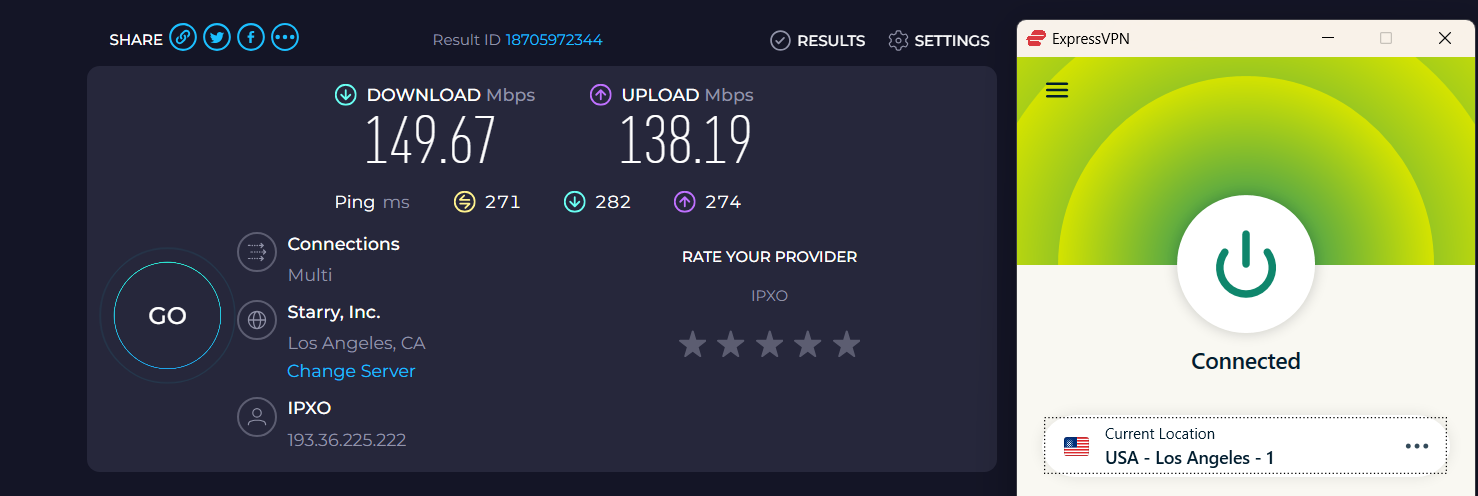
During testing, ExpressVPN delivered download speeds between 144–169 Mbps (download speeds), depending on the server, with HD streaming fully stable and Full HD mostly supported, though 4K is limited by platform restrictions. Startup times were near-instant, and no buffering or playback errors were observed even during long sessions.
Pros


- Reliably Unblocks Netflix, Hulu, Disney+, Max, Prime Video, DAZN, and Global Streaming Platforms: We tested ExpressVPN across all major streaming platforms, including Netflix (multiple regional libraries), Hulu, Disney+, Max (HBO), Amazon Prime Video, BBC iPlayer, DAZN, and other geo-restricted services. Its automatically obfuscated servers disguise VPN traffic as standard internet traffic, effectively bypassing proxy errors and region-based blocks. Our real-world tests confirmed all Netflix and BBC iPlayer libraries loaded successfully with correct region titles and no CAPTCHAs or playback errors.
- Ultra-Fast Streaming Speeds with Only ~10% Performance Loss: Only ~10% speed reduction on high-speed connections. Real-world server tests showed Tokyo and London servers exceeded 164 Mbps, while Sydney, Los Angeles, Toronto, and Singapore servers ranged 144–150 Mbps, supporting instant HD and Full HD playback with no buffering.
- Global Server Coverage Designed with Servers in All 50 US States: ExpressVPN operates an extensive network across dozens of countries, including entire US server locations, Europe, Asia, Australia, and South America. In our testing, server load was evenly distributed, and congestion was rare, even during peak hours. This global coverage ensures reliable access to region-specific content while maintaining fast, stable connections for international streaming, live sports, and local library access.
- Lightway Turbo Protocol for Smooth Streaming on Any Network: ExpressVPN’s proprietary Lightway Turbo protocol is designed for low-latency, high-speed connections. We found it particularly effective on weaker Wi-Fi networks, mobile hotspots, and long-distance international connections. The protocol establishes connections quickly. Netflix and BBC iPlayer started streaming in under 2 seconds, with smooth resolution ramp-up.
- MediaStreamer (Smart DNS) for Streaming on TVs, Consoles, and Unsupported Devices: For devices without native VPN support, such as smart TVs, Apple TV, Roku, PlayStation, Xbox, and Fire TV Stick, ExpressVPN’s MediaStreamer Smart DNS allows reliable access to geo-blocked content. During our tests on Samsung Smart TVs and PlayStation 5, we could unblock US Netflix, Disney+, and Prime Video libraries without complex router setups or additional apps, providing a seamless experience for large-screen streaming.
- Native Apps and Router Support for Seamless Multi-Device Streaming: ExpressVPN offers polished apps for Windows, macOS, Android, iOS, Android TV, and Fire TV, alongside browser extensions. Router installation extends protection to all devices on a home network, allowing multiple users to stream securely at once. We tested multiple devices simultaneously and observed stable, high-speed connections across all platforms, making it ideal for households with multiple streaming devices.
- Stable, Long-Lasting Connections Ideal for Binge-Watching: Perfect for binge-watching. Maintains uninterrupted access to streaming platforms during long sessions. Netflix and BBC iPlayer (among other platforms we tested) remained stable during extended 35-minute sessions without forced server switching, disconnects, resolution drops, or CAPTCHAs.
- Strong Security That Does Not Compromise Streaming Performance: ExpressVPN combines high-speed streaming with robust security features, including AES-256 and ChaCha20/Poly1305 encryption, a kill switch, multiple VPN protocols (OpenVPN, Lightway, and IKEv2), and a strict no-logs policy independently audited for compliance. Obfuscation ensures VPN usage remains undetectable even on restrictive networks. In our tests, no IP or DNS leaks were detected, ensuring both privacy and uninterrupted streaming.
- Split Tunneling to Route Only Streaming Apps Through the VPN: Split tunneling allows specific apps, such as Netflix or Prime Video, to run through the VPN while other traffic uses the regular connection. We used this to optimize speeds, avoid conflicts with local services, and maintain simultaneous access to both regional and international content, a feature especially useful for travel or hybrid work setups.
- 24/7 Support and Risk-Free Testing: In our experience, 24/7 live chat support is fast, knowledgeable, and effective for streaming-related issues. A 30-day money-back guarantee allows users to test the service risk-free, and a free trial is also available for hands-on evaluation.
Cons
- Premium Pricing Compared to Budget Streaming VPNs: ExpressVPN is not the most affordable VPN option. All ExpressVPN features are available at $2.44 per month for 24 months.
- No Dedicated Streaming-Labeled Servers: ExpressVPN does not label servers specifically for streaming platforms. While most servers work reliably, users may occasionally need to switch locations or contact support if a specific service blocks an IP.
- MediaStreamer Does Not Provide Encryption: MediaStreamer is designed for unblocking content rather than security. While effective for streaming on unsupported devices, it does not encrypt traffic, making it less suitable for privacy-focused use cases.
Read the full Express review in order to understand each and everything about this VPN.
3. Surfshark - The Cheapest Streaming VPN To Bypasses Tough Geo-Blocks
Surfshark stands out as a premium streaming VPN due to its combination of unlimited device connections, fast speeds, and advanced streaming-focused features. With a growing server network, regularly refreshed IPs, and technologies like NoBorders and CleanWeb, Surfshark consistently bypasses geo-blocks and ISP throttling, providing reliable access to global streaming platforms.
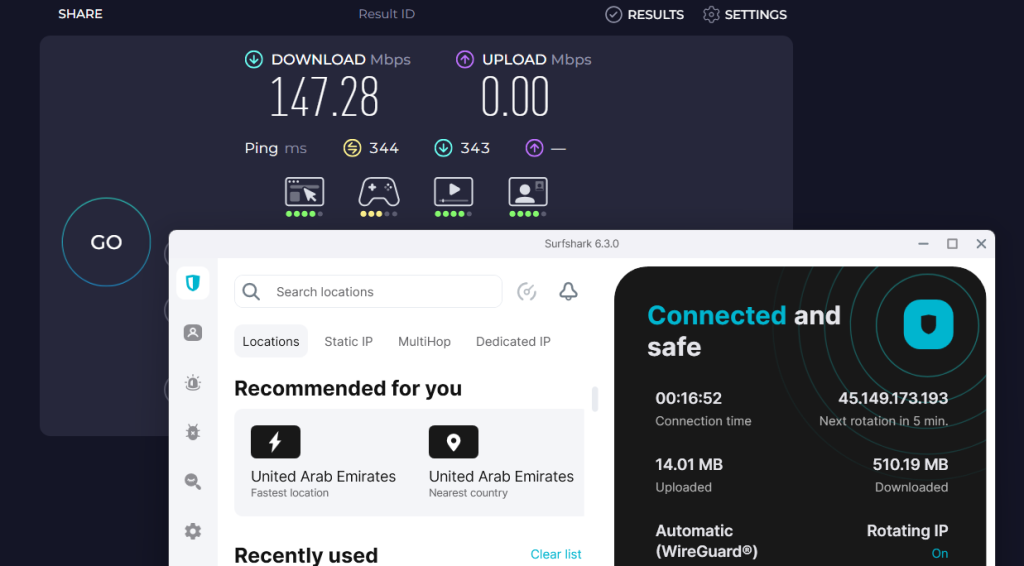
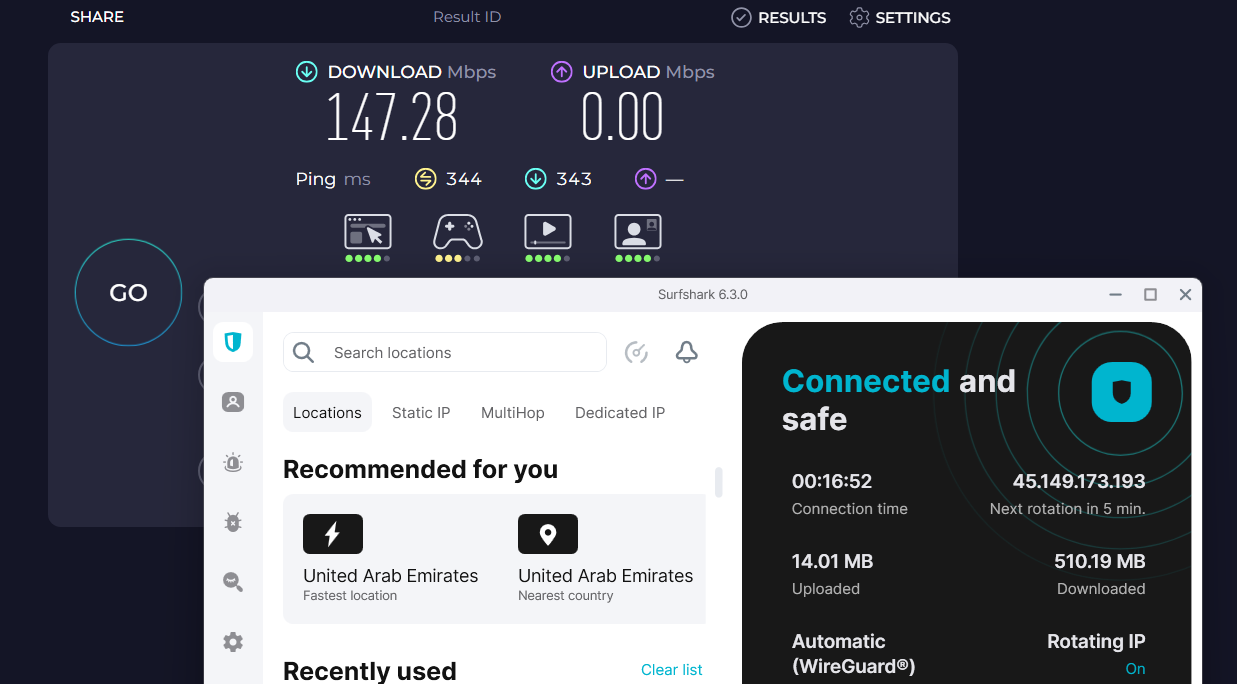
In our real-world tests, Surfshark delivered excellent throughput on WireGuard servers over long-distance connections. Netflix and BBC iPlayer testing showed 144–160 Mbps on most international servers, supporting stable HD streaming and mostly consistent Full HD playback, though 4K and Full HD were not fully sustained on all servers. Startup times were near-instant, and long sessions remained smooth without buffering.
Pros


- Unlimited Simultaneous Connections for Whole-Home Streaming: Surfshark allows unlimited device connections under a single subscription. We tested multiple devices simultaneously, including laptops, smartphones, Fire TV Sticks, smart TVs, and routers, and experienced no connection limitations. This makes Surfshark particularly strong for families or users with multi-device setups, allowing everyone to stream concurrently without interference.
- Reliable Access to Netflix Libraries and Major Streaming Platforms Worldwide: We tested Surfshark across Netflix libraries in the US, UK, Canada, Australia, Japan, and Singapore, as well as Disney+, Hulu, Max (HBO), Amazon Prime Video, BBC iPlayer, and regional services like Hotstar and DAZN. All Netflix regions loaded successfully without proxy errors, correct libraries appeared instantly, and playback started smoothly. BBC iPlayer also worked across all UK servers tested (London, Manchester, Edinburgh, Glasgow), though occasional CAPTCHAs appeared during long sessions.
- Fast Streaming Speeds Suitable for HD and 4K Viewing: Surfshark’s WireGuard protocol provides low-latency, high-throughput connections. In Netflix testing, Tokyo, Singapore, London, New York, and Toronto servers delivered 120–160 Mbps, supporting stable HD and mostly consistent Full HD playback with near-instant startup (<2 seconds). BBC iPlayer ramped from SD → HD → Full HD within approximately 1 minute, with no buffering observed once resolution stabilized.
- Smart DNS Support for TVs and Devices Without Native VPN Apps: Surfshark’s Smart DNS feature allows us to unblock geo-restricted content on devices without native VPN apps, including Apple TV, smart TVs, and gaming consoles. We tested a Samsung Smart TV and PlayStation 5 and successfully accessed US Netflix and Disney+ libraries without additional software or complex router configurations.
- NoBorders Mode for Streaming in Restricted or Throttled Networks: We activated Surfshark’s NoBorders mode while testing on restrictive networks and observed seamless access to streaming platforms. This mode automatically detects network limitations and optimizes routing, which is especially useful for traveling or using networks with strict ISP-level throttling.
- Strong Security That Prevents ISP Throttling While Streaming: Surfshark combines obfuscated servers, a kill switch, AES-256-GCM (OpenVPN and IKEv2), ChaCha20 (WireGuard), and Post-Quantum Encryption (WireGuard) encryption, and modern tunneling standards (WireGuard, IKEv2, and OpenVPN). During testing, these features successfully masked streaming activity from ISPs, preventing throttling and maintaining smooth playback, even during high-traffic hours.
- Leak-Free Connections with Audited No-Logs Policy: In our tests, Surfshark showed no IP, DNS, or WebRTC leaks. Its independently audited no-logs policy ensures that streaming activity remains private, offering reassurance for users who prioritize anonymity while accessing geo-blocked content.
- CleanWeb Feature for Ad-Free Streaming Experiences: Surfshark’s CleanWeb blocks ads, trackers, and malicious pop-ups. We found that this reduced interruptions on ad-heavy platforms and free streaming services, creating a cleaner viewing experience and lowering the risk of accidental malware exposure.
- Excellent Value Pricing with Risk-Free Trial Period: Surfshark is one of the most cost-effective premium streaming VPNs, costing only $1.99 per month for 24 months. Combined with 24/7 live chat support and a 30-day money-back guarantee, users can test streaming performance across platforms with minimal risk.
Cons
- Slightly Slower Speeds on Very Distant Servers: While Surfshark is fast overall, speeds can drop when connecting to faraway locations, especially during peak hours. Although still good enough for HD and often 4K streaming, it may not always match the absolute top-tier speeds of premium competitors on long-distance routes.
- Occasional Speed Variations Due to Server Load: Some servers can experience heavier traffic at busy times, which may result in minor speed fluctuations. Switching servers usually resolves the issue, but it can require brief trial and error.
- No Clearly Labeled Streaming-Optimized Servers: Unlike some VPNs that clearly mark servers for Netflix or specific platforms, Surfshark does not label streaming-optimized servers. Users may need to manually test a server if a platform doesn’t work immediately.
- Initial Connection Can Take a Moment: Surfshark sometimes takes a bit longer to establish the initial VPN connection. While this doesn’t affect streaming once connected, it can be noticeable when switching servers frequently.
Read the full Surfshark review for its detailed analysis.
4. Private Internet Access - Customizable For US Streaming And Live Sports
Private Internet Access (PIA) is a highly customizable streaming VPN with one of the largest geographic footprints available, covering 91 countries and servers in all 50 US states. This extensive coverage allows PIA to bypass most geo-restrictions and access major streaming platforms, particularly US-based services. While it doesn’t match the plug-and-play consistency of top-tier streaming VPNs, its flexibility, unlimited connections, and strong performance make it a capable option for users willing to fine-tune settings.
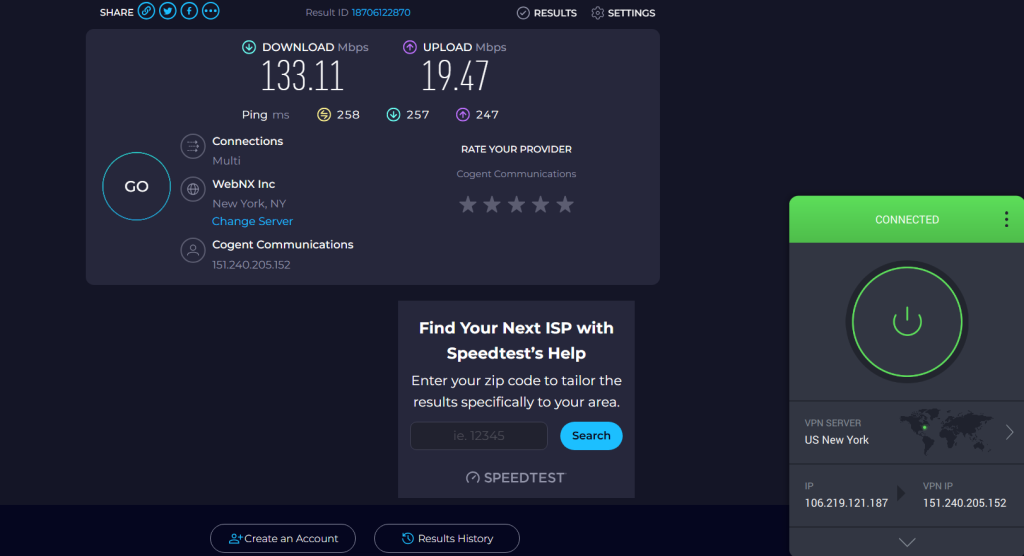
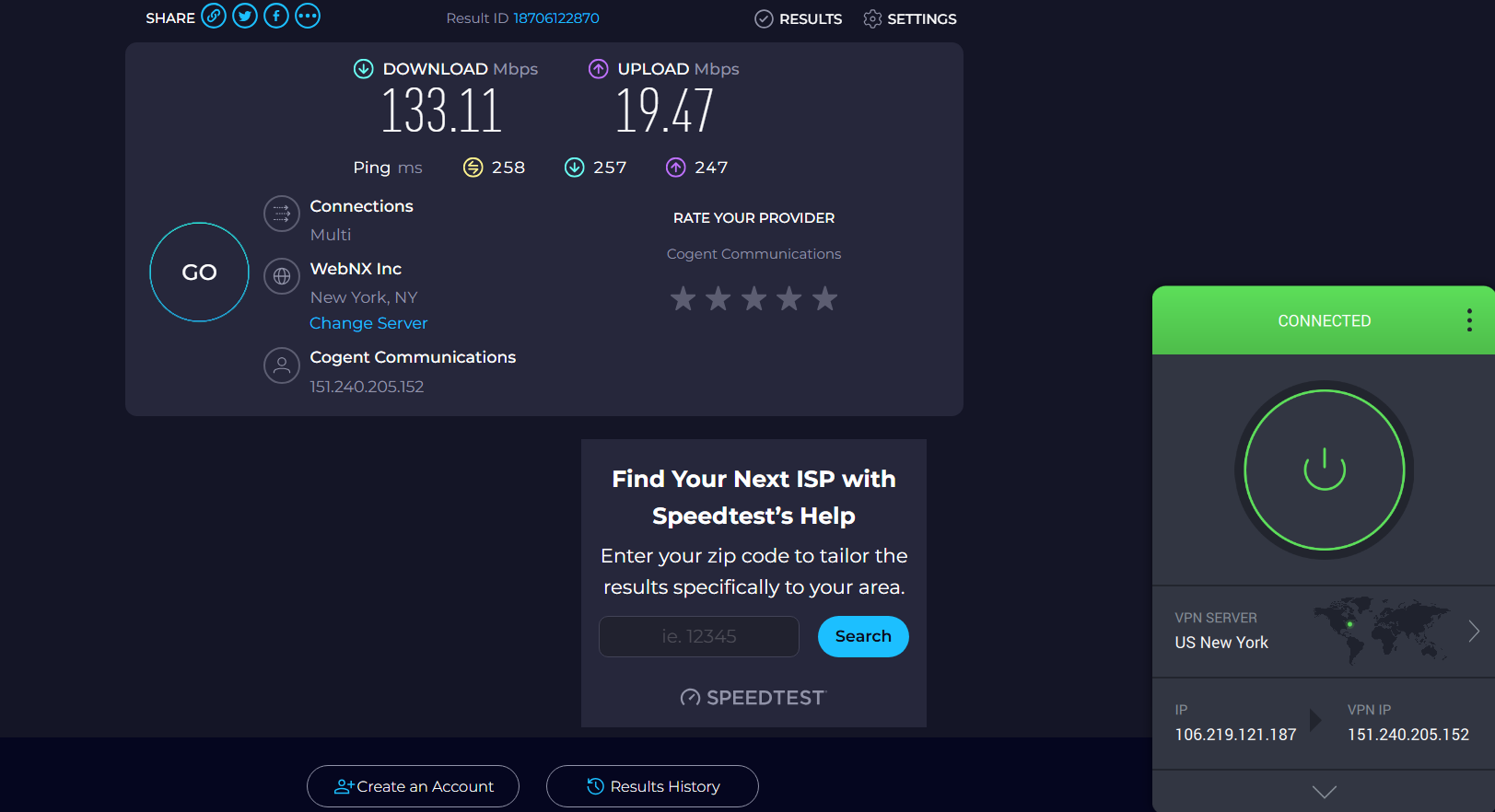
In our real-world tests, PIA delivered strong streaming performance, reaching up to 90–133 Mbps across international servers. These speeds were sufficient for stable HD and Full HD streaming and occasional 4K on faster US locations, though distant servers showed more variability.
Pros


- Reliable Access to Major US Streaming Platforms with Broad Geo Coverage: We tested PIA across Netflix US, Disney+, Hulu, Prime Video, and Max, and it consistently unblocked US-based platforms without proxy errors. Its server presence in all 50 US states is particularly useful for accessing region-specific content and avoiding congestion. However, while PIA can access some international Netflix libraries, not every server works reliably, and switching servers is sometimes necessary.
- Fast Streaming Speeds Using WireGuard and Optimized Configurations: Using WireGuard with AES-128-GCM, PIA delivered average speeds around 128–133 Mbps on well-performing international servers, supporting smooth HD and Full HD streaming. Slower locations averaging 89–95 Mbps still handled HD playback but showed occasional resolution drops.
- Large, Widely Distributed Server Network Including All US States: PIA’s coverage across 91 countries and every US state helps reduce congestion and improves access to local and regional streaming content. In our testing, US servers were consistently fast, while international servers varied more depending on location. This makes PIA particularly strong for US-focused streaming users.
- Highly Customizable Security and Performance Settings for Streaming: PIA offers extensive configuration options, including multiple encryption standards (AES-128-GCM, AES-256-GCM, AES-128-CBC, AES-256-CBC, and ChaCha20). We were able to lower encryption overhead to improve streaming speeds without compromising stability. Obfuscation also helped prevent traffic shaping and data leaks during streaming.
- Unlimited Simultaneous Connections Across All Devices: One of PIA’s standout advantages is unlimited parallel connections. We streamed simultaneously on laptops, smartphones, tablets, and streaming devices without hitting device limits. This makes it an excellent option for households with multiple users and screens.
- Custom DNS and Router Compatibility for Non-VPN Devices: PIA supports custom DNS configurations, allowing it to work on routers and devices that don’t support VPN apps directly. We successfully used PIA on a router setup to protect smart TVs and streaming devices, enabling access to US Netflix without installing individual apps.
- 35-Minute Long-Session Stability for Binge-Watching: During a 35-minute continuous Netflix streaming test, PIA maintained a stable connection with no VPN disconnects, no forced server switching, and no playback errors. Occasional resolution drops occurred during short sessions, but long-session stability was reliable.
- Port Forwarding Support for Advanced Streaming Setups: PIA includes port forwarding, which can improve performance for apps like Kodi or peer-assisted streaming services. While not essential for mainstream platforms, this feature adds flexibility for advanced users.
- 24/7 Live Chat Support and Risk-Free Testing Period: PIA provides 24/7 live chat support, which we found helpful when troubleshooting server access issues. Its 30-day money-back guarantee allows users to test streaming performance across platforms without long-term risk.
Cons
- Less Consistent Access to International Netflix Libraries: While PIA works reliably with Netflix US, not all international libraries are consistently accessible. During our testing, some foreign Netflix regions required switching servers, particularly outside Europe and North America.
- Medium-Fast Speeds Compared to Top Streaming VPNs: Speeds on faraway locations like Japan and Singapore averaged under 95 Mbps, which is sufficient for HD streaming but can limit Full HD consistency.
- US-Based Jurisdiction (Five Eyes Member): PIA is headquartered in the United States, part of the Five Eyes intelligence alliance. While its audited no-logs policy reduces risk, privacy-focused users may prefer providers based outside surveillance-heavy jurisdictions.
- No Recent Independent Audit: PIA’s no-logs policy was independently audited in the past (2022, and 2024), but there has been no recent third-party audit, which may concern users seeking ongoing external verification.
- Requires Manual Configuration for Optimal Streaming Performance: PIA’s highly customizable settings are a double-edged sword. To achieve the best streaming performance, we often had to adjust encryption levels, protocols, and server locations manually. This added complexity may be inconvenient for users who prefer a fully automated, plug-and-play experience.
- Streaming-Optimized Servers Are Less Reliable Than Premium Rivals: While PIA offers streaming-optimized servers for platforms like Netflix and Hulu, they don’t match the reliability of top streaming-focused VPNs. In some cases, servers that worked one day were blocked the next, requiring trial-and-error to restore access.
- Interface and Settings May Be Overwhelming for Beginners: PIA’s app interface exposes a wide range of advanced options, which is great for power users but can be overwhelming for beginners. New users may need time to understand which settings affect speed, security, and streaming performance.
Read the full Private Internet Access review for deeper configuration guidance and advanced setups.
5. CyberGhost VPN - Beginner-Friendly VPN With Dedicated Streaming Servers
CyberGhost VPN is a highly capable streaming VPN that combines platform-specific server optimization, privacy-focused infrastructure, and easy-to-use apps for both beginners and experienced users. Its dedicated streaming servers, Smart Rules automation, and Smart DNS functionality allow us to bypass geo-blocks efficiently while maintaining secure and stable connections for HD streaming.
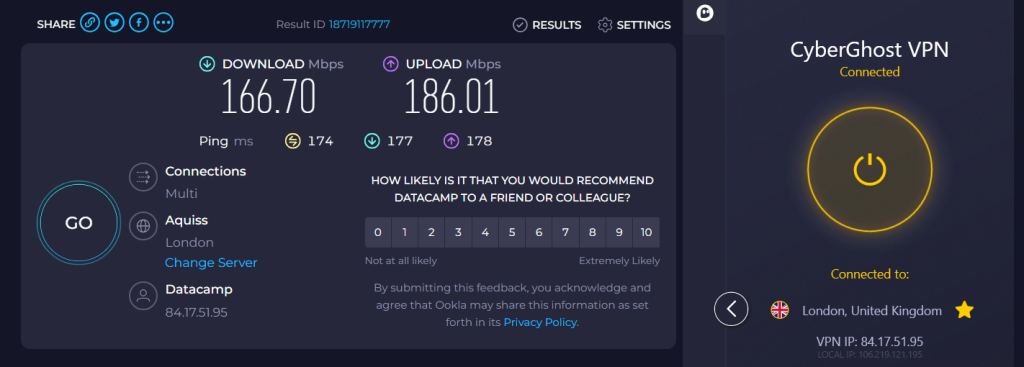
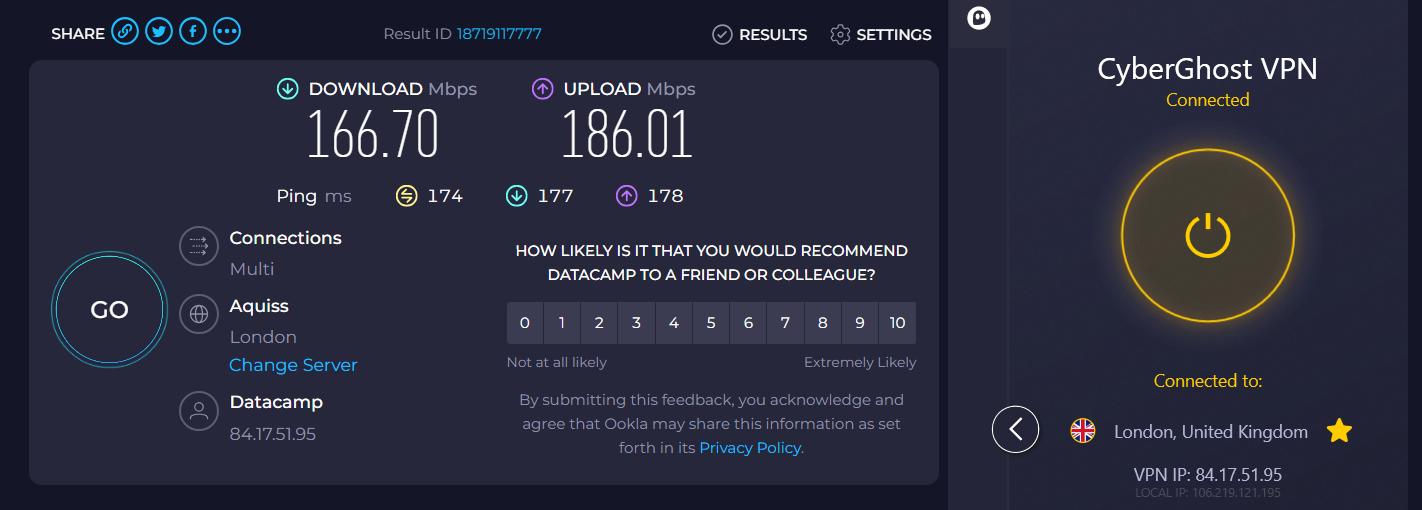
Regarding speed, CyberGhost offers the lowest speed among all the VPNs that we have tested. However, you’ll still get stable performance that supports streaming of Netflix, Hulu, Prime Video, Max, and Disney+, to name a few. On its BBC iPlayer Streaming Optimized UK server, we recorded 166.70 Mbps download and 186.01 Mbps upload, ensuring fast startup times and stable long-session playback.
Pros
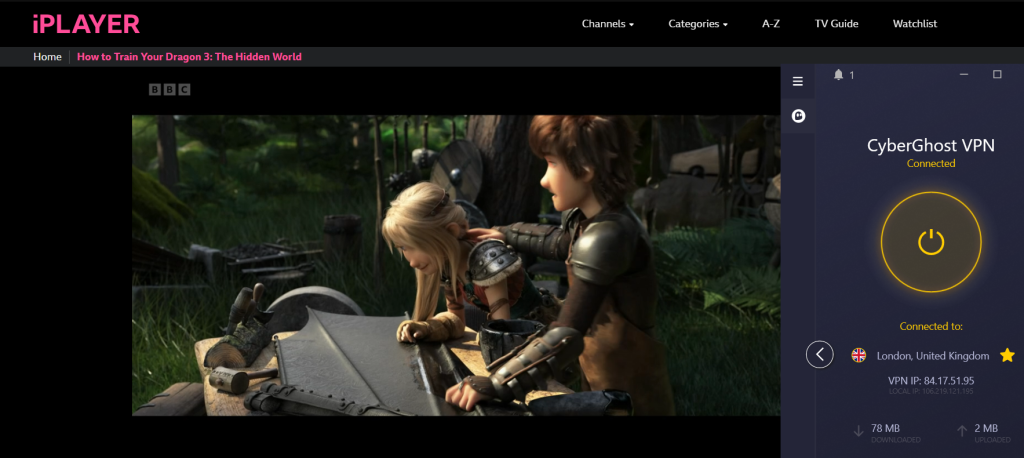
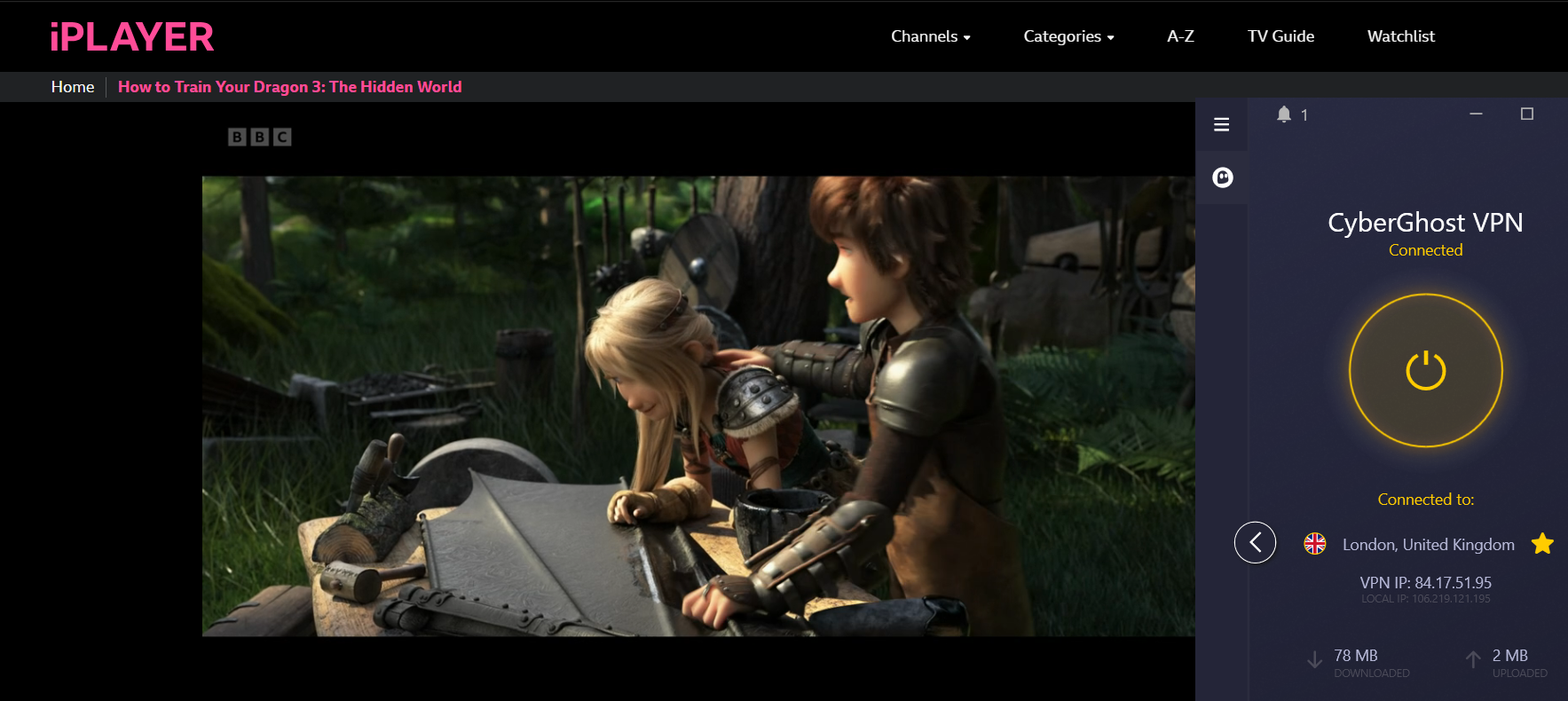
- Dedicated Streaming Servers Clearly Labeled for Major Platforms: CyberGhost offers pre-labeled servers optimized for Netflix (US and international libraries), Disney+, Hulu, Prime Video, BBC iPlayer, and more. In our tests, these eliminated trial-and-error entirely, directing us instantly to working locations with reliable access and fast playback.
- Reliable Unblocking of 50+ Streaming Apps Worldwide: With its extensive server network, CyberGhost successfully bypassed geo-restrictions for over 50 streaming platforms in our testing. This includes global services and region-specific apps, allowing us to access multiple international libraries with minimal effort. Even services that often block VPN traffic, like BBC iPlayer and Hotstar, were consistently accessible when connected to optimized servers.
- Fast Startup Times and Stable Streaming on Optimized Servers: On CyberGhost’s BBC iPlayer Streaming Optimized UK server, streams started in under 2 seconds and reached Full HD within 4–7 seconds, with zero buffering or disconnects during playback. Normal UK servers were slower and inconsistent, making the optimized servers essential for best results.
- Smart Rules Automation That Connects You Automatically: CyberGhost’s Smart Rules feature allows us to set the app to automatically connect to a streaming-optimized server when launching a specific app. In practice, this reduced manual steps and ensured we were always connected to the best-performing servers for Netflix, Prime Video, or Disney+. It’s a convenient feature for users who prefer a “set it and forget it” approach.
- Smart DNS for Streaming on Consoles and Unsupported Devices: CyberGhost includes Smart DNS functionality for Apple TV, smart TVs, PlayStation, Xbox, and other devices without native VPN apps. We successfully streamed US Netflix and BBC iPlayer on large-screen devices without router setups.
- NoSpy Servers for Enhanced Privacy During Streaming: CyberGhost’s NoSpy servers are high-performance, privacy-focused nodes fully managed by CyberGhost. During our testing, these servers provided both fast connections and strong privacy protections, reducing third-party involvement. While CyberGhost does not offer obfuscated servers, NoSpy servers remain a solid option for users concerned about security alongside streaming.
- Strong Security, Encryption, and Leak-Free Performance: CyberGhost uses AES-256-GCM and ChaCha20, supports modern VPN protocols (OpenVPN, IKEv2, and WireGuard), includes an automatic kill switch, and enforces a strict no-logs policy that is regularly audited. In our tests, CyberGhost remained free from IP, DNS, and WebRTC leaks, ensuring that streaming sessions are both private and secure.
- Wide Device Compatibility with Easy-to-Use Apps: CyberGhost provides native apps for Windows, macOS, Android, iOS, Android TV, Fire TV, and routers. Its intuitive interface and guided server selection make it beginner-friendly, while still offering enough features for advanced users. We found setup to be seamless across multiple devices, from laptops to smart TVs.
- Affordable Long-Term Pricing with an Industry-Leading Refund Policy: CyberGhost is currently priced at $2.03 per month for 24 months. Long-term plans include a 45-day money-back guarantee, and monthly subscriptions offer a 14-day money-back guarantee. This allows us to test streaming performance risk-free across multiple platforms before committing to a plan.
- 24/7 Live Chat Support for Streaming Assistance: CyberGhost provides round-the-clock live chat support. Our experience with their support team confirmed they are knowledgeable about streaming issues, including recommending the right servers and troubleshooting connection problems, making them reliable for users seeking guidance.
Cons
- Slower Speeds Compared to Top Streaming VPNs (Major Con): CyberGhost recorded the lowest speeds among all VPNs we tested, with up to 65% performance loss on some servers. While optimized servers delivered 166.70 Mbps download speed (UK BBC iPlayer), distant and standard servers were significantly slower and less reliable for 4K streaming.
- Limited Ability to Bypass ISP Throttling: Unlike top-tier VPNs, CyberGhost does not reliably bypass ISP throttling. Users with throttled connections may not experience full potential speeds, especially for extended streaming sessions or high-resolution video.
- No Obfuscated Servers for Highly Restrictive Networks: CyberGhost does not offer obfuscation technology. This makes it less suitable for users in countries or networks that actively block VPN traffic, limiting its usability for restricted regions.
- Feature Availability Varies by Device: Some advanced features, such as Smart Rules automation, NoSpy server access, and split tunneling, may not be fully available on all devices. While these are minor issues for basic streaming, users seeking uniform functionality across every platform may encounter limitations.
- Occasional Need to Switch Servers for Streaming Access: Although CyberGhost has dedicated streaming servers, streaming services occasionally block certain IPs. Users may need to reconnect or switch servers in rare cases, which can interrupt streaming and require manual selection.
- Not Optimized for Power Users: CyberGhost is designed with simplicity in mind, which is great for beginners but may frustrate advanced users who want detailed configuration options, granular protocol control, or high-speed tunneling customization.
This CyberGhost review will help you understand it better.
6. Proton VPN - Privacy-First VPN With Plus Servers And Vpn Accelerator
Proton VPN is another best VPN for watching TV abroad as it balances strong security, transparent operations, and reliable streaming performance. Backed by its Swiss jurisdiction and independently audited infrastructure, Proton VPN is designed for users who want to unblock major streaming platforms without compromising privacy. Its Plus servers, VPN Accelerator technology, and strong anti-throttling capabilities allow it to access popular platforms while maintaining stable playback quality.
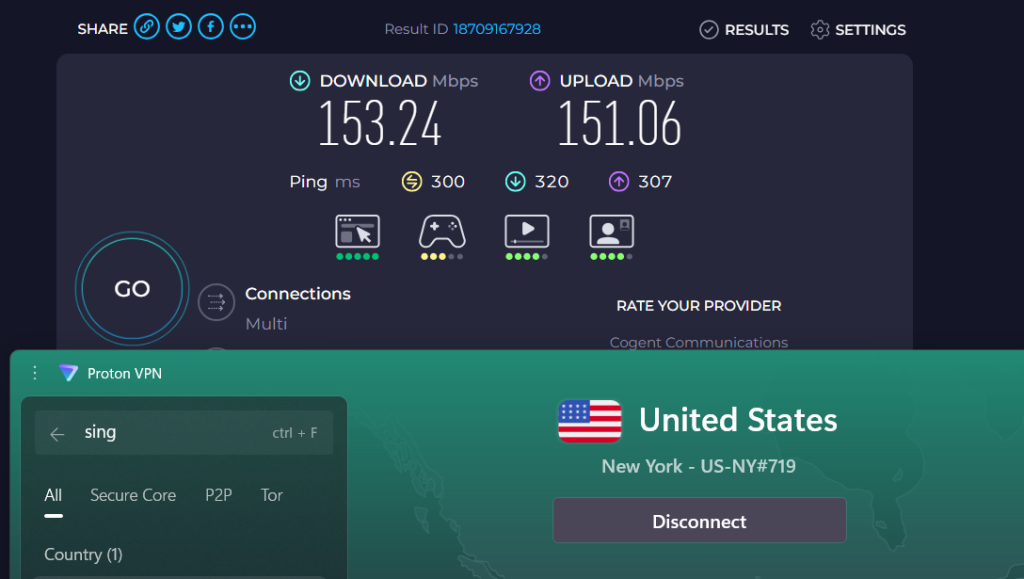
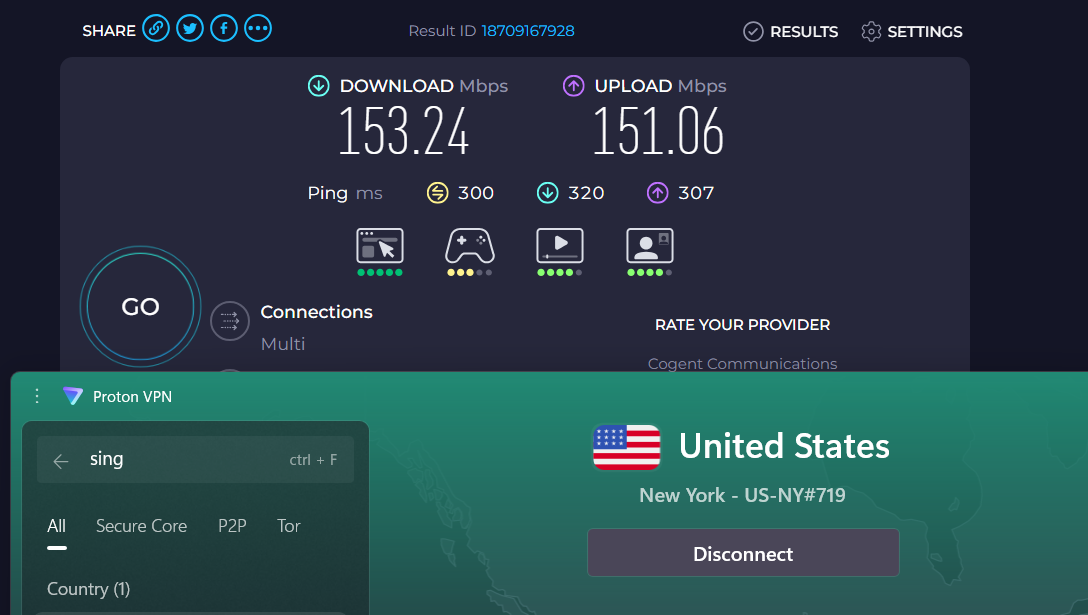
In real-world testing, Proton VPN delivered medium-fast speeds suitable for HD, Full HD, and 4K streaming, with US server speeds averaging ~153 Mbps, UK servers reaching ~174 Mbps, and Singapore peaking at ~177 Mbps. During a 35-minute continuous streaming test, Proton VPN maintained a stable connection with no VPN disconnects, no playback errors, and no forced server switching on both Netflix and BBC iPlayer, though BBC iPlayer triggered CAPTCHAs during extended use and Netflix showed occasional resolution dips early in sessions.
Pros
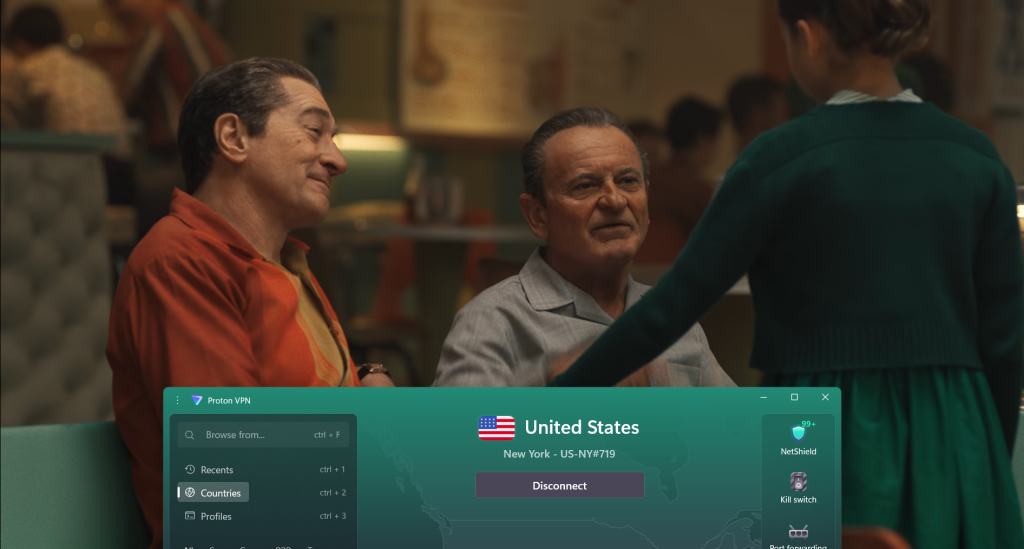
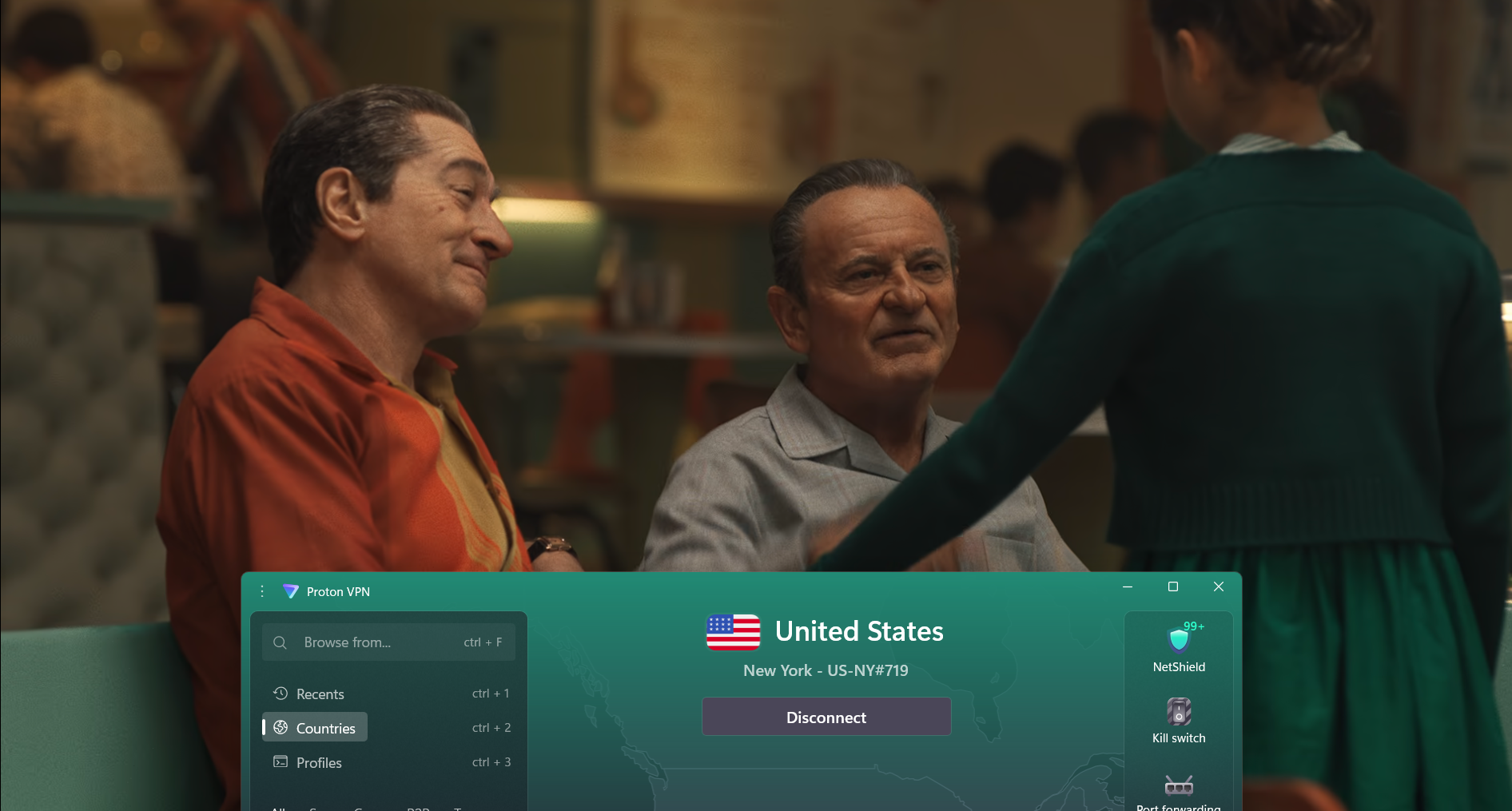
- Reliable Access to Netflix, Prime Video, BBC iPlayer, and Other Major Platforms: We tested Proton VPN across Netflix (US, UK, Canada, Japan, Australia), Amazon Prime Video, BBC iPlayer, Disney+, and Hulu. Plus servers consistently bypassed geo-restrictions without proxy errors, and once connected, streams remained stable for long sessions. Occasional server switching was required, but it was resolved quickly. Connection remained stable once established.
- Consistent HD Streaming Supported by VPN Accelerator: Proton VPN’s VPN Accelerator technology improves throughput and reduces latency, especially on long-distance connections. In our tests, this resulted in stable HD playback with no noticeable buffering during extended sessions.
- Strong Anti-Throttling Performance for Smooth Playback: Proton VPN effectively bypasses ISP throttling. During testing, streaming quality remained consistent even during peak hours, with no sudden drops in resolution or buffering. This makes it a solid choice for users whose ISPs aggressively throttle video traffic.
- Privacy-First Infrastructure Backed by Swiss Jurisdiction: Proton VPN stands out for its commitment to privacy. It uses advanced AES-256 and ChaCha20, secure tunneling protocols such as WireGuard, OpenVPN, IKEv2, and Stealth, a built-in kill switch, and Secure Core routing for additional protection. Based in Switzerland, it benefits from strong privacy laws and has undergone independent audits. We detected no IP or DNS leaks during testing.
- Secure Core Routing for Privacy-Conscious Streaming: Proton VPN offers 17,276 servers in 127 countries (130 secure core in 67 countries) . Secure Core routes traffic through privacy-friendly countries before exiting to streaming regions. While this slightly impacts speed, it provides an additional layer of protection for users who prioritize anonymity while accessing geo-restricted content.
- Apps for All Major Platforms and Manual Streaming Device Support: Proton VPN offers apps for Windows, macOS, Linux, iOS, Android, and Android TV. We tested the apps across desktop and mobile platforms and found them stable and reliable, though slightly more technical than beginner-focused VPNs. For devices without native VPN support, such as smart TVs and gaming consoles, Proton VPN supports manual router setups and Smart DNS-style alternatives.
- Unlimited Bandwidth on All Plans, Including Free Tier: Unlike many competitors, Proton VPN offers unlimited bandwidth across all plans. Even its free plan has no data caps or ads, though streaming access is limited. Paid plans unlock full streaming support without restrictions, making it suitable for heavy or frequent viewers.
- Transparent Pricing and Risk-Free Trial: You can subscribe to Proton VPN starting at $2.49 per month per 24 months, backed by a 30-day money-back guarantee. The availability of a genuinely usable free plan further reinforces Proton VPN’s transparency and trustworthiness.
Cons
- Medium-Fast Speeds Compared to Top-Tier Streaming VPNs: While Proton VPN is fast enough for HD and many 4K streams, its peak speeds (average 177 Mbps max in testing) trail speed-focused VPNs like NordVPN, particularly on distant servers.
- Streaming Access Limited to Plus Servers: Access to major streaming platforms is restricted to Proton VPN’s Plus servers. Users on the free plan or basic tiers will not be able to unblock most streaming services, which limits flexibility unless you upgrade.
- Occasional Manual Server Switching Required: Although Proton VPN reliably unblocks major platforms, we occasionally had to switch Plus servers when a specific IP was blocked by a streaming service. These instances were infrequent but still required some manual intervention.
- Noticeable Speed Reduction on Certain Servers: In our internal speed tests, Proton VPN showed an average speed reduction of around 53% on some connections. While still sufficient for HD and 4K streaming, this level of slowdown can affect latency-sensitive activities and falls behind performance-focused VPNs.
- Split Tunneling Not Available on macOS and iOS: Proton VPN does not currently support split tunneling on macOS or iOS. This limits app-level traffic control on Apple devices and may be inconvenient for users who rely on routing specific apps outside the VPN.
Read the full Proton VPN review to understand each and everything about Proton VPN.
How to Securely Set Up and Use a VPN for Streaming
Streaming your favorite content securely requires more than just picking the right VPN. It starts with a proper setup. In this section, we’ll walk you through the key steps to securely set up and use a VPN for seamless, safe streaming. Let’s take a more in-depth look at this procedure:
- Sign up for a VPN that works for streaming (we recommend NordVPN).
- Go to the VPN provider’s website or your device’s app store, and install the app on your preferred streaming device.
- Launch the VPN app and log in to your account.
- Connect to the Right Server Location. This step is crucial. Choose a server in the region where your streaming service is available.
- Want to watch Hulu, Max, or Paramount+? Connect to a U.S. server.
- Looking for BBC iPlayer? Use a U.K. server.
- Trying to access Netflix Japan or Disney+ India? Connect to Japan or India, respectively.
- Enable key security features before you stream
- Kill Switch – Prevents data leaks if your VPN connection drops.
- Obfuscation – It is very important to turn it on as it will prevent the streaming platforms from even detecting that you are using a VPN.
- DNS Leak Protection – Keeps your IP and DNS queries secure.
- Split Tunneling – Route only your streaming app through the VPN while keeping other apps on your local connection.
- Ad & Tracker Blockers – Some VPNs (like NordVPN, Surfshark or CyberGhost) include built-in tools to block intrusive ads and tracking during streaming.
- That’s it! Now, you can enjoy a seamless streaming experience.
Why Streamers Use a VPN for Streaming?
Streaming shows, movies, or live content online isn’t always smooth. Sometimes things are blocked or slow. That’s where a VPN comes in. It helps streamers get around restrictions and enjoy a better, safer experience. Here’s why more and more people are using it for streaming.
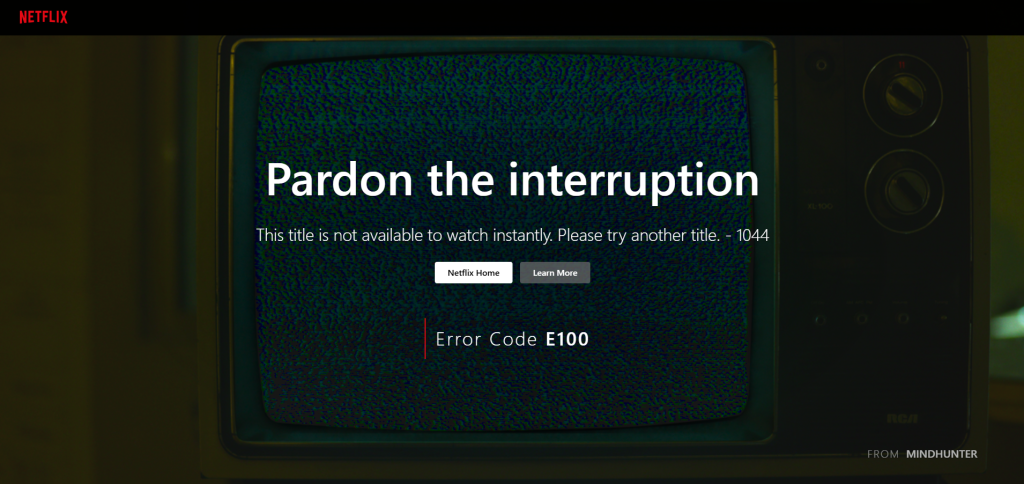
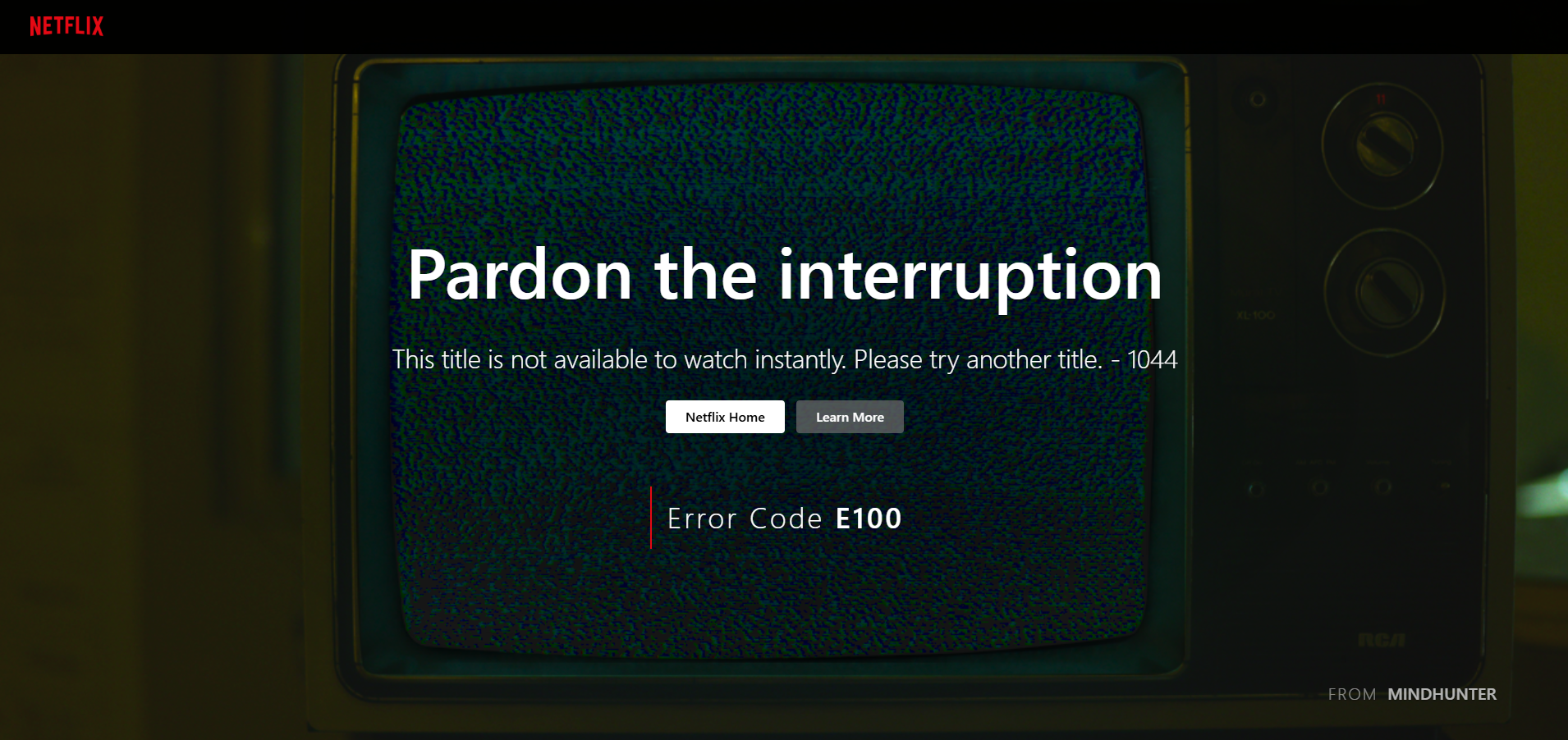
- Bypass Geo-Blocks – Watch content from anywhere in the world by changing your virtual location with a VPN, no matter where you are. For instance, we tried logging in to Netflix and received this message that says, "Pardon the interruption. This title is not available to watch instantly. Please try another title. -1044. Error Code E100."
- Unlock More Movies & TV Shows – Access exclusive shows and films available only in other countries by connecting to global streaming libraries.
- Stream Regional Sports & Live Events – Beat local blackouts and never miss your team’s game by switching to a location where it’s freely available.
- Protect Your Privacy on Adult Sites – Avoid government ID checks and keep viewing porn privately with a VPN that hides your identity and activity.
- Avoid ISP Throttling – Regain your full internet speed during streaming by preventing your ISP from detecting and slowing your traffic.
- Watch Your Subscriptions Abroad – Travel without losing access to your streaming accounts—connect to your home country and watch like normal.
- Remove Annoying Ads & Trackers – Enjoy cleaner, uninterrupted streaming by blocking intrusive ads and background tracking through VPN DNS features.
- Stay Secure on Public Wi-Fi – Stream safely on hotel or airport Wi-Fi networks by encrypting your data against hackers and snoops.
Find the Best Streaming VPN for Your Favorite Platforms
Are you looking for the best VPN for your favorite streaming service? Whether you're tuning in for movies, TV shows, live sports, or anime, not all VPNs perform equally across platforms. Some excel at unblocking Netflix and Hulu, while others are better suited for bypassing sports blackouts or unlocking international content libraries.
Additionally, our team has been testing streaming services and how well they work with VPNs for quite some time now. Use the links found below to learn about the best VPNs to unblock them from anywhere.
What Are the Cheapest VPNs for Streaming?
If you're looking to stream your favorite shows without breaking the bank, then we have some good news for you!. Among our top recommendations, there are multiple options are are highly affordable. Let’s take a quick look at the best-value VPNs for streaming and help you pick the right one.
If you want the best mix of price, performance, and features, Surfshark at $1.99/month is your winner. It’s cheap, fast, reliable for streaming, and works on unlimited devices, making it the most well-rounded and affordable choice on the list. Furthermore, if you are looking for more discounts, we highly recommend that you check out these latest deals on top VPNs.
How Fast Does Your VPN Need to Be for Streaming?
In general, the lowest requirement to stream any type of content is 1 to 3 Mbps. With that speed, be prepared for some buffering, and you'll also get the lowest possible video resolution.
For more precise information, check out the following table. As you can see below, we made sure to cover the most popular streaming platforms.
Your VPN speed plays a major role in your streaming experience. The key is making sure your VPN can maintain stable speeds without major drops from your base internet connection. Here’s a quick breakdown of general streaming speed requirements:
- Basic streaming (SD quality): Requires 1–3 Mbps. Expect occasional buffering and lower visual quality.
- High Definition (HD): Needs around 5–8 Mbps for smooth playback.
- Ultra HD / 4K: Demands a minimum of 16–25 Mbps, depending on the platform and content. Not all services offer 4K, and it often requires a premium subscription tier.
Know that no matter which VPN you pick, it will slow down your Web connection to a certain degree. Here's more info on why a VPN slows you down, which includes handy tips on getting the most out of your VPN's performance.
Legal and Ethical Considerations of Streaming with a VPN
Using a VPN to stream content is legal in most countries like the U.S., U.K., Canada, and across much of Europe. That means you won’t get into legal trouble just for using one. However, in countries with heavy internet restrictions, like China, Russia, Iran, or North Korea, using a VPN can be restricted or even illegal.
Now, just because it’s legal doesn’t mean streaming platforms are okay with it. Services like Netflix, Hulu, and Amazon Prime have rules in their terms of service that say you shouldn’t use a VPN to watch content from other regions. If you do, they might block your connection or limit what you can watch. They usually won’t ban your account, but they can stop the VPN from working.
That said, using a VPN to protect your privacy or to access your subscriptions while traveling is generally seen as fair and ethical. What raises eyebrows is using a VPN to get around content restrictions that are in place because of licensing deals. That can be seen as unfair to content creators and broadcasters who follow those rules.
Hence, VPN streaming is usually legal, but it might go against platform rules. Use it responsibly, and be aware of the terms you're agreeing to.
What Major Streaming Platforms Say About VPNs
1. Netflix
Netflix notes that if you see the message, “You seem to be using a VPN or proxy…,” it's because their system detected VPN usage. They also mention that VPNs cannot be used for live events or the ad-supported plan.
Note: Watching Netflix while using a VPN isn't allowed on an ad-supported plan. Live events on Netflix can't be watched while using a VPN.

2. Disney+
Disney+’s Subscriber Agreement prohibits using any technique “to obscure or disguise your location.” While VPNs aren’t illegal, doing so may result in blocked streams or account locks.

3. Paramount+
Paramount+ support confirms that if you’re prompted to disable your VPN or proxy, it’s because they've detected rerouted traffic. Streaming will be blocked until VPN is turned off. It mentions as:

4. Hulu
Hulu’s terms prohibit “using technology or other means … to bypass any content protection or access control mechanisms,” which covers VPNs used to circumvent geo-restrictions. If detected, according to Hulu Terms and Conditions, it will block access until the VPN is disabled.

VPN Legality & Streaming Platform Availability by Country
Troubleshooting VPN Streaming Issues: Quick Fixes for Seamless Access
If your VPN isn't working with streaming platforms, you're not alone. Many users run into this issue due to evolving geo-blocking techniques and technical glitches. Fortunately, most problems have simple fixes. From switching servers to tweaking device settings, here’s a breakdown of common issues and how to solve them efficiently.
Free VPNs for Streaming: Are They Worth It?
In general, it's not recommended to use free VPNs for streaming. We don't recommend them because they often collect and sell your data, as well as compromise your security and privacy. Let's have a quick comparison on all of them.
More precisely, we recommend a trial period of NordVPN, which lasts 7 days and can be activated on Android. For other devices and platforms, NordVPN offers a 30-day money-back policy. Alternatively, you can check our hand-picked VPN deals, which let you sign up for only a few dollars per month. However, you may check out the free trials of these premium VPNs for more options.
And if you're set on using a free option, opt for Proton VPN, which comes with unlimited bandwidth but limits you to a couple of locations only.
Final Thoughts
After reading the entire post, we can conclude one thing - a trustworthy VPN takes your streaming to the next level by bypassing regional blocks, reducing ISP throttling, and giving access to global content libraries. Beyond performance, it safeguards your privacy, keeps your online activity hidden, and ensures uninterrupted, secure entertainment across all devices.
Keeping all things in mind, here are the 6 best VPN services for streaming in 2026:
- NordVPN – Exceptional all-round performance with SmartPlay technology, vast server coverage, NordLynx protocol for ultra-fast HD/4K streaming, and stable connections.
- ExpressVPN – Fastest streaming experience with MediaStreamer Smart DNS, Lightway protocol for high speeds, and reliable access to virtually all platforms worldwide.
- Surfshark – Budget-friendly with unlimited device connections, NoBorders mode for tough geo-blocks, CleanWeb ad-blocking, and solid streaming speeds.
- Private Internet Access (PIA VPN) – Highly customizable with extensive US coverage, strong security, and optimized servers for reliable access to major streaming services.
- CyberGhost VPN – Beginner-friendly with dedicated streaming servers, Smart Rules automation, and wide platform coverage for easy, plug-and-play streaming.
- Proton VPN – Privacy-first solution with Plus servers, VPN Accelerator for smooth HD/4K streaming, Swiss jurisdiction, and transparent operations.
So, whether you prioritize speed, privacy, device coverage, ease of use, or budget, these six best VPNs for both video and TV streaming deliver the best combination of performance, reliability, and streaming-focused features in 2026.
That’s all we've prepared for you in this guide on 'The Best VPNs for Streaming in 2026.' If you have any additional comments or remarks, feel free to share them via the comments section below. Thanks for reading!