



Cybersecurity News Roundup: A Week of Breaches, Botnets, Impersonation and Insider Access
Published on April 18, 2026

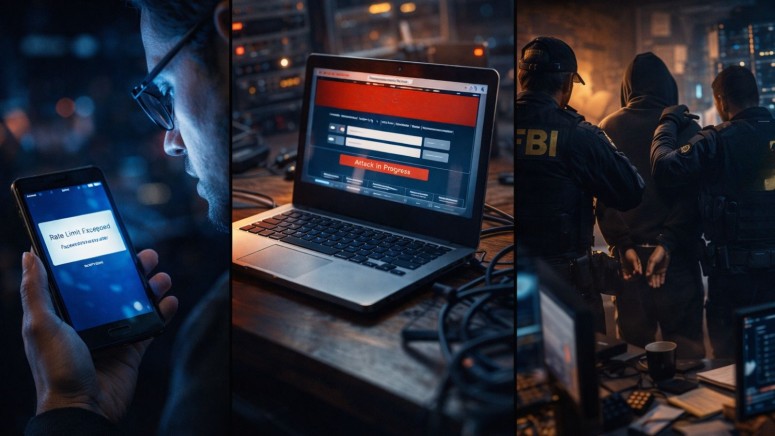
Recent incidents point to a spread across consumer platforms, financial systems, critical infrastructure, and workplace environments rather than a single dominant target. Personal data exposure and financial fraud continue to appear together, with breaches and scams both involving sensitive user and banking information.
A repeated pattern is the focus on access and control. Campaigns are stealing data and maintaining persistence inside systems, whether through malware or unauthorized insider access via remote work setups. Even in cases where attacks were detected within minutes, data exposure still occurred, showing how quickly impact can unfold.
US Senate Probes Tech Giants Over CSAM Reporting Failures to NCMEC
A US Senate investigation led by Chuck Grassley is examining eight major technology companies over deficiencies in reporting child sexual abuse material to the NCMEC CyberTipline. Findings show that despite millions of reports filed in 2025, many lacked critical details such as geolocation data and suspect identification, limiting their usefulness for law enforcement. Platforms including Meta, TikTok, Amazon, Discord, and Roblox were flagged for inconsistent or incomplete reporting practices. Some companies reportedly submitted large volumes of reports that were either irrelevant or missing key investigative elements. The probe also raises concerns about the handling of exploitation content within AI training datasets and gaps in identifying victims in online interactions.
Suspect in €6 Million Swedish Bank Scam Extradited from US to Sweden
A key suspect in a large-scale Swedish banking fraud scheme has been extradited from the United States to Sweden, where authorities will proceed with prosecution. The scam, active since 2019, involved impersonating bank officials to trick victims into transferring funds under false security pretenses. Investigators say at least 25 individuals were defrauded, with total losses reaching approximately €6 million. The suspect was transferred on April 10, 2026, following coordinated efforts between U.S. and European authorities, including Eurojust. Earlier arrests in 2024 had already targeted members of the same network across multiple jurisdictions.
Canis C2 Surveillance Framework Exposed in Targeted Cyber Campaign Against Japan
Security researchers have uncovered a previously undocumented surveillance framework known as Canis C2, discovered through an exposed API linked to a malicious server targeting Japan. The campaign began with phishing attacks impersonating local financial services like Paidy and Pay-Easy to trick users into installing malicious applications. Once deployed, the malware enables attackers to access sensitive data, including location, camera feeds, audio, and credentials, while also supporting arbitrary code execution. The framework operates across multiple platforms, including Android, iOS, Windows, Linux, and macOS, indicating a highly sophisticated and coordinated operation.
Basic-Fit Data Breach Exposes 1 Million Members, Including Bank Details
Basic-Fit disclosed a cybersecurity incident in April 2026 in which attackers accessed and exfiltrated data from its corporate systems. The breach affected approximately 1 million members across Europe, including at least 200,000 individuals in the Netherlands. Compromised data includes names, addresses, contact details, dates of birth, membership information, and bank account details. The intrusion was detected within minutes on April 8, but attackers were able to extract data before access was terminated. The company confirmed that passwords, identification documents, and data from franchise locations were not affected. Basic-Fit has notified regulators and impacted users while working with external cybersecurity experts to monitor potential misuse of the stolen data.
Rockstar Games Confirms Data Breach Linked To Anodot Incident
Rockstar Games confirmed a cybersecurity incident involving unauthorized access to its systems, with attackers linked to the ShinyHunters group. The threat actors claimed they accessed Snowflake cloud instances using authentication tokens obtained during a prior breach affecting analytics firm Anodot. They further alleged exfiltration of tens of millions of internal records, including analytics related to player behavior, in-game economies, and anti-cheat testing. Rockstar stated that the accessed data was limited to internal analytics and non-sensitive company information. The company also confirmed that player accounts and personal data were not impacted.
Impersonated Remote Workers And Insider Access Scheme Lands US Facilitators In Prison
Two U.S. nationals have been sentenced for enabling a North Korean-linked scheme that used stolen identities to place impersonated remote IT workers inside American companies. The operation relied on identity misuse tactics, where overseas actors posed as U.S.-based professionals to secure jobs and gain trusted insider access to corporate systems. Facilitators in the U.S. ran “laptop farms,” allowing remote control of company-issued devices while maintaining the illusion of domestic employees. This setup enabled persistent access to sensitive data and internal networks across more than 100 organizations, including high-value targets.
Cutting The Power Cord: Operation PowerOFF Disrupts 75,000 DDoS Users Worldwide
A Europol-supported global crackdown saw 21 countries coordinate enforcement and prevention efforts against DDoS-for-hire ecosystems, targeting over 75,000 users. Authorities sent mass warnings, made four arrests, issued 25 search warrants, and dismantled 53 domains tied to booter services. The operation was powered by intelligence from more than 3 million user accounts obtained through seized infrastructure, enabling coordinated global action. Alongside takedowns, officials removed over 100 malicious URLs, deployed targeted ads to deter potential offenders, and issued blockchain-based warnings, marking a significant combined enforcement and prevention push against one of cybercrime’s most accessible attack models.
ZionSiphon Malware Targets Israeli Water Infrastructure With PLC Manipulation Capabilities
ZionSiphon is a newly identified operational technology malware designed to target Israeli water infrastructure, including desalination and wastewater treatment systems. Analysis shows the malware actively scans for industrial control systems and attempts to interact with programmable logic controllers using protocols such as Modbus. Its embedded commands are designed to manipulate physical processes, including altering chlorine dosing, opening valves, and modifying pressure levels in treatment systems. The malware also includes USB-based propagation, privilege escalation, and persistence mechanisms to maintain access across environments.
Bluesky Hit by DDoS Attack, Services Disrupted for Days
Bluesky experienced a distributed denial-of-service (DDoS) attack starting April 15 around 8:40 p.m. ET, leading to ongoing service disruptions. The attack flooded its servers with traffic, causing intermittent outages across feeds, notifications, threads, search, and profile access. The company confirmed no unauthorized access to user data but did not provide a clear timeline for full recovery. The disruption also affected its status page and led to increased migration requests to alternative platforms like Blacksky. Some decentralized communities running on the same protocol remained operational as they use independent infrastructure.
Mirai-Based Nexcorium Botnet Exploits DVR Flaw for DDoS Attacks
Fortinet researchers uncovered a Mirai-based botnet named Nexcorium that exploits a command injection flaw (CVE-2024-3721) in TBK DVR devices to gain control and deploy malware. The campaign uses a downloader script to install multi-architecture payloads, establish persistence through system modifications, and spread via brute-force attacks and additional exploits. Once infected, devices connect to a command-and-control server to launch various DDoS attacks, including UDP and TCP floods. The malware targets poorly secured IoT systems and maintains long-term access using multiple persistence techniques
FBI, Indonesia Dismantle W3LL Phishing Network Behind $20M Fraud Attempts
The FBI Atlanta Field Office and Indonesian authorities dismantled a global phishing operation built around the W3LL phishing kit, which enabled cybercriminals to steal credentials and attempt over $20 million in fraud. The tool allowed attackers to create fake login pages, capture credentials and session data, and bypass multi-factor authentication. Investigators linked the operation to a marketplace called W3LLSTORE, which sold over 25,000 compromised accounts between 2019 and 2023, while continued activity through encrypted channels targeted more than 17,000 victims in 2023 to 2024.
AI Cybersecurity Spending Shifts to ROI, SecOps Tools, and Fewer Vendors
A survey of 125-plus cybersecurity investors shows budgets are tightening, pushing buyers to prioritize tools that deliver measurable ROI, reduce costs, and prove value within three years. Around 80% of investors plan to increase funding in 2026, with spending expected to favor AI-native security operations tools that improve analyst efficiency and automate response. At the same time, practitioners are moving away from point solutions, superficial AI features, and legacy add-ons, while vendor consolidation is expected as teams look to reduce tool sprawl and focus on platforms that deliver clear operational outcomes.
SantaCon Organizer Charged in $2.7M Charity Fraud Scheme
Stefan Pildes, the organizer of SantaCon, has been charged with wire fraud for allegedly diverting millions raised for charity into personal use. Authorities say the event generated about $2.7 million between 2019 and 2024, but more than half was funneled into a separate entity he controlled, while additional funds were spent on personal expenses like property renovations, travel, and luxury purchases. The scheme misled attendees and venues that were told proceeds would go to charity, with only a small portion actually donated. Pildes has been arrested and faces up to 20 years in prison if convicted.
First U.S.–Indonesia Action Against Phishing, Policy Pressure, and Cybersecurity Budget
Regulators kept pressure on major tech platforms, with U.S. lawmakers examining gaps in how harmful content is reported and handled. Disruption remained active with DDoS attacks while botnets continued targeting exposed devices using similar infrastructure. Coordinated enforcement reflected this overlap, with agencies like the FBI, Europol, and Indonesian authorities carrying out takedowns, arrests, and infrastructure seizures tied to both phishing and DDoS ecosystems.
The U.S.–Indonesia operation against the W3LL phishing network marked the first such joint action targeting a phishing kit developer between the two countries.
Related






Get expert insights on threats, breaches, scams, and security trends — delivered every Monday.
Most Popular
Get expert insights on threats, breaches, scams, and security trends — delivered every Monday.
Most Popular