



Ubuntu 20.10 Is Here and It Is Devoted to Raspberry Pi 4
Last updated May 27, 2021


- Ubuntu 20.10 has landed, and it’s a release that’s dedicated to Raspberry Pi 4 single-board computers.
- Canonical has added support for cutting-edge CPU architectures and has updated the underlying software tools.
- A lightly optimized GNOME Shell 3.38 runs atop of Linux kernel 5.8 now.
The latest release of the world’s most popular Linux distribution, Ubuntu 20.10, is here. The highlight of this non-long-term support version is the fact that Canonical has decided to give Raspberry Pi some love through it. Thus, we have optimized images that were specifically created for the Raspberry Pi 4 hardware.
As Mark Shuttleworth, the CEO at Canonical, stated:
Apart from that, the Ubuntu 20.10 release, which is code-named “Groovy Gorilla,” is also bringing the following updates:
- Linux kernel 5.8
- Initial support for the “POWER10” CPU architecture
- Graphics support for Intel’s gen 11 and gen 12 processors
- Initial support for AMD’s Zen 3 architecture
- XFS online repair
- Airtime Queue limits on WiFi
- USB 4 and Thunderbolt 3 support
- Active State Power Management (ASPM)
- Thermal pressure tracking
- GCC 10
- Open JDK 11
- Python 3.8.6
- GNOME DE 3.38
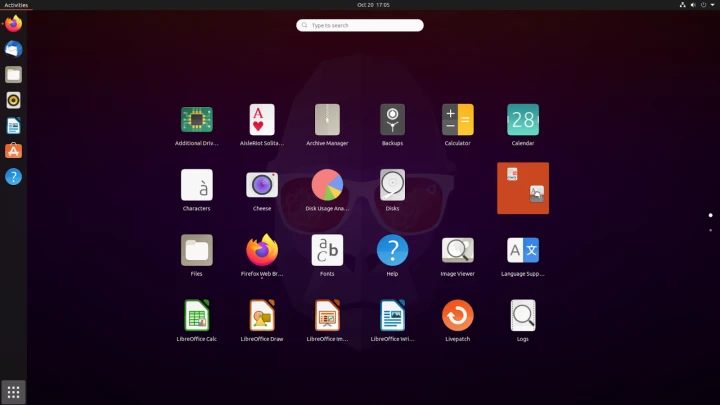
The Raspberry Pi models that feature 4GB or 8GB of RAM will get the fully-fledged Ubuntu Desktop with the GNOME Shell experience. The desktop environment's specific tweaks include an optimized apps grid design, more configuration options for the app order and organization, and a battery indicator exposed all the time. Also, WiFi network sharing can now be done through QR codes, and the system restart option has been added to the status menu.
Those who use their Raspberry Pi boards for micro cloud computing will be happy to find MAAS, LXD 4.6, MicroK8s 1.19, and Ceph on the latest Ubuntu release. If you are interested in experimenting with small servers and clusters, note that Raspberry Pi released the Computer Module 4 a few days ago, and it’s available from $25. To run Ubuntu 20.10 on it, make sure to pick models that have 4 or 8 GB of RAM, though.
This is Ubuntu’s first release after 20.04, which is the most recent long-term support one. This means the experimentation has just started, so these releases are usually the most unstable of the series. Keep that in mind and be patient as fixing patches arrive with time.
Related






Get expert insights on threats, breaches, scams, and security trends — delivered every Monday.
Most Popular
Get expert insights on threats, breaches, scams, and security trends — delivered every Monday.
Most Popular