


Telegram Rolls Out Anti-Censorship Update as CEO Urges Russians to Use Multiple VPNs
Published on April 14, 2026

Key Takeaways
- Russia Telegram crackdown response: Telegram upgrades anti-censorship tools; Durov urges Russians to stock multiple VPNs for reliable access amid restrictions
- Rising censorship in Russia: Authorities intensify blocking efforts; Telegram disruptions spike sharply as government pushes users toward state-controlled alternatives
- VPNs remain essential workaround: Despite detection efforts, millions still use VPNs daily to bypass restrictions and maintain access
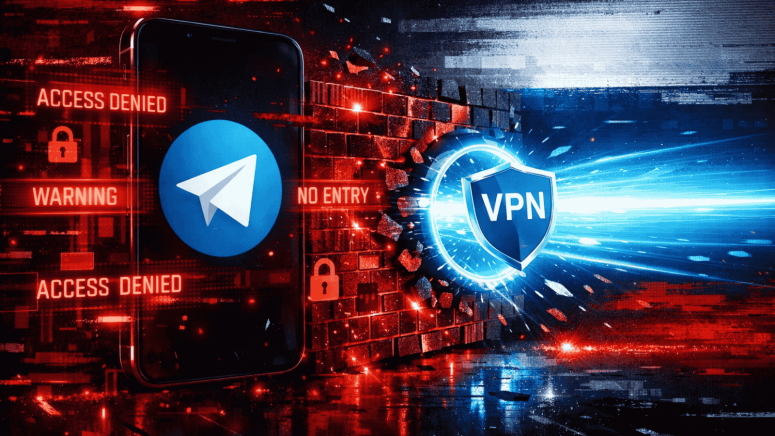
Telegram has introduced an upgraded anti-censorship protocol aimed at maintaining service availability in Russia, as the platform faces increasing restrictions from state authorities. At the same time, CEO Pavel Durov is advising users in the country to rely on multiple VPN services to stay connected.
The announcement comes amid reports of a sharp decline in Telegram’s accessibility across Russia. According to data from Open Observatory of Network Interference, connectivity dropped significantly, with failure rates reaching as high as 95% at one point, marking a rapid escalation in blocking efforts.
Telegram Responds to Escalating Restrictions
In response to the disruptions, Telegram deployed an updated version of its anti-censorship technology. The upgrade is designed to help users bypass network interference and maintain stable access to the platform.
Durov urged users to update their apps promptly to benefit from the improvements. Despite these measures, he emphasized that VPNs remain essential for accessing Telegram reliably within Russia.
He also advised users to avoid opening Russian applications while connected to a VPN, citing concerns that local services may assist authorities in identifying and blocking circumvention tools.
Intensifying Digital Crackdown
Russia’s efforts to restrict Telegram have been building over recent months, with intermittent disruptions eventually leading to broader blocking measures in March. Authorities have justified these actions as necessary for tackling illegal activity and protecting user data.
However, Durov has disputed this narrative, arguing that the move is politically motivated. He claims the government is attempting to shift users toward “MAX,” a state-backed messaging platform.
Concerns about this strategy have also been raised by digital rights advocates. Sarkis Darbinyan of RKS Global previously described the crackdown as an effort to push citizens into a controlled digital ecosystem.
Telegram remains one of the few major messaging platforms still partially accessible in Russia. Other services, including WhatsApp, Signal, Discord, as well as platforms owned by Meta such as Facebook and Instagram, have already faced restrictions.
VPN Usage Becomes Increasingly Critical
As access to online platforms tightens, VPNs are playing a central role in helping users bypass restrictions. These services work by masking IP addresses and routing traffic through external servers, allowing users to access blocked content.
However, Russian authorities are also increasing efforts to limit VPN effectiveness. Reports suggest that regulators are developing tools to detect and restrict VPN traffic more precisely.
Despite this, VPN usage remains widespread. Durov recently stated that more than 50 million users in Russia continue to access Telegram daily with the help of such tools.
At the policy level, the government is also taking steps to discourage VPN usage. Maksut Shadaev has proposed measures aimed at reducing reliance on VPNs, including potential penalties and new compliance requirements.
Ongoing Uncertainty
While some VPN providers report that their services are still functioning in Russia, the situation remains fluid as both enforcement and circumvention techniques continue to evolve.
Durov’s recommendation to use multiple VPNs reflects this uncertainty, suggesting that users may need backup options if individual services become unavailable.
With Telegram continuing to update its infrastructure and authorities tightening controls, the situation highlights the ongoing tension between digital access and government regulation in the region.
Related





Get expert insights on threats, breaches, scams, and security trends — delivered every Monday.
Most Popular



Get expert insights on threats, breaches, scams, and security trends — delivered every Monday.
Most Popular