



Japan Warns of Hacked Trading Accounts, Nearly $700M in Unauthorized Trades Recorded
Published on April 22, 2025

- Japan’s Financial Services Agency signaled that the number of hacked trading accounts increased substantially.
- In under three months, the number exceeded 3,300 compromised accounts of six securities firms
- Hijackers performed unauthorized actions that amounted to $700 million over the course of this period.
Japan's Financial Services Agency (FSA) has issued an urgent warning regarding a substantial increase in hacked trading accounts, resulting in approximately $700 million in unauthorized trades over the last three months.
The concerning trend has seen trading accounts across six securities firms targeted, with a sharp escalation in incidents tied to phishing attacks and malware.
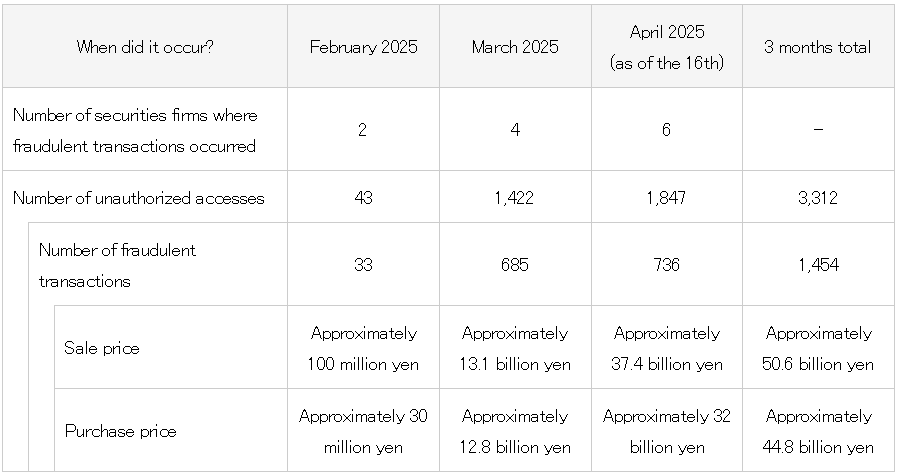
The FSA reported a dramatic rise in fraudulent activity, with hacked accounts increasing from 33 incidents in February 2025 to 685 in March, and 736 more cases during the first 16 days of April. This reflects a total of 3,312 compromised accounts in under three months and 1,454 fraudulent transactions.
The account hijacks were attributed to data breaches that have predominantly involved stolen login credentials obtained through phishing websites, impersonating legitimate securities companies.
Additionally, the Japan Securities Dealers Association (JSDA) noted the use of infostealer malware as a secondary means of stealing sensitive account information.
These attacks are further compounded by phishing emails, where fraudsters exploit the panic surrounding the incidents by pretending to offer protective measures, luring victims into clicking malicious links.
Many hacked accounts have been manipulated to sell existing stock holdings while using proceeds to purchase Chinese stocks and other securities. These transactions have left victim accounts holding undervalued or dubious assets, leading to speculation that criminals may be attempting to artificially inflate the prices of certain stocks for profit.
Although the recorded transaction values (50.6 billion yen in sales and 44.8 billion yen in purchases) do not represent direct investor losses, they underscore the scale of unauthorized activity.
Related






Get expert insights on threats, breaches, scams, and security trends — delivered every Monday.
Most Popular



Get expert insights on threats, breaches, scams, and security trends — delivered every Monday.
Most Popular