



TikTok Faces UK Child Safety Investigation as Ofcom Unveils Major Scam Protection Measures
Published

Key Takeaways
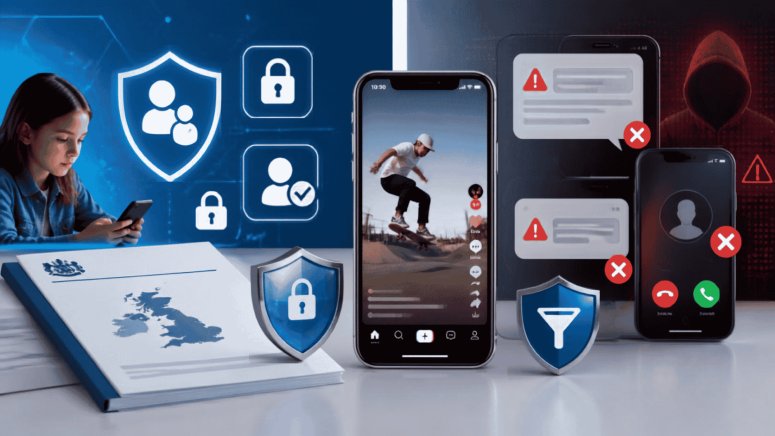
- Investigation: Ofcom TikTok investigation examines whether the platform meets UK child safety duties under the Online Safety Act.
- Anti-Scam Rules: Ofcom introduces stricter requirements to block scam texts, spoofed calls, and fraudulent business messaging.
- Impact: Measures strengthen child protection oversight and mobile fraud defenses, with TikTok probe remaining officially ongoing.
The UK's communications regulator, Ofcom, has launched a formal investigation into TikTok's child safety practices while also introducing new measures aimed at reducing scam text messages and spoofed calls.
Both announcements were made in mid-July 2026 and form part of Ofcom's broader efforts to strengthen online safety and combat digital fraud across the UK.
The developments affect social media platforms that serve children, mobile network operators, messaging providers, businesses that send text messages, and millions of UK consumers.
Ofcom Investigates TikTok's Compliance With Child Safety Requirements
On July 16, 2026, Ofcom announced that it had opened an investigation into TikTok Information Technologies UK Limited to examine whether the platform is complying with child protection duties under Section 12 of the Online Safety Act 2023.
The investigation focuses on rules designed to prevent children from encountering harmful content online. These legal obligations came into force on July 25, 2025, and apply to regulated user-to-user services that are likely to be accessed by children.
Under the law, platforms must use proportionate systems and processes to prevent children from viewing content classified as harmful to them. They must also use highly effective age assurance measures when required to determine whether a user is a child.
Age assurance refers to technologies or methods used to estimate or verify a user's age before granting access to certain content or services.
According to Ofcom, the investigation follows its review of major online platforms and findings from its Children's Online Experiences Report, which raised concerns about children's exposure to harmful content on TikTok.
The regulator also cited its newly published Age Assurance Report, which suggested that age inference systems, including those used by TikTok, may in some cases have failed to correctly identify a significant proportion of children. Ofcom said this could potentially expose children to harmful content.
The regulator emphasized that opening an investigation does not mean it has concluded that TikTok breached the law. The process will involve gathering and analyzing evidence to determine whether any violations occurred.
Ofcom expects this initial stage to take at least three months and said it plans to provide an update in October 2026.
If compliance failures are ultimately identified, Ofcom has the authority to impose penalties of up to £18 million or 10% of a company's qualifying worldwide revenue, whichever is higher. In serious cases, the regulator can also seek court orders that could require third parties to withdraw services from a platform or block access to it within the UK.
New Rules Aim to Reduce Scam Text Messages and Spoofed Calls
One day earlier, on July 15, 2026, Ofcom finalized a new package of rules and guidance intended to make it harder for criminals to use mobile messaging services to target consumers and businesses.
The regulator said fraud accounted for an estimated 45% of all reported crime incidents in England and Wales, while criminals stole approximately £1.28 billion in 2025. Ofcom also noted that 40% of UK mobile users reported receiving at least one suspicious text message during the previous three months.
The new measures build on existing anti-fraud efforts and are designed to block, limit, and disrupt scam activity across mobile networks.
To tackle person-to-person text scams, mobile providers will be required to collect information about scam messages, malicious links, and suspicious phone numbers from customers and anti-fraud organizations. Providers must then block numbers linked to scams and stop fraudulent messages from being delivered across their networks.
Mobile operators will also be required to set message volume limits for pay-as-you-go SIM cards, making it more difficult for scammers to send large numbers of messages at once.
For business messaging services, operators and message aggregators must perform stronger verification checks on businesses that send bulk text messages. These checks include ongoing monitoring of account activity and investigations into suspected fraud.
The rules also require providers to verify sender identities and prevent misuse of Alphanumeric Sender IDs, which are the names that appear instead of phone numbers in many business text messages. Providers must also establish processes for responding to scam incidents and blocking malicious messages while they are in transit.
Ofcom Also Targets International Call Spoofing
Alongside the messaging rules, Ofcom issued strengthened guidance addressing international calls that falsely appear to come from UK mobile numbers.
The regulator said criminal groups operating abroad often spoof UK numbers because consumers are more likely to trust and answer them.
Under the updated guidance, telecom companies should withhold caller identification for international calls that appear to originate from UK mobile numbers unless the validity of those calls can be verified.
Ofcom noted that consumers should continue to exercise caution when receiving calls from withheld or unfamiliar numbers.
The regulator also encouraged the public to report suspicious calls and messages to 7726, a reporting service used by mobile providers to identify fraud trends and improve network protections.
Why Privacy and Security Users Should Care
The two announcements highlight increasing regulatory attention on both online safety and digital fraud.
For social media users, particularly families and younger users, the TikTok investigation could influence how platforms implement age verification and child protection measures under the Online Safety Act.
For mobile users, the new anti-scam requirements are intended to strengthen protections against fraudulent text messages, fake sender identities, and spoofed calls that are commonly used to steal money or personal information.
Both actions have been officially announced by Ofcom. The TikTok investigation remains ongoing, and no conclusions have yet been reached regarding compliance. Meanwhile, the new anti-scam rules and guidance have been finalized and are intended to strengthen protections for UK consumers and businesses.
Users do not need to take any immediate action, although Ofcom recommends continuing to report suspicious messages and calls to 7726 to help mobile providers identify and block scam activity.
Related






Get expert insights on threats, breaches, scams, and security trends — delivered every Monday.
Most Popular



Get expert insights on threats, breaches, scams, and security trends — delivered every Monday.
Most Popular