



JEDEC Presents DDR5 Memory Standard Specs and It’s a Massive Upgrade
Last updated July 15, 2020

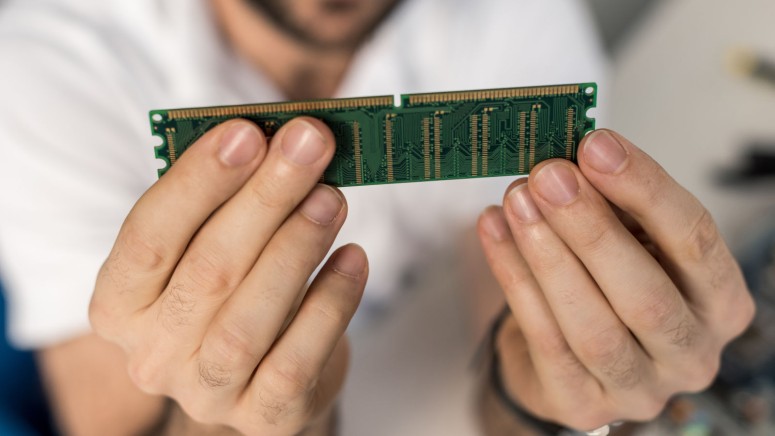
- The DDR5 standard has been announced, and it doubles everything, from speeds to bandwidths.
- The new modules will be smarter, featuring independent data channels and on-board management units.
- There will be no compatibility with the DDR4 generation, and the new products are expected to arrive by late 2021.
The JEDEC Solid State Technology Association has presented the technical specifications of the DDR5 RAM standard, and it looks like it’s going to be a massive upgrade over DDR4. The semiconductor standardization organization has made improvements on all aspects, from power efficiency to memory speed and size, and the data transfer rates.
Thus, the DDR5 is going to be a totally new chapter of performance, but you should not expect any products to support it before late 2021 or early 2022. That said, we’ll have to stick with our DDR4 modules released in 2014 for a little while longer.
So, here’s what will change with the arrival of DDR5, and where they will be different compared to DDR4:
- Max UDIMM size will go from 32GB to 128GB
- Max die density will reach 64 Gbit from the 16 Gbit of the DDR4
- Max data rate rises from 3.2 Gbps to 6.4 Gbps
- The frequency will now range between 3200 and 8400 MHz
- The operational voltage will drop from 1.2 to 1.1 volts
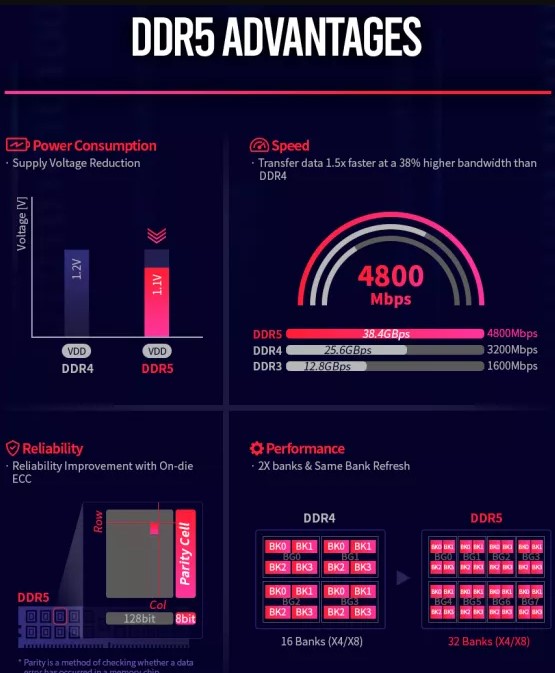
Source: TechRadar
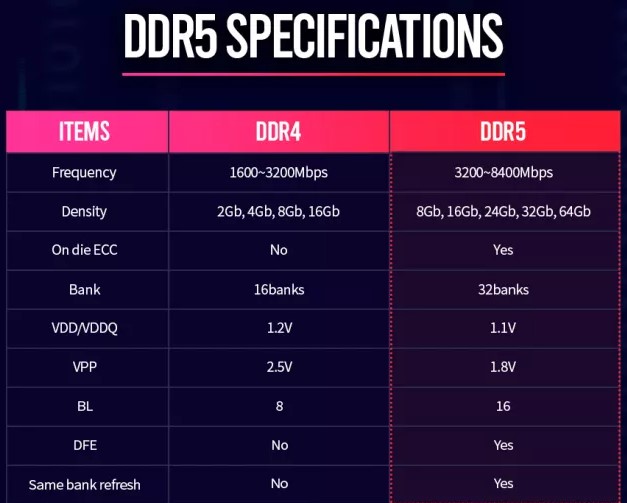
Source: TechRadar
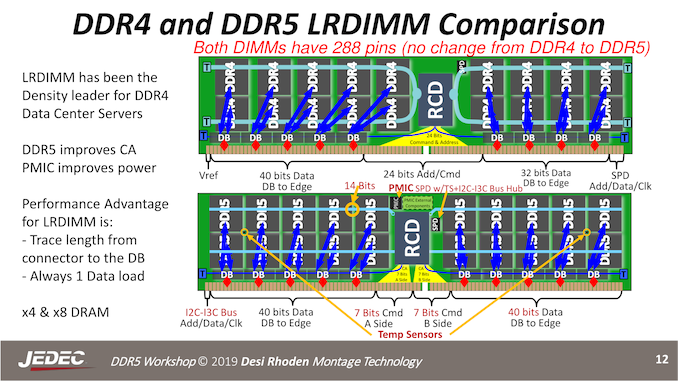
Regarding the DIMM channel design, we will still get 288 pins in the same position, so the sockets will match with older generations, but the functionality of the pins will change - so compatibility is out of the question.
There will be two 32-bit channels on each module, working independently, while the burst length for each channel is doubled from eight to 16 bytes now.
As for the bank groups, these go up to 8/4, from 4/2 that we have in DDR4.
Another important new upgrade concerns the implementation of the DFE (Decision Feedback Equalization) to enable IO speed scalability, reducing inter-symbol interference, and allowing for cleaner signaling at higher data transfer rates.
Finally, the power consumption won’t be limited to cutting 0.1 volts from the nominal rating, but there will also be additional power-saving modes implemented in DDR5. Since the new standard incorporates power management units and VRMs onto the module itself, motherboards are expected to get simpler as well.
It would be fair to point out that the above specs - especially the stacking of dies and the data density that will eventually give us 128 GB modules - will not be made immediately available on the market.
As with every generation, the manufacturing technology will have to mature in order to see the gradual improvements in products, so the first DDR5 DIMMs will be a lot better in every way compared to DDR4. Still, they won’t reach the full potential of the new standard.
Read More:
- AMD Is Reportedly Working on a New Storage Acceleration Solution
- Intel Presented the Technical Specifications of the Thunderbolt 4 Interface
Related






Get expert insights on threats, breaches, scams, and security trends — delivered every Monday.
Most Popular

Get expert insights on threats, breaches, scams, and security trends — delivered every Monday.
Most Popular