


How Trusted SaaS Integrations and AI Agents Create Identity Security Risks While Knowledge Graphs Expose Attack Paths
Published

Key Takeaways
- Balakrishnan warns that attackers can steal tokens to impersonate trusted applications without compromising employee accounts.
- An application may be trustworthy, but excessive permissions or compromised credentials can turn its integration into an attack path.
- SaaS inventories do not reveal the service accounts, OAuth grants, and third-party connections operating behind applications.
- Security telemetry cannot reliably expose malicious SaaS activity when identities, permissions, and integrations are examined separately.
- Obsidian Security says teams need continuous visibility into how applications are connected, and where risk is emerging.
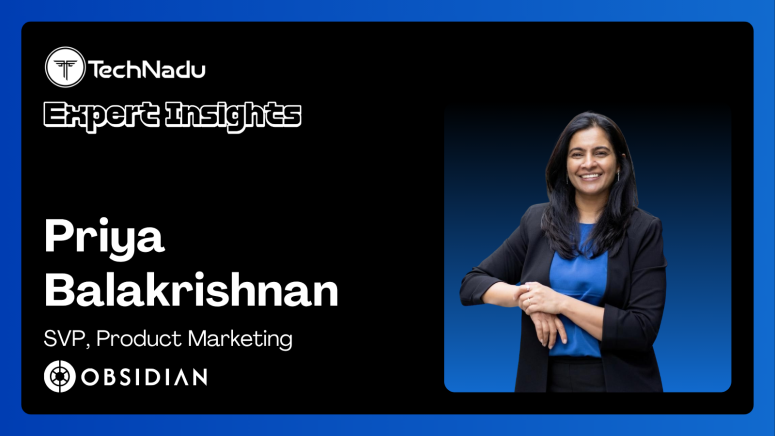
Priya Balakrishnan, SVP of Product Marketing at Obsidian Security, believes identity has become infrastructure because people are not the only entities trusted to access data.
Balakrishnan has led product and go-to-market strategy across Confluent, Rubrik, Redis, Splunk, and HP, contributing to IPO messaging, and product launches.
She explains that OAuth tokens, service accounts, and API keys now establish trust between the applications that run a business. An attacker who steals one of these may not need a password or a compromised employee account.
A single compromised integration can affect multiple downstream organizations. It can expose customer information, business intelligence, and connected systems.
Balakrishnan also argues that an inventory of SaaS applications does not reveal the full extent of this exposure. Security teams need to know how applications are connected, what permissions they hold, and whether it is still necessary.
AI agents add another layer to the problem because they can inherit extensive permissions. As their use grows, organizations should govern them as privileged identities and continually reassess their access.
Vishwa: Over the past year, attackers have repeatedly abused OAuth tokens, SaaS integrations, and trusted business apps. When do you think identity becomes infrastructure rather than just a user account?
Priya: Identity becomes infrastructure the moment it evolves from simply authenticating people to establishing trust between the systems that run the business. Today, identity isn't just about people, but it's also about the non-human identities that power integrations and automation across the enterprise.
OAuth has evolved from a user authentication protocol into the trust layer that determines which applications can access data, trigger workflows, and act on behalf of users. In many organizations, that identity layer now underpins how business systems operate, making it as foundational as the network itself.
That shift has created a new security challenge. Integration tokens often have broad, persistent access and operate quietly in the background, making them attractive targets for attackers. Rather than stealing passwords, adversaries are increasingly stealing or abusing
OAuth tokens to impersonate trusted applications and move through enterprise environments using legitimate authorization flows, making malicious activity much harder to detect.
We’ve already seen this risk emerge. Obsidian Security recently disclosed an incident involving Klue's Salesforce integration, where attackers used stolen OAuth tokens to authenticate as the trusted integration and conduct large-scale CRM data exfiltration across multiple organizations. In this event, the threat actors didn't need a password, MFA, or a compromised employee account; they only needed the token.
Rather than attacking individual enterprises one by one, adversaries are increasingly targeting SaaS vendors and the trusted integrations they provide. One compromised token can create access into hundreds of customer environments simultaneously, dramatically expanding the potential blast radius.
The impact extends well beyond the initial data theft. Information such as customer records, contacts, and sales opportunities can fuel highly targeted phishing campaigns, expose business strategy and competitive intelligence, and provide pathways into adjacent systems.
That's why identity is no longer just about authenticating users but is becoming infrastructure. Securing today's enterprise means governing not only human identities, but also the non-human identities, OAuth grants, and trusted integrations that underpin modern business operations.
Vishwa: The Salesloft–Drift and Gainsight incidents showed how one compromised SaaS integration can affect many downstream organizations. Where does trust really break down: the app, the integration, the permissions, or something else?
Priya: Trust doesn’t break down at a single point, but when organizations lose visibility and control over the growing number of touchpoints that connect their environment. As organizations of all sizes rely on more SaaS integrations, delegated permissions, and long-lived OAuth tokens, the attack surface expands beyond individual accounts into a complex network of trust relationships. An app may be trusted, but if it's granted excessive access or its credentials are compromised, that trust becomes an attack path.
The Salesloft–Drift incident and the Gainsight events are clear examples of this threat, where attackers abused compromised OAuth tokens to gain access to hundreds of customers' environments and exfiltrate sensitive data and ultimately forcing the company to revoke all active access and refresh tokens.
That's why the attack surface has expanded beyond user identities to the integration layer. Every OAuth grant, connected application, and non-human identity represents a potential access point. Organizations need visibility into these relationships, understanding which integrations exist and the totality of their access that will determine the level of trust necessary for maximum security.
As these access points multiply, traditional security models built around securing individual accounts and applications can miss the broader network of connections that attackers can exploit. A compromised integration or overprivileged token can effectively bypass established points of trust, allowing adversaries to move through legitimate pathways that organizations may not be actively monitoring or governing.
Vishwa: Organizations often inventory SaaS apps but pay less attention to service accounts, API keys, OAuth tokens, and third-party integrations. What are your views on this?
Priya: Inventorying SaaS applications is an important first step, but it no longer provides a complete picture of enterprise risk. The greater challenge is understanding the identities and trust relationships behind those applications, including service accounts, API keys, OAuth tokens, and third-party integrations that move data across the organization.
Attackers increasingly target these connections because they often have persistent access and can operate through legitimate authorization flows. At the same time, employees continue adopting collaboration tools, AI assistants, finance platforms, and other SaaS applications outside of formal IT processes, creating additional integrations and permissions that may never be centrally reviewed.
Organizations need visibility not just into which applications are in use, but also into how those applications are connected, what permissions they hold, and whether that access is still justified. Without that context, it's difficult to identify excessive access, detect risky integrations, or understand where the most significant exposure actually exists.
Vishwa: Many security teams treat SaaS security as an extension of endpoint or cloud security. Have you seen cases where teams believed they had strong visibility, but later found they were wrong?
Priya: Yes. Many organizations believe they have strong visibility because they can see the applications employees use or monitor endpoints and cloud infrastructure. What they often can't see are the trust relationships behind the scenes, like OAuth grants or AI agents acting on behalf of users.
As organizations connect more AI agents and SaaS automations into business-critical systems, those hidden relationships become a much larger part of the attack surface. Teams may know an integration exists, but not what permissions it has, what data it can access, or how it's connected to other applications.
The recent Vercel breach illustrates this growing visibility gap security teams are facing. When an organization authorizes a third-party application, it also extends trust to that application's infrastructure, developers, and connected services. As a result, teams often discover gaps in their understanding only after an incident exposes them.
That's why it is no longer sufficient to just know which applications are in your environment – you also need to understand how identities, permissions, and integrations work together, because that's where attackers are increasingly finding opportunities to exploit enterprises.
Vishwa: AI agents get permissions to access business apps on behalf of users. Are organizations giving AI agents more trust than they would give a human employee?
Priya: In many cases, yes. One of the biggest challenges facing security teams now is that AI agents are often granted far more access than they actually need. In fact, AI agents receive 10x more access than their workflows require, creating a much larger attack surface than most organizations realize.
Every unnecessary permission increases the potential impact if an agent is compromised or behaves in an unintended way. Unlike a human employee, an AI agent can interact with multiple business systems simultaneously and operate continuously, which means if an agent is compromised, the potential impact extends well beyond a single account.
As AI adoption surges, security teams must be able to govern AI agents the same way they would any other privileged identity. That means continuously monitoring what agents can access and do and regularly reviewing permissions as workflows evolve.
Vishwa: Security teams struggle to separate legitimate SaaS activity from attacker behavior because both happen through trusted apps. Do the biggest detection failures come from missing telemetry, or from having telemetry but reading it in isolation?
Priya: The main challenge is often not a lack of telemetry, but a lack of context. Security teams may have activity data from SaaS applications, but if that data is analyzed in isolation, it's difficult to understand the relationships between users, permissions, integrations, and the applications they connect to.
SaaS risk doesn't typically exist within a single application or event; it exists in the relationships between users, applications, integrations, permissions, and data across the enterprise. Attackers increasingly exploit these trusted relationships through compromised OAuth tokens, third-party integrations, and SaaS applications because their activity can look indistinguishable from legitimate business operations.
The challenge for organizations is gaining continuous visibility across their SaaS ecosystem by understanding how applications connect, what access they have, how permissions are being used, and where trust relationships may introduce risk.

As AI agents become more prevalent, these relationships become even more complex, as agents inherit permissions and take action across multiple systems, making visibility into the entire SaaS ecosystem increasingly critical. Solutions like a knowledge graph are becoming critical to address this gap.
Rather than simply collecting logs, a knowledge graph connects identities, permissions, applications, tokens, and activity into a living model of the SaaS environment. It allows security teams to understand not just what happened, but why it happened, how access was granted, and where risk can spread across connected systems.
Ultimately, the goal isn't just to collect more telemetry, but to create the context needed to distinguish legitimate activity from threats and identify real risk across the SaaS ecosystem.
Vishwa: As organizations adopt hundreds or thousands of SaaS apps, many teams focus mainly on visibility. Is visibility still the bottleneck, or has the bigger problem shifted to understanding relationships between identities, permissions, and integrations?
Priya: Visibility is not the bottleneck – it’s the foundation for effective security. The challenge facing security teams today is no longer simply knowing which applications exist in an environment, but understanding how identities, permissions, integrations, and more connect across the SaaS ecosystem and where those relationships introduce risks to the enterprise.
This becomes especially important as AI agents become more prevalent. Obsidian recently found that, across over 50 enterprise deployments governing more than 1.2 million users, agent counts grew from under 500 in late 2024 to nearly 95,000 by February 2026.
However, of those agents, 38% carry medium, high, or critical risk factors from the moment they deploy. Many have no documented owner, some were created by accounts that no longer exist, and all have active connections to production systems.
Traditional governance models were built for static systems where access was reviewed at deployment and behavior was easier to predict. Security teams need visibility more than ever now in order to ensure these systems can still deliver governance today, showing what’s connected and how access is granted, how it’s being used, and where risk is emerging.
Related


Get expert insights on threats, breaches, scams, and security trends — delivered every Monday.
Most Popular





Get expert insights on threats, breaches, scams, and security trends — delivered every Monday.
Most Popular