



Taiwan High-Speed Rail Disrupted by TETRA Network Exploit
Published on May 7, 2026

Key Takeaways
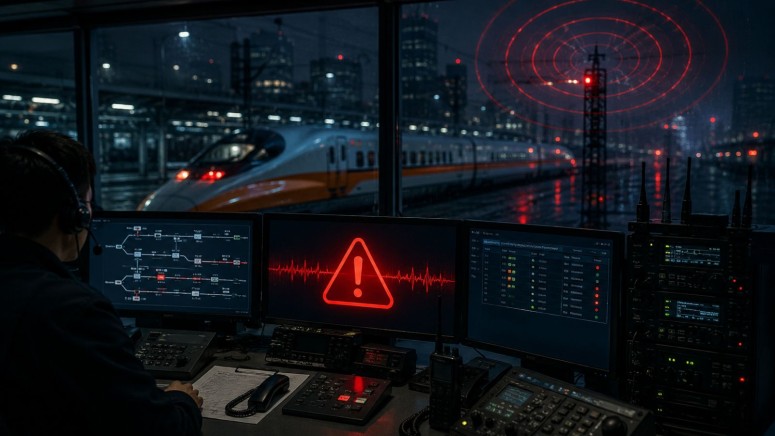
- Signal disruption: A rogue General Alarm caused a 48-minute operational halt to three high-speed trains due to cloned radio signals.
- TETRA vulnerability exploited: A 23-year-old university student allegedly compromised the terrestrial trunked radio network.
- Hardware seized: Investigators recovered multiple radio devices and a software-defined radio filter during the arrest.
On April 5, the Taiwan High Speed Rail (THSR) network experienced a significant operational disruption. Authorities confirmed that a rogue General Alarm signal forced a 48-minute halt, directly impacting three high-speed trains. The unauthorized signal was transmitted via a terrestrial trunked radio (TETRA) handset located at Taichung Station.
In strict accordance with established safety protocols, rail staff initiated emergency response procedures, instructing the affected trains to execute manual stops.
TETRA Network Vulnerability
Following an extensive investigation by telecommunications experts and law enforcement, Taiwan police identified a 23-year-old university student going by the surname Lin as the primary suspect.


Described as a radio enthusiast, Lin allegedly exploited a vulnerability within the TETRA communication network. Investigators assess that the suspect remotely triggered the General Alarm signal by deploying unspecified electromagnetic equipment to clone and transmit the authorized rail frequencies.
Law enforcement officials subsequently executed search warrants at the suspect's residence and workplace. During these targeted raids, investigators seized technical hardware, including seven radio devices, a laptop, two smartphones, and what appeared to be a software-defined radio (SDR) filter.
Student Arrested
Police officially arrested Lin on April 28 in connection with the cyber-physical intrusion after the prosecutor determined that he was suspected of exploiting a computer system vulnerability to intrude into the core network and using electromagnetic interference equipment.
Following formal questioning on April 29, authorities released the suspect on a bail set at NT$100,000 (approximately US$3,150). Rail operators and telecommunications investigators continue to analyze the network infrastructure to prevent future unauthorized transmissions.
In November 2025, the FCC warned that hackers exploit unsecure Barix radio transmission equipment to broadcast inappropriate materials.
Related






Get expert insights on threats, breaches, scams, and security trends — delivered every Monday.
Most Popular

Get expert insights on threats, breaches, scams, and security trends — delivered every Monday.
Most Popular