



Booking.com Data Breach Exposes Sensitive Customer Information
Published on April 14, 2026

Key Takeaways
- Unauthorized access confirmed: A recent Booking.com data breach exposed sensitive reservation details and communication records to malicious third parties.
- Customer data accessed: The compromised information includes full names, email addresses, phone numbers, and accommodation messages.
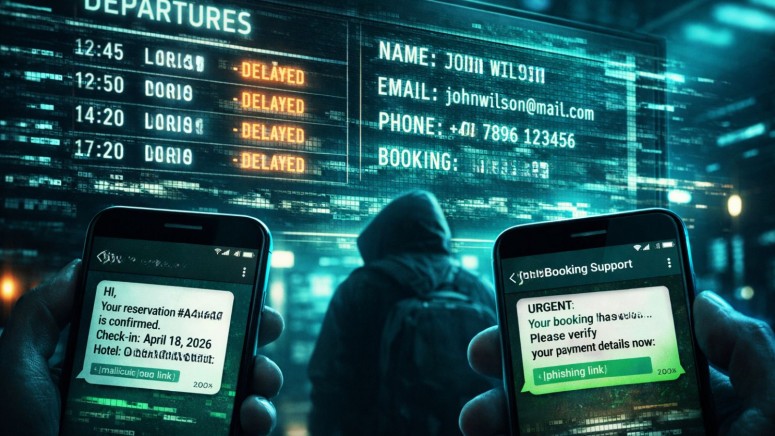
- Elevated phishing risk: Threat actors are actively leveraging stolen reservation data to launch targeted WhatsApp phishing campaigns against affected travelers.
A Booking.com cybersecurity incident affected its user base, the global travel reservation platform confirmed on Monday. Following unauthorized system access, malicious actors successfully extracted sensitive reservation details, though financial data remains secure.
Booking.com Cybersecurity Incident
Booking representatives acknowledged that unauthorized third parties penetrated their network infrastructure, resulting in substantial customer data being accessed by attackers. The exfiltrated datasets contain:
- full names,
- email addresses,
- phone numbers,
- specific booking itineraries,
- direct communications between guests and accommodation providers.
Booking.com successfully contained the breach, stating that attackers did not acquire payment infrastructure data or physical home addresses, according to The Guardian. People reported online that the company started sending breach notification messages this past week, as per TechCrunch.
Reports indicate that cybercriminals are already weaponizing the stolen data. Reports say that attackers have launched targeted social engineering campaigns, using WhatsApp to send phishing messages referencing exact booking details to establish credibility and deceive victims.
Company Response
In response to the intrusion, the organization reset security PINs for all impacted reservations and issued formal security notifications to affected individuals to secure the platform, The Guardian reported.
This Booking.com data breach underscores the critical need for robust access controls across massive third-party integration networks. Security professionals urge users to scrutinize all unsolicited communications regarding their travel itineraries and implement continuous endpoint monitoring to prevent secondary exploitation.
In December 2025, GrayBravo expanded CastleLoader operations with Booking and DAT Freight impersonations, while in June, fake Booking sites disseminated AsyncRAT. In 2024, Booking was impacted by phishing via compromised partners and generative AI phishing campaigns.
Related






Get expert insights on threats, breaches, scams, and security trends — delivered every Monday.
Most Popular

Get expert insights on threats, breaches, scams, and security trends — delivered every Monday.
Most Popular