


AI Tools Are Connecting To SaaS Faster Than Teams Can Track, Creating Data Flows No One Fully Sees
Published on April 7, 2026

Key Takeaways
- Persistent usage, deeper permissions, and repeated API activity signal that AI has become embedded in operations.
- Context matters more than the event itself, including who authorized access.
- Third-party and fourth-party data flows extend exposure beyond the original integration.
- Spitler notes that broad permission scopes and unclear data handling by AI vendors raise immediate concerns.
- OAuth grants and API key creation events are often the first signals, but they appear low-noise and easy to miss.
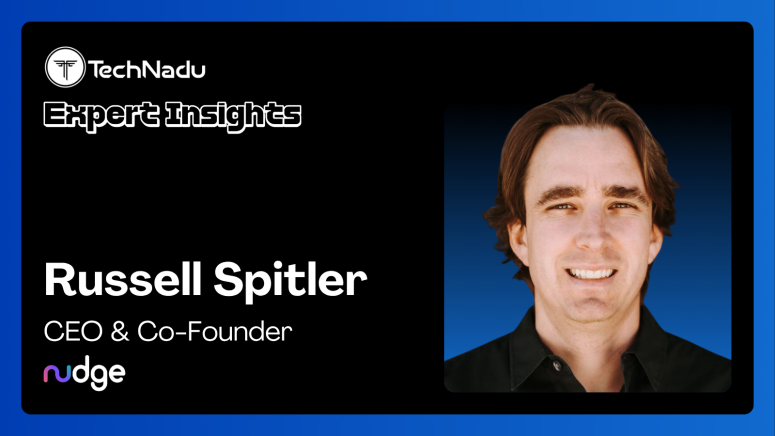
Russell Spitler, Co-Founder & CEO at Nudge Security, breaks down how integrations begin as quick, employee-led actions and evolve into deeply embedded dependencies. Spitler’s background includes leading product strategy at AT&T Cybersecurity and building cloud-native security and threat intelligence platforms at AlienVault.
He explains that AI tools connecting to SaaS platforms are creating new data flows, new identities, and new risks that most teams never see forming. An employee signs up for an AI tool, connects it to a collaboration platform, and starts using it immediately.
No review, no centralized visibility, and no clear understanding of what data is being accessed. Over time, more users adopt the same tool, permissions expand, and the integration becomes part of the workflow.
This leaves security teams piecing together signals across OAuth grants, API activity, and logs. Spitler explains where visibility breaks, and why the integration layer remains unmonitored.
This conversation focuses on what practitioners should actually watch for, how risk accumulates, and why traditional controls fail to keep pace with AI-driven integrations.
Vishwa: When an employee connects an AI tool to a SaaS application using OAuth or API keys, what signals typically appear first in logs or security dashboards?
Russell: The first signals are usually pretty quiet—and that's part of what makes them easy to miss. You'll often see a new OAuth grant appear in an application's authorized apps list, sometimes with an unfamiliar vendor name or a broad permission scope like "read and write all files." API key generation events may show up in audit logs if the application surfaces them, though many don't.
What's telling isn't always the event itself, it's the context. An OAuth grant issued by an individual contributor to a third-party AI tool, with access to a core collaboration or document system, is a different signal than one issued during an IT-led rollout.
Teams paying attention to who authorized the access, what was granted, and when it happened will triage much faster than those just watching for connection events.
Vishwa: In SaaS environments with hundreds of applications, how do security teams usually discover that an AI tool has been granted access to company data?
Russell: Honestly? Often by accident—or not at all. In environments with sprawling SaaS estates, most AI tool connections fly under the radar until something goes wrong or a periodic access review surfaces them.
The most common discovery paths are OAuth grant audits within individual SaaS platforms (if someone remembers to run them), user-reported incidents, and the occasional vendor notification. Continuous, automated visibility across the full SaaS environment—surfacing new integrations as they're created rather than weeks later during a review cycle—is far more effective but far less common.
That gap between connection and discovery is where most of the risk actually lives.
Vishwa: When employees begin using AI tools alongside SaaS platforms such as collaboration or document systems, what types of data handling patterns tend to concern security teams?
Russell: A few patterns consistently raise flags.
- The first is broad permission scope—when an AI tool requests access to an entire drive, inbox, or repository rather than a specific folder or dataset.
- The second is data egress to an external service without clear visibility into how that data is processed, stored, or retained by the vendor.
- Third-party and fourth-party data flows are another area of concern.
An employee might connect an AI writing tool to their Google Drive and that AI tool may itself be integrated with other services the organization has never evaluated. The chain of data exposure can extend well beyond the original connection.
Security teams also watch for patterns where sensitive data types like contracts, financial records, or source code are implicated in these flows, particularly when the AI vendor's security posture hasn't been reviewed
Vishwa: From the SaaS security perspective, what sequence of events usually expands the attack surface when new applications or integrations are introduced by employees?
Russell: It usually starts with adoption outside of IT. An employee finds a useful AI tool, signs up with their corporate email, and connects it to an existing SaaS platform, all in a few minutes. At that point, there's a new vendor relationship, a new data flow, and a new identity in the environment, none of which have been reviewed or approved.
From there it compounds:
- Colleagues get invited,
- The integration deepens as more data gets pulled in, and
- The tool embeds itself into team workflows in ways that make it hard to remove later.
What started as one person's productivity experiment becomes an organizational dependency. The security review, if it ever happens, is playing catch-up the whole time.
Vishwa: Many organizations track application access but struggle to understand how tools interact with each other. Where do security teams most often lose visibility when AI tools connect to SaaS platforms?
Russell: The integration layer is the biggest blind spot, specifically what happens after the initial OAuth grant or API connection is established. Most security tooling logs the connection event reasonably well. Far fewer give teams ongoing visibility into what data is being accessed, how frequently, and whether the scope of access has quietly expanded.
There's also a coverage problem. Security teams tend to have good visibility into their tier-one apps—Salesforce, GitHub, Microsoft 365—and much less into the dozens of other apps employees use every day. AI tools often connect into that less-monitored layer.
That's precisely where visibility breaks down, and where the more interesting risk tends to accumulate.
Vishwa: If a security team wants to trace how data moves between SaaS apps and AI tools, what kinds of activity or indicators help them follow that path?
Russell: OAuth authorization records are the starting point—they show which AI tools have been granted access to which SaaS platforms, and with what permissions. API activity logs, where available, can tell you whether that access is being actively used and at what volume.
A complete picture requires piecing together a few things:
- identity-level activity (which users are tied to which integrations),
- data classification signals (whether sensitive data types are in scope), and
- vendor security information (how the AI tool handles and retains what it receives).
No single source tells the full story. Teams that consolidate these signals into a unified view rather than checking each SaaS platform separately tend to catch things much earlier.
Vishwa: Looking across SaaS environments today, what operational signals suggest that AI usage is becoming embedded into everyday employee workflows?
Russell: The clearest signal is persistence. Early AI adoption tends to be experimental:
- one-off usage,
- shallow integrations,
- limited data access.

When the same tools start appearing consistently across multiple users and teams, with deeper permission scopes and regular API activity, the tool has moved from novelty to infrastructure.
Other tells:
- AI tools showing up in onboarding flows during an employee's first week,
- OAuth grants to AI vendors outpacing grants to traditional SaaS tools,
- Employees building workflows that depend on AI-to-SaaS integrations rather than using apps independently.
- At that point, AI isn't being evaluated anymore; it's just how work gets done.
That shift isn't a problem in itself, but the security and governance posture around those tools needs to be keeping pace with it.
Related



Get expert insights on threats, breaches, scams, and security trends — delivered every Monday.
Most Popular




Get expert insights on threats, breaches, scams, and security trends — delivered every Monday.
Most Popular