



Mullvad Browser Alpha Update Adopts Rapid Release Model
Published on March 28, 2026

Key Takeaways
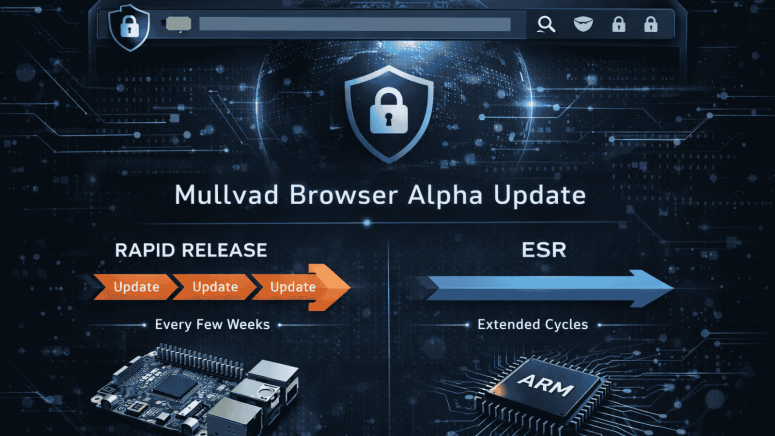
- Mullvad Browser Alpha Update: Moves to Firefox Rapid Release, enabling faster feature access but increasing potential security and stability risks
- Release Model Changes: Stable version shifts to one yearly update, reducing workload from previous dual annual releases cycle
- Linux ARM Availability: Alpha version now supports Linux ARM devices, expanding compatibility and encouraging broader user testing participation
Mullvad Browser Alpha has introduced notable changes in its latest 16.0a1 release, including a shift in its update model and expanded platform support. The update moves the Alpha version to a new release cycle while also making it available on Linux ARM systems.
Shift to Firefox Rapid Release Channel
With this update, Mullvad Browser Alpha is now based on Firefox Rapid Release instead of the Extended Support Release (ESR) channel. This marks a significant change in how updates and features are delivered.
Previously, aligning with a new ESR version required extensive effort each year, as developers had to integrate nearly a year’s worth of upstream changes at once. The new approach spreads that workload throughout the year, reducing the pressure associated with large annual updates.
The change is part of ongoing experimentation by the Tor Project, which is exploring more flexible release strategies. While the Alpha channel adopts Rapid Release, the Stable version of Mullvad Browser continues to rely on the ESR model.
What This Means for Users
For users of the Stable version, the update cycle is expected to change. Instead of two feature releases annually, previously scheduled around mid-year and late Q3, the browser is now expected to deliver one major feature update per year.
Alpha users, however, will experience more immediate changes. Features developed upstream by Mozilla will now be available sooner, rather than being delayed until the next ESR-based release.
At the same time, this faster release cycle may introduce trade-offs. Because updates arrive more frequently, there is a higher chance of encountering bugs that could affect security or privacy. The developers note that Alpha versions are meant for testing, and users who require a more stable or secure browsing experience are advised to stick with the Stable channel.
Another change is a less predictable release schedule. The interaction between upstream updates, internal build systems, and custom patches can sometimes create complex issues that may take longer than the typical four-week Rapid Release cycle to resolve.
Linux ARM Support Added
In addition to the release model changes, Mullvad Browser Alpha is now available on Linux ARM platforms. This expands compatibility to a broader range of devices using ARM-based processors.
Users can install the Alpha version either by downloading it manually from the official website or through RPM and DEB repositories.
Call for Testers
The developers are encouraging users to try the Alpha version and contribute to testing. However, they emphasize that individuals who require strong anonymity or are in high-risk situations should continue using the Stable release instead.
The update reflects an ongoing effort to balance faster feature delivery with the challenges of maintaining privacy and security in a rapidly evolving browser environment.
Related





Get expert insights on threats, breaches, scams, and security trends — delivered every Monday.
Most Popular




Get expert insights on threats, breaches, scams, and security trends — delivered every Monday.
Most Popular