


How API Attacks Exploit Authentication, Authorization Gaps, and Trusted Application Workflows
Published on March 18, 2026

Key Takeaways
- Early-stage API attacks are often subtle and blend into normal operations.
- Attackers begin by probing endpoints, testing parameters, or validating credentials.
- Bots can enumerate endpoints and chain small gaps into larger exploits faster than humans could.
- Barr states that API abuse is different because attackers use trusted access instead of malware.
- Cequence Security notes that privilege escalation often happens by chaining multiple small weaknesses.
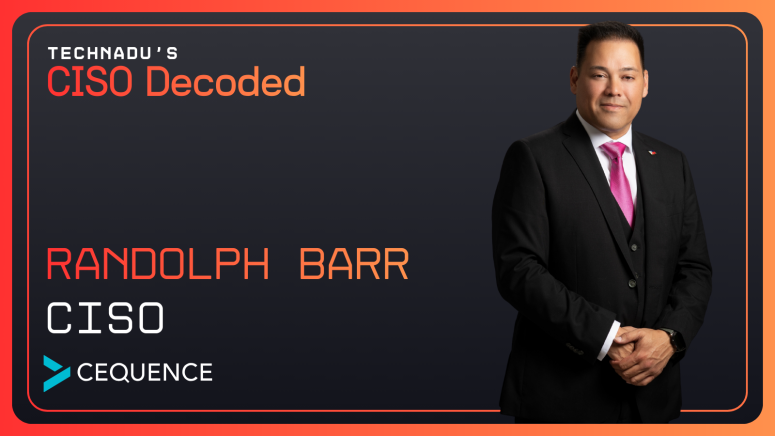
Randolph Barr, Chief Information Security Officer at Cequence Security, explains how API abuse exploits authentication flows, sessions, and tokens across interconnected services.
Applications rely on APIs to connect internal services, SaaS platforms, partner systems, and AI agents executing automated workflows. These APIs carry authentication tokens, session identifiers, and permission scopes that authorize transactions across systems.
Barr says API attacks start by probing endpoints, testing parameters, and observing authentication responses. These probes appear legitimate because they follow the same request patterns used by applications.
Once attackers map the API structure, automation accelerates the process. Bots enumerate endpoints, replay authentication tokens, and test authorization scopes.
Stolen credentials, reused sessions, or exposed service tokens allow requests to pass authentication checks. Barr says this is why API abuse bypasses traditional security monitoring. Many controls confirm authentication but do not analyze how sessions, tokens, and transactions behave across systems, drawing attention to continuous validation.
Vishwa: What does an API attack look like in its early stages within the kill chain?
Randolph: Early-stage API attacks are often subtle and blend into normal operations. Attackers begin by probing endpoints, testing parameters, or validating credentials. The traffic looks legitimate, which makes it easy to miss.
In large-scale environments, especially during high-intensity periods or events, low-volume abuse can go unnoticed because access levels are temporarily elevated, and teams are focused on availability rather than detecting subtle misuse.
AI-driven monitoring and behavioral analysis of API traffic can catch these anomalies early, flag unusual patterns, and identify which are malicious before they escalate.
Vishwa: What role does automation play in scaling API abuse?
Randolph: Automation amplifies every attack. Bots can enumerate endpoints, attempt credential stuffing, and chain small gaps into larger exploits faster than humans could. When AI is used in attacks, they can be even harder to spot as they can dynamically change their approach as needed, often mimicking human behavior.
When you combine the ability to detect AI-driven traffic with behavioral intent analysis, you get the ability to detect abnormal usage, replayed tokens, or abuse of session flows that would otherwise slip through. Attackers are increasingly using automated misuse instead of malware to achieve persistent footholds in environments that seem legitimate.
Vishwa: How do attackers move from API discovery to exploitation and privilege escalation?
Randolph: Once attackers understand the landscape, they look for gaps in authentication, parameter validation, or permission scopes Discovery tells them what exists. Exploitation starts when they identify where sensitive information isn’t properly encrypted, or identity tokens are accepted without validation. It is rarely a single catastrophic flaw. More often, it is the chaining of multiple small weaknesses that, on their own, appear to be low risk.
Privilege escalation relies on context, such as exposed service tokens, poorly scoped accounts, or undocumented APIs that were never meant to be externally reachable. Attackers test how far an identity can actually go versus how far it was intended to go. The goal is to blend into normal operations, stay unnoticed, and expand influence over time, often for weeks or months before detection.
Vishwa: From your perspective, what puzzles teams about API security, regardless of deploying standard controls?
Randolph: What consistently surprises teams is how quickly API risk shifts from a visibility problem to a behavioral problem. Most organizations deploy the expected controls such as authentication, rate limiting, and perimeter filtering. Those are necessary, but they create a sense of completeness that does not always reflect reality.
APIs are not static assets. They change constantly as new features are shipped, integrations are added, and AI-driven agents begin interacting across multiple services. APIs are dynamic, interconnected, and often evolving faster than teams can document or secure them.
Business logic often changes faster than documentation. Permissions expand temporarily during launches or events and then are not always rolled back cleanly. When there are large events, access levels are often elevated for a short period, apps and APIs are used to their fullest, and security teams are focused on keeping systems available rather than protected. That drift creates exposure.
What puzzles teams is that even when controls are technically present, abuse still happens. The reason is that attackers are not always breaking controls. They are misusing legitimate workflows. Attackers are usually not using malware or traditional intrusion techniques.
Instead, they are abusing trusted access, sessions, and tokens. If you are only validating whether a request is authenticated, you are missing whether that request makes sense in context. That gap between access and intent is where most API abuse lives.
Vishwa: Could you explain the difference between API abuse and any other form of infrastructure compromise?
Randolph: Traditional infrastructure compromise typically involves exploiting a vulnerability, gaining shell access, deploying malware, or moving laterally. There are clearer technical indicators and a defined intrusion pattern.
API abuse is different because when attackers gain access, they usually don't use malware or other such behaviors to wreak damage; instead, they use trusted access. They log in with stolen credentials, replay tokens, automate transactions, or manipulate business logic. This involves taking over an account, abusing sessions and tokens, scraping data, perpetrating fraud, and staying in the environment for a long time.
These things usually become part of everyday business and can go on for weeks or months without triggering standard security procedures that are supposed to stop intrusions, not misuse.
The real shift is that attackers are looking to compromise trust, not just infrastructure. Detecting that requires understanding how sessions, transactions, and APIs are behaving in context. If businesses can observe how apps and APIs are being used in real time and know when things aren't working as expected, they can prevent a lot of these dangers.
Vishwa: What role does continuous validation play in API security?
Randolph: Continuous validation ensures access controls, data flows, and API behavior remain aligned with policy over time. Authentication and authorization, for example, can’t be a “one and done” activity. Least-privilege access, short-lived access tokens, and other techniques are crucial.
Attackers excel at exploiting changes that teams may not immediately see. Real-time monitoring and anomaly detection catch these deviations before they become larger incidents. This is especially critical when multiple systems and AI-driven integrations interact simultaneously, increasing the complexity of what “normal” looks like.
Vishwa: How can organizations improve authentication and authorization breakdowns in API incidents?
Randolph: It starts with fine-grained access control and enforcing least privilege. Continuous validation of tokens, scopes, and sessions is essential. Many breaches I see are not due to a single flaw but gaps in ongoing enforcement.
AI-driven monitoring can detect abnormal activity, such as replayed credentials or automated misuse, before it escalates. Organizations that pair strong access governance with continuous observation are far more resilient.
Vishwa: Where do compliance frameworks have room to improve in addressing API risk?
Randolph: AI agents are fundamentally changing traffic patterns. Instead of human-driven requests, you now have agents orchestrating multiple APIs across internal systems, SaaS platforms, and partner environments in real time. That increases speed, complexity, and blast radius.
The challenge is not just exposure, but governance. Organizations are racing to connect internal and external systems to AI agents, often faster than security guardrails mature. Without strong authentication, authorization, and runtime monitoring, you risk creating scalable abuse paths or insecure one-off prototypes.
This is why controlling agentic AI access to applications and data is so important. Solutions like the Cequence AI Gateway allow organizations to transform existing APIs and applications into agent-compatible endpoints while embedding authentication, authorization, monitoring, and guardrails directly into that connection layer.
The goal is not to slow down AI adoption, but to prevent productivity gains from being undermined by unmanaged exposure. Security must be built into the control plane of how agents access systems, not layered on afterward.
Vishwa: As a CISO, how do you bring API risk from an operational issue into a board-level discussion?
Randolph: API risk becomes a board-level issue when you frame it in terms of business exposure rather than technical controls. APIs are not just integration points. They are direct conduits to revenue, customer data, partner ecosystems, and increasingly AI-driven business logic. When an API is abused or compromised, the impact is not confined to infrastructure. It affects digital services, customer trust, regulatory posture, and operational resilience.

Instead of reporting vulnerability counts, I focus on exposure trends, growth in machine-to-machine traffic, and how quickly we can detect and contain abuse. I translate API risk into revenue risk, data risk, and automation risk, which makes the discussion relevant to enterprise strategy.
When organizations move fast on AI adoption, the stakes get higher, and the discussion naturally shifts to a more strategic level. The rush to connect internal, external, and SaaS applications to AI agents is outpacing necessary security guardrails, which expands API exposure at scale. Boards need confidence that innovation is not creating unmanaged access paths.
Enterprise-grade controls, such as integrated authentication, authorization, monitoring, and guardrails, including capabilities delivered through solutions like Cequence AI Gateway, allow organizations to safely enable agentic AI while maintaining governance. When you look at it that way, API security is not just another technical project. It is a practical way to protect digital growth and maintain a competitive edge.
Vishwa: How do organizations identify and manage shadow or undocumented APIs that expand exposure over time?
Randolph: Discovery begins with comprehensive logging and traffic analysis. AI-enabled tools can highlight endpoints that are externally accessible but undocumented. Once identified, these APIs should be assessed for risk, integrated into governance, and monitored continuously.
Shadow APIs are attractive targets because they often exist outside standard security oversight. Tools that integrate behavioral analysis into the gateway, such as AI-driven API platforms, can provide visibility and enforce controls across these hidden endpoints before they become exploitable.
Related






Get expert insights on threats, breaches, scams, and security trends — delivered every Monday.
Most Popular


Get expert insights on threats, breaches, scams, and security trends — delivered every Monday.
Most Popular