



LeakNet Ransomware Tactics: New ClickFix Lures Delivered via Compromised Legitimate Websites & Deno Loader
Published

Key Takeaways
- New Access Tactics: The LeakNet ransomware group now utilizes ClickFix lures hosted on compromised legitimate websites.
- Stealthy Execution Method: Attackers deploy a novel Deno-based loader that executes base64-encoded payloads entirely in memory.
- Predictable Attack Chain: These cybersecurity threats consistently follow a post-exploitation sequence of DLL sideloading, lateral movement, and staging.
LeakNet ransomware employs ClickFix lures on compromised legitimate websites, a newly confirmed initial access method that is part of its fundamental shift in attack methodologies, which compresses the timeframe from initial access to data encryption. The threat actor also leverages a staged command-and-control (C2) loader built on Deno.
ReliaQuest security researchers have identified a strategic departure from relying on initial access brokers (IABs), which was likely the group’s previous tactic. The group now generates direct network footholds using sophisticated social engineering techniques and memory-centric execution runtimes.
ClickFix Lures for Initial Access
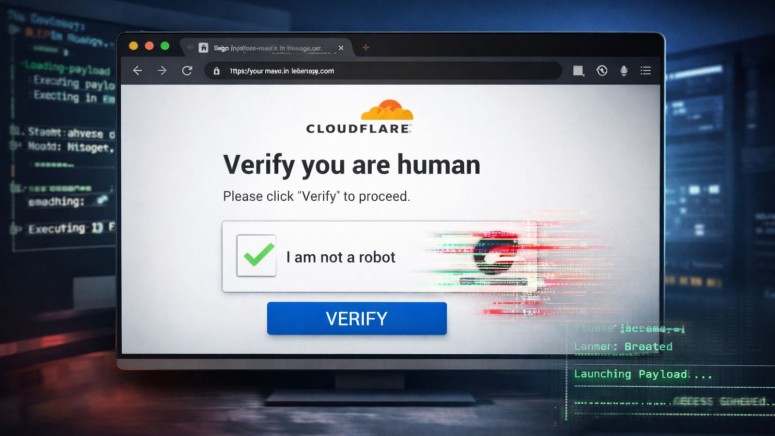
The compromised legitimate websites display ClickFix lures – deceptive error prompts that trick visitors into manually executing malicious system commands. Attackers typically utilize a fake Cloudflare Turnstile verification page, a Microsoft Installer (MSI), and a VBS file.
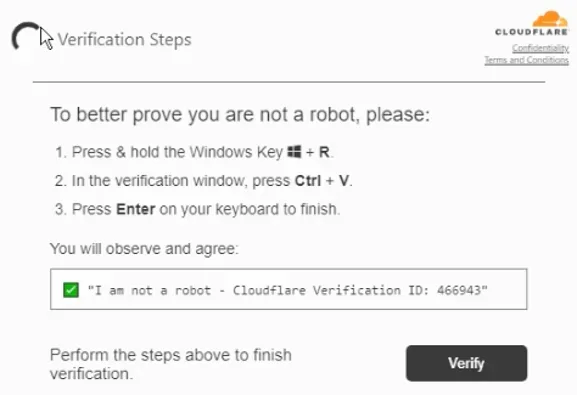
Following successful user interaction, the attack sequence initiates a novel Deno-based loader (a legitimate JavaScript and TypeScript runtime environment). Attackers exploit this utility through a "bring your own runtime" (BYOR) execution model, use a fileless execution mechanism that fingerprints the victim machine, and establish C2 communication.
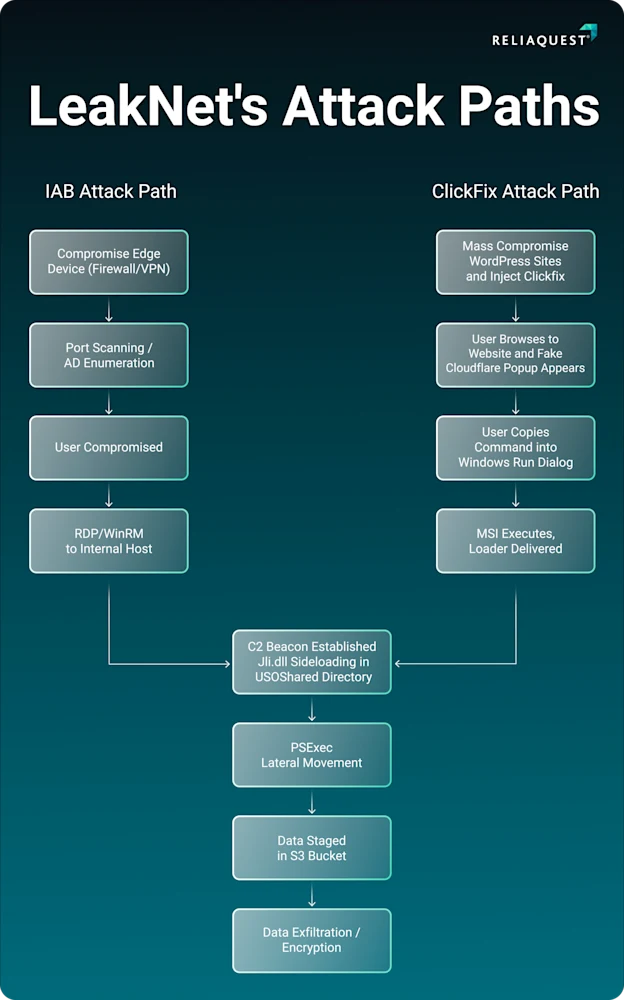
Despite the evolving entry vectors, these escalating cybersecurity threats maintain a highly predictable post-exploitation playbook. Upon establishing persistence, LeakNet ransomware operators consistently execute Dynamic Link Library (DLL) sideloading and use PsExec-based lateral network movement and S3 bucket payload staging.
Preventing LeakNet Initial Access and Lateral Movement
By leveraging established web infrastructure, LeakNet bypasses standard network-layer reputation filters. Using Deno turns allowlists and “unknown binary” heuristics less effective, and fileless execution effectively circumvents traditional signature-based endpoint protections.
To disrupt this attack chain, security administrators must:
- Block newly registered domains,
- Restrict Win-R access,
- Limit PsExec to authorized administrators.
In January, an ErrTraffic ClickFix tool industrialized social engineering malware. However, a free ‘ClickFix Hunter’ tool was made available last month after the ErrTraffic ClickFix service was observed to be industrializing social engineering malware.
Related





Get expert insights on threats, breaches, scams, and security trends — delivered every Monday.
Most Popular
Get expert insights on threats, breaches, scams, and security trends — delivered every Monday.
Most Popular