



Commonwealth Bank in Australia Deploys Custom AI Threat Hunter
Published


Key Takeaways
- Massive Signal Increase: Commonwealth Bank AI defense systems now process 400 billion weekly threat signals, up from 80 million just six years ago.
- Rapid Threat Assessment: Custom AI threat-hunting tools reduced the time required to analyze emerging cybersecurity risks from 2 days to just 30 minutes.
- Strategic Internal Development: The bank built proprietary agents alongside data scientists because external vendors could not keep pace with the evolving AI-powered attacks.
Australia's Commonwealth Bank has engineered its own agentic AI tools to combat escalating digital threats. Facing an unprecedented surge in malicious activity, the institution determined that third-party vendors could no longer keep pace with the velocity of modern cyberattacks, General Manager of Cyber Defence Operations Andrew Pade said at Gartner’s Security & Risk Management Summit in Sydney on Tuesday.
Scaling AI Threat Hunting Capabilities
The Commonwealth Bank in Australia recorded 80 million threat signals per week six years ago. Today, malicious network activity has grown to exceed 400 billion events, and traditional defense mechanisms cannot process this sheer volume of data, according to Pade.
This Commonwealth Bank AI defense initiative drastically accelerates incident response times. Previously, analysts required two full days to evaluate emerging threats and formulate risk hypotheses.
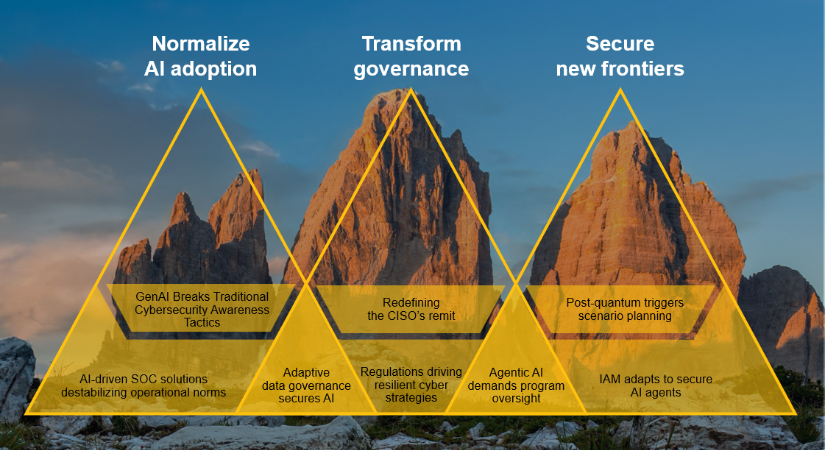
The new AI agent completes this complex analysis and generates actionable reports in 30 minutes. A secondary agent systematically scans for indicators of compromise, elevating security personnel from monotonous data sorting to advanced problem-solving, Pade said.
Future Cybersecurity Innovation
This internal cybersecurity innovation represents a critical shift in financial sector security protocols. Pade stated that adding deterministic points in a non-deterministic AI was “a real mind shift” for red teams.
At the summit, Gartner announced that it predicts AI applications will drive 50% of cybersecurity incident response efforts by 2028, and that information security spending in Australia will reach over $7.5 billion this year. Another prediction asserted that at least 80% of governments will deploy AI agents to automate routine decision-making by 2028.
Meanwhile, malicious actors continue to leverage AI to scale attacks. Earlier this month, hackers deployed CyberStrikeAI in over 600 FortiGate attacks targeting 55 countries. Alex Quilici, YouMail CEO, spoke to TechNadu about how robocalls and scam campaigns are evolving faster than traditional defenses can keep up.
Related





Get expert insights on threats, breaches, scams, and security trends — delivered every Monday.
Most Popular
Get expert insights on threats, breaches, scams, and security trends — delivered every Monday.
Most Popular