



Cloudflare Blocks Pirate Sites for UK Users, Marking a Shift in Internet Governance
Published on July 16, 2025

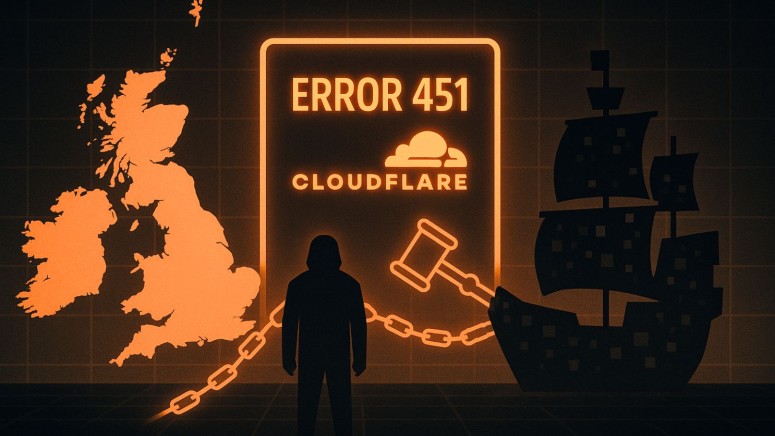
- A Blocking First: Cloudflare is the first anti-piracy internet intermediary beyond ISPs to block pirate sites.
- Legal Reasons: A legal order required Cloudflare to effectively cut off access at a network level in the U.K.
- Global Impact: This development marked a significant step in global internet governance.
Cloudflare, a major player in internet infrastructure, has begun blocking access to pirate sites for users in the U.K. following a legal mandate, with the company's Error 451 message signaling the site's inaccessibility due to "legal reasons."
A Legal Precedent in Piracy Control
Historically, U.K. internet service providers (ISPs), such as BT, Virgin Media, and TalkTalk, have enforced anti-piracy measures under High Court orders. The addition of Cloudflare to this ecosystem stems from recent legal directives initiated by the Motion Picture Association.
Approximately 200 piracy-related domains were targeted in this latest wave, prompting Cloudflare to comply by geoblocking these domains specifically for U.K. users.
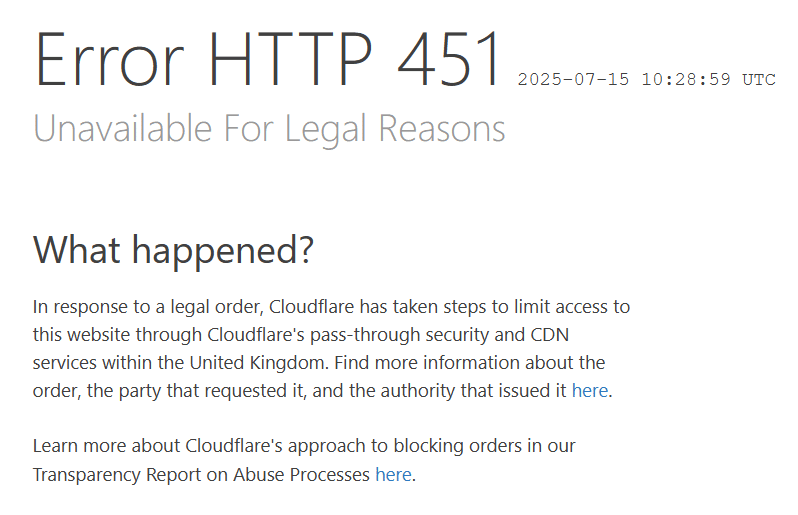
Cloudflare, which has historically taken a cautious approach to content regulation, generally maintains a neutral role in enforcement. In this case, however, the company confirmed that its action was in response to a valid legal order.
This decision is a marked departure from its typical policy of only blocking content under strict conditions of proportionality and transparency.
The Mechanics of Blocking
Pirate websites typically rely on services such as Cloudflare’s content delivery network (CDN) to improve performance and enhance security, even though they do not host the content directly.
By geoblocking these sites within the U.K., Cloudflare has effectively cut off access at a network level, even rendering common circumvention tactics like VPN usage less effective when geo-located servers within the U.K. are utilized.
The Error 451 notice provided to users sheds some light on the circumstances of the block. However, transparency remains an issue as the legal order details, including who initiated or authorized the block, remain inadequately accessible despite Cloudflare's stated commitment to improving visibility through platforms like the Lumen Database.
Implications for Internet Governance
Cloudflare's entrance into the realm of direct site blocking suggests a shift in how piracy is policed online. The reliance on central infrastructure providers, rather than ISPs alone, indicates an evolution in enforcement mechanisms.
In December 2024, Sky raised the bar on ISP blocking against pirate IPTV services with dynamic blockades. Meanwhile, in January, EFF supported Cox in court, defending Internet users accused of piracy by “copyright trolls.”
In other news, the VPN Trust Initiative strongly opposed the anti-piracy move in France, where rights holders proposed blocking measures at VPN level.
Related






Get expert insights on threats, breaches, scams, and security trends — delivered every Monday.
Most Popular


Get expert insights on threats, breaches, scams, and security trends — delivered every Monday.
Most Popular