



Canada’s TD Bank Deploys WorkiQ Surveillance Software Amid Privacy Gaps
Published

Key Takeaways
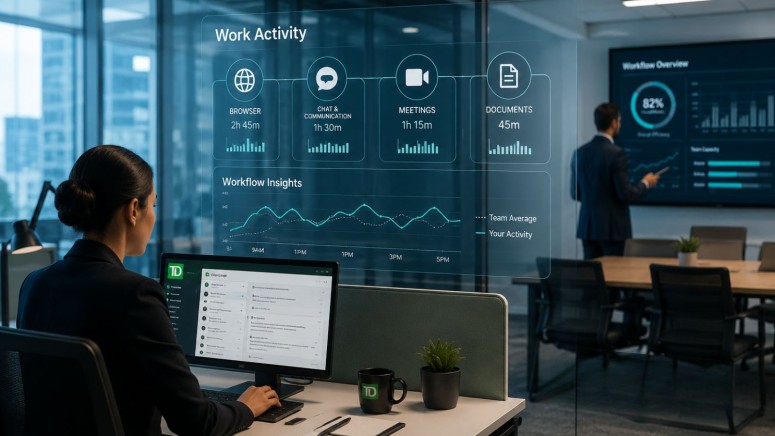
- Software Deployed: TD Bank told some staff that it will use WorkiQ software to track time spent on browsers and internal communication applications.
- Weak Protections: Canadian employees have few legal safeguards against workplace monitoring, with privacy laws weaker than the EU's GDPR.
- Bill Gap: Canada's privacy bill before the House of Commons does not address the electronic monitoring of employees.
TD Bank, Canada's second-largest company by market cap, has told some employees it will deploy WorkiQ software to track work activity, reigniting debate over consent and privacy in workplace surveillance. Several TD employees posted anonymously on social media, expressing concerns about layoffs, micromanaging, AI replacement, and pressure to perform.
TD Bank Defends WorkiQ Deployment
TD said the rollout was "standard practice across the industry," adding that "the tool allows managers to more accurately manage workflows, team capacity and performance," according to Reuters. The bank declined further comment.
According to a recorded team call and a document TD shared with staff, the tool monitors time spent on browsers and internal chat and meeting applications.
Six Canadian legal experts said the country's privacy laws are weaker than those in the European Union, where privacy is a fundamental right, and companies must justify monitoring tools. Lawyers noted that intent must be defined: if a company says itmonitors only for productivity, the data cannot be repurposed for performance reviews.
"The employer could say outright that they're using it for performance evaluations, and as long as they're upfront about it, there's nothing the employees can do about it," said Brent Arnold, a partner at Toronto-based INQ Law.
Privacy Bill Omits Surveillance
Canada is updating its privacy laws in a bill before the House of Commons that draws on the EU's General Data Protection Regulation (GDPR). University of Ottawa law professor Michael Geist said the bill does not cover workplace surveillance, and it includes no notice or consent requirements for tracking software or keylogging.
Valerio De Stefano of York University's Osgoode Hall Law School said monitoring "has not been on the government's radar," leaving "basically no specific safeguard" for employees.
Recently, Meta paused its plans to collect employee mouse movements and keystrokes for AI training data after staff resistance.
Related






Get expert insights on threats, breaches, scams, and security trends — delivered every Monday.
Most Popular

Get expert insights on threats, breaches, scams, and security trends — delivered every Monday.
Most Popular