



Free Smart TV Apps Embed Bright Data SDK to Build an AI Web-Scraping Proxy Network
Published on June 8, 2026


Key Takeaways
- AI Data Pipeline: Free apps that embed the Bright Data SDK can turn smart TVs and other devices into nodes in a web-scraping infrastructure serving AI.
- Consent-Sourced Network: The Bright Data SDK relays web-scraping traffic through residential IP addresses described by Bright Data as consent-sourced.
- Bandwidth Consumption: Some SDK configurations reportedly allow bandwidth use.
Free apps installed on smart TVs may enroll devices into a large-scale web-scraping network through the Bright Data SDK, according to research from Include Security. The SDK can route scraping traffic through residential IP addresses, including devices that users have opted into the program.
How the Bright Data SDK Operates on Smart TVs
The Bright Data SDK is embedded in some free applications available across consumer platforms, including iOS frameworks within partner apps, according to researchers at Include Security. When users install participating apps and opt in, their devices can become exit nodes in a distributed proxy network used to conduct web scraping at scale.
The SDK routes external scraping requests through the device's internet connection, using its IP address as part of Bright Data's residential proxy network. Include Security said, “At least three CTV-focused entities (PlayWorks, CloudTV, Longvision) monetized their user’s devices as residential proxy exit nodes.”
Include Security also noted that being listed in Bright Data’s configuration means an integration may have existed at some point, but does not by itself prove that a specific publisher’s currently shipping app includes the SDK in production. The researchers said per-app verification is required for any named publisher.
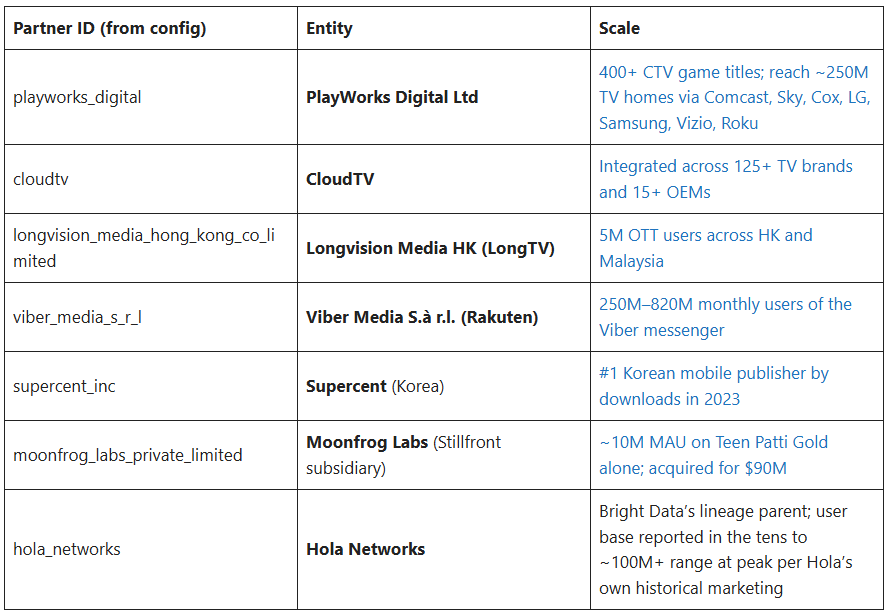
Bright Data describes the IP addresses used by its network as consent-sourced. However, researchers questioned whether users fully understand the practical scope of resource sharing when opting in. Include Security cited Petflix, a Roku app previously documented by The Verge, as an example where the SDK’s publicly queryable configuration showed a 200GB default monthly Wi-Fi traffic limit.
Implications for Data Collection
According to Include Security, this infrastructure supports web-data collection operations that benefit from residential IP addresses. Residential proxy traffic can be harder for websites to distinguish from ordinary user traffic than datacenter-based scraping activity.
Smart TVs, which often remain connected for long periods and receive less direct security scrutiny than computers or smartphones, may represent an attractive pool of residential IP addresses for proxy-network operators.
Bright Data disputes claims that its SDK operates without consent or transparency. In its request to TechNadu, the company said users must affirmatively opt in, can opt out at any time, and receive disclosures about participation in the network. Bright Data also said its practices are supported by independent audits, certifications, and third-party assessments.
Bright Data is the successor to Luminati, a company associated with Hola VPN. Security researchers have previously raised concerns about Hola’s architecture, though Bright Data operates today as a separate commercial data-collection platform.
A December 2025 report outlined how outdated embedded browsers expose smart TVs, gaming apps, and game consoles to cyber risks. One month earlier, Android TV boxes were linked to botnet activity.
Update: Following revisions to the original Include Security report and subsequent communication from Bright Data, TechNadu reviewed and updated this story to reflect changes in the source material, and include Bright Data's response.
Related






Get expert insights on threats, breaches, scams, and security trends — delivered every Monday.
Most Popular


Get expert insights on threats, breaches, scams, and security trends — delivered every Monday.
Most Popular