


Wisconsin ‘Denmark School District’ Cyber Incident Triggering Network Outage Claimed by INC Ransom
Published on March 3, 2026


Key Takeaways
- Network Disruption: The Denmark School District experienced a prolonged internet outage stemming from an alleged internal vulnerability.
- Operational Impact: The lack of connectivity forced educators and administrative staff to implement paper-based instructional workarounds to maintain operational continuity.
- Threat Actor: An unverified ransomware claim from the threat group INC Ransom has recently surfaced.
A Denmark School District cyber incident recently disrupted operational continuity for the local educational system, resulting in a five-day internet blackout, which was recently claimed by INC Ransom. Serving approximately 1,500 students, the district was forced to execute rapid contingency plans, reverting to paper-based methodologies after its network infrastructure was severely compromised.
Unverified Ransomware Claim and Threat Analysis
According to telemetry from the district’s network provider, WiscNet, the Denmark School District’s handoff port was designated as offline starting in late January due to an “internal” root cause. The Denmark News reported on February 9 that the service went down across district facilities.
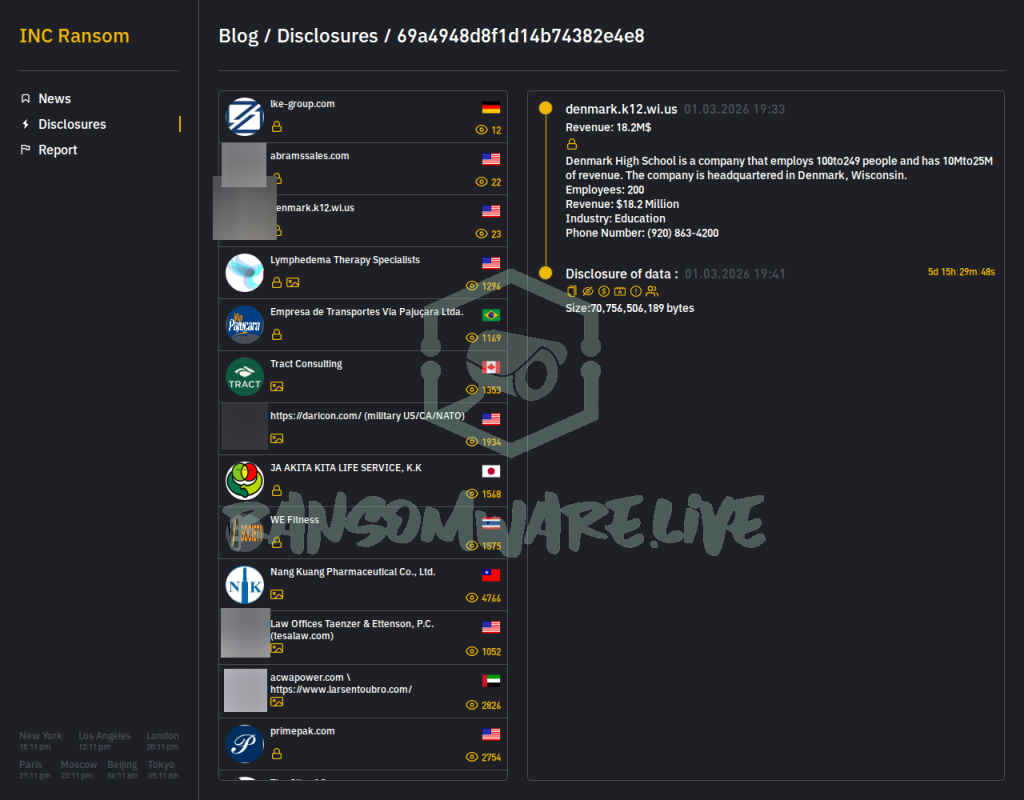
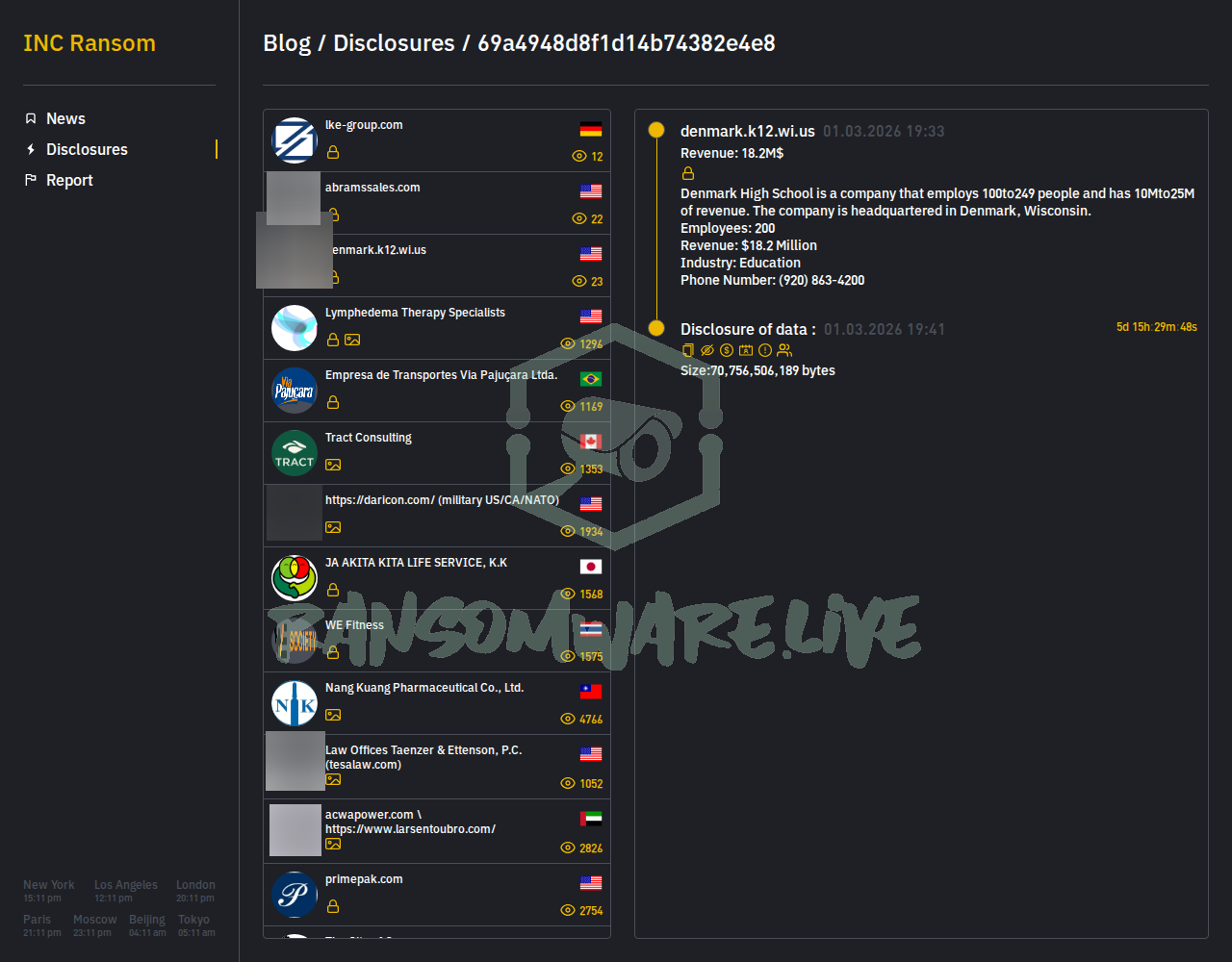
While district officials have not publicly confirmed a ransomware attack, INC Ransom listed the district's domain on its leak site on March 1, claiming the exfiltration of over 70GB of data. However, this assertion remains unverified.
School officials did not confirm data exfiltration, identify the specific attack vector, or indicate whether they notified law enforcement or requested a cybersecurity inquiry.
Escalating Risks for Cybersecurity in Education
This Wisconsin school outage adds to the number of municipal and educational institutions suffering cyber incidents. The incident amplifies the urgent necessity for rigorous cybersecurity in education to prevent digital disruptions that threaten both academic stability and sensitive demographic data.
In other recent news, cybersecurity researchers observed that UAT-10027 leverages the ‘Dohdoor’ backdoor and Cobalt Strike against U.S. education and healthcare sectors.
In January, a U.K. Higham Lane School cyberattack closed its doors, impacting telephones, emails, and servers, and Japanese School Yokosuka Gakuin in December confirmed a ransomware attack and data leak, which Rhysida claimed.
Related






Get expert insights on threats, breaches, scams, and security trends — delivered every Monday.
Most Popular
Get expert insights on threats, breaches, scams, and security trends — delivered every Monday.
Most Popular