



African Cybercrime on the Rise, Per INTERPOL’s 2025 Report
Published on June 24, 2025


- INTERPOL’s Africa Cyberthreat Assessment sheds light on the growing cybercrime in African countries
- While BEC primarily originates from 11 African countries, South Africa and Egypt show the highest ransomware detections
- Bridging this divide requires international and private sector cooperation, improved institutional readiness, and extensive cybersecurity training
An Interpol report about the state of cybercrime across the African continent addressed the appalling state of cybercrime and the widening security gap.
The INTERPOL Africa Cyberthreat Assessment Report 2025 drew attention to the grappling situation, desperately highlighting the urgent need to bridge the divide, allowing cybercrime to thrive.
The survey detailed that several African member countries are facing immense difficulty in enforcing existing laws on cybercrime, primarily due to the lack of trained personnel within the law enforcement agencies.
Staff with limited expertise in digital forensics, incident response, investigations, reverse engineering and miscellaneous technical expertise are bound to miss important cybercrime details.
As a result, crucial evidence, the subtle indicators of advanced threats, and effective opportunities for containing and remediating cyberattacks may all go unnoticed as the threat actors make their way to the victim’s digital infrastructure.
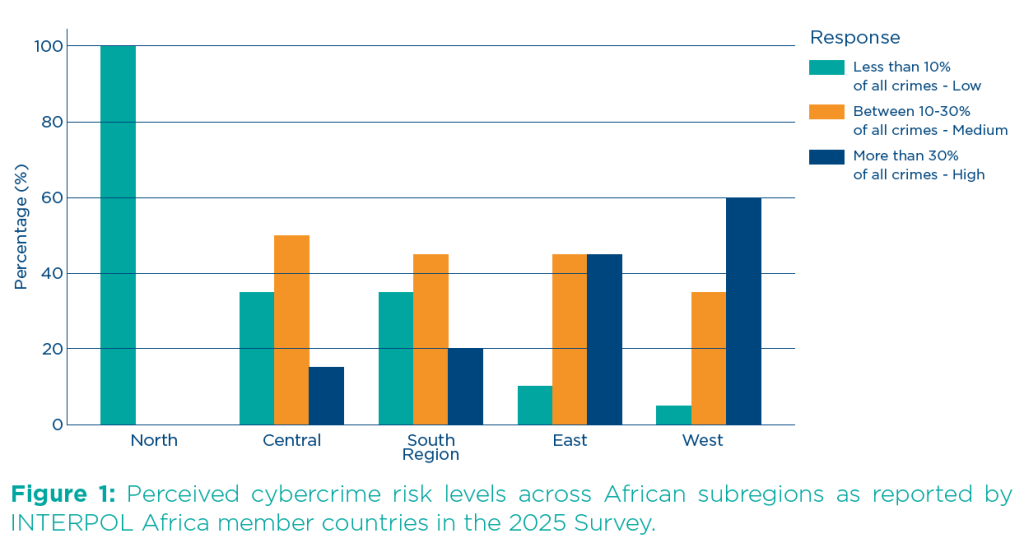
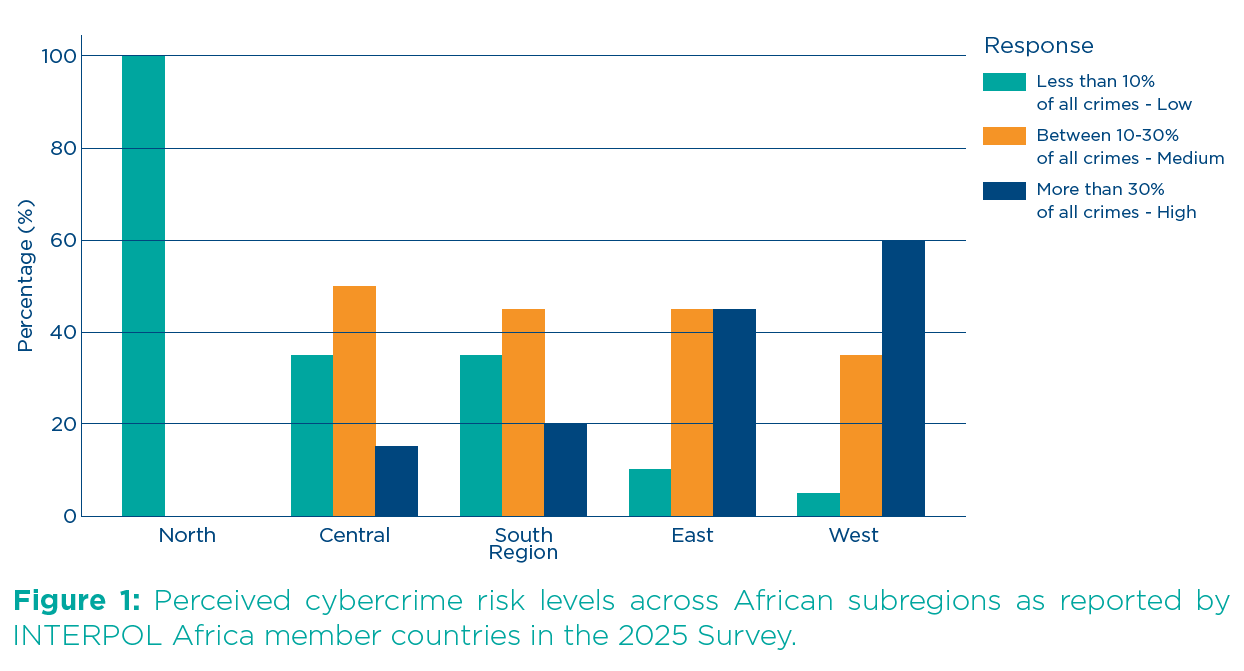
Based on data from surveyed law enforcement agencies in 43 African countries, the following was found:
- Two-thirds of the countries surveyed reported cyber-related crimes amounting to a medium-to-high share of all crimes, with this proportion rising to 30% in Western and Eastern Africa
- Among them, phishing attacks were the most commonly reported cybercrime, followed by online sextortion, ransomware, and Business Email Compromise (BEC)
- Suspected scam notifications increased by over 3,000% in some African countries
- In 2024, South Africa and Egypt security tools detected the highest number of ransomware attempts, with 17,849 and 12,281 detections respectively
- The majority of the BEC-related incidents originated from 11 African nations
- Multi-million-dollar criminal enterprises in West Africa are thriving on BEC frauds, with one such group identified as Black Axe
- About 60% of African member countries reported increased digital sextortion, where threat actors use sexually explicit images to blackmail their targets
Their lack of trained staff in the law enforcement agencies contributes to the occurrence of significant cyberattacks, such as the breach at Kenya’s Urban Roads Authority (KURA.
Furthermore, the public could be impacted by hacking incidents targeting government databases, as seen with Nigeria’s National Bureau of Statistics (NBS).
Ambassador Jalel Chelba, Acting Executive Director of AFRIPOL, said, “Cybersecurity is not merely a technical issue; it has become a fundamental pillar of stability, peace, and sustainable development in Africa.”
Neal Jetton, INTERPOL Cybercrime Director, said that no single agency or country can face these challenges alone in this assessment, which is the fourth edition in INTERPOL's Africa Cyberthreat series.
While seeking private sector expertise for cybercrime investigations, 89% of African countries face challenges in cooperation, largely due to unclear engagement channels and low institutional readiness.
It is essential to implement cybersecurity training in schools, specifically because students also own mobile devices, exposing themselves and others they interact with.
While cyber resilience and cybercrime response capabilities are a core concern and are strengthened with international cybercrime operations led by INTERPOL, such as Operation Serengeti and Operation Red Card, there is still a need for substantial contributions from neighboring nations and cybersecurity organizations.
This support is vital to help African countries counter cyber threats at a grassroot level, preventing them from escalating and infiltrating wider systems.
Related






Get expert insights on threats, breaches, scams, and security trends — delivered every Monday.
Most Popular

Get expert insights on threats, breaches, scams, and security trends — delivered every Monday.
Most Popular