
10.1.1.1 – What Does This IP Mean? How to Use (Access) It?
Last updated June 21, 2021

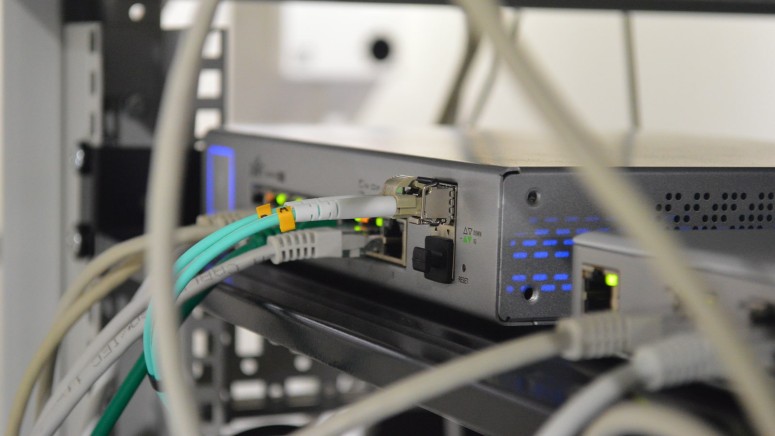
Due to so many misconceptions and conflicting information on the Web, we have decided to put together a trustful guide to the '10.1.1.1' IP. That means you can use this article to learn more about this address, how to use it, and what it means to access your router’s IP. So, let’s jump right in, shall we?
10.1.1.1 – Is This a Private or a Public IP Address?
Before we dive deeper into this matter, it’s important to understand that there are two types of IP addresses. Knowing this will help you understand what it means to access your router, so let’s take a moment to explain the differences between private and public IPs in a simple way.
What Are the Differences & Similarities Between Private & Public IPs?
When talking about the '10.1.1.1' IP, we are talking about a private IP address. What’s also interesting is that millions of individuals around the world use this same IP to access their routers. So, how is that possible? Let's see!
Every router comes with a private IP already set up. These are not routable on the Web, and they are used to set up private home networks. As you surely know, all your Web-connected devices in your home first need to connect to your router to send and receive data.
However, those devices also form their own closed (or private) network. To access your router using a private IP, all your devices must be on the same Wi-Fi network. That's why no one else can access your router (unless they're connected to your home Wi-Fi).
Public IPs are visible on the Web, and they are unique to every device. Every time you connect your device to the Internet, your device will receive a unique digital identifier. This public IP is then used to send and receive data over the Web.
As such, public IPs need to be visible to other websites and Web services. By knowing your IP, your Internet Service Provider (ISP) can keep track of your Internet connection and make sure you’re using it without crossing any limitations.
What Kind of a Private IP Is '10.1.1.1?'
Back in the 1990s, the Internet Assigned Numbers Authority came up with several ranges (spectrums) of private IPs. All of those are used to set up closed networks, which means that their primary role isn’t to connect your device to the Web.
Still, they hold great value because they form the basis of your Web connection capable of sending and receiving data using the World Wide Web.
Next, to learn about what kind of IP is 10.1.1.1, we need to tell you that there are three types of private IP spectrums. Take a look at the table below.
As you can see, the 10.1.1.1 IP is a 'Class' A private IP where that entire range supports more than 16 million devices. Even though there are many routers using one of the 'Class A' IPs, 'Class C' IPs are more commonly used in homes.
Still, you need to know that there are no good or bad IP addresses. They all work in the same way, and they are all used for the same purpose.
What Can Be Done Using the '10.1.1.1' IP?
Knowing your router’s IP address is the only way to access your router. This's important to know because that is the only way to make sure your Internet connection is safe and secure. Here are some of the possible things you can do within your router’s admin page.
- Make sure no one else is using your Web connection. One of your router admin panel's most basic uses is to change your Wi-Fi connection's name and password. By doing this, every device that is currently connected will be disconnected from the Web. To re-enter, they need to have a proper password. That means you can keep your Internet connection secure and eliminate any unwanted users of your network.
- You can do a lot to improve the speed of your connection. The most common way to improve your wireless connection's speed is by switching to another wireless channel. Every router comes with a whole range of these, so you can pick one that isn’t occupied "crowded" by other routers.
- You can review how your kids are using the Web. Some routers come with comprehensive parental controls where you can review different kinds of online activities. For example, you can see your kids’ Web browsing history and limit their time online.
How to Connect to a '10.1.1.1' Router?
Accessing your router using the 10.1.1.1 IP is quite simple. In case you’re sure that 10.1.1.1 is the correct IP, all you need to do is open a Web browser, enter its credentials, and you’re done. So, here’s our step-by-step guide.
- Open a Web browser on your computer or any other Web-connected device.
- Type in the IP in the address bar. This means you need to type in '10.1.1.1.'
- At this moment, you will be asked to enter your router’s default username and password. For security purposes, every router comes with default credentials. Since '10.1.1.1' is often associated with Belkin and D-Link, take a look at the table below.
- Once you have the right combination, you will see your router’s admin panel. You are free to make any changes here but remember to save them. In case you just close your Web browser, there are chances that your changes will be nulled.
Issues With Connecting to the '10.1.1.1 IP?' Try These Quick Fixes!
If you’re sure that you have the correct IP and know who's the manufacturer or your router, this should be a simple process. However, you might encounter some roadblocks along the way. So, here’s what you need to know to make this process as smooth as possible.
- Are you sure you have the correct IP address of your router? Checking your router's IP is a straightforward process and can be done on a wide range of devices, including Windows, macOS, iOS, and Android. Check just below for more information about this.
- Consult your router’s manual to find its default username and password. Take a look at your router, and you’ll find a sticker that indicates the exact model. Then, you can do a Google search to find the username and password of your router.
- Default usernames and passwords can be changed at any time. In case you think someone might have changed those, you can press and hold the factory reset button on your router. Keep holding it up to 30 seconds until the router fully reboots. However, please note that this will change all values to their default state, including your Wi-Fi name and password.
- To access your router, you need to be connected to it first. This means being connected from your computer to your home Wi-Fi network.
- Some routers don’t allow access to their admin panel via Wi-Fi. This is especially true for older models that only allow a wired connection via Ethernet. So, find your old Ethernet cable and physically connect your computer to your router.
How to Find Your Router’s IP?
Finally, we are going to show you how to check your router’s IP. You can use the Command Prompt to find your router's IP on Windows. Also, you can use System Preferences on macOS. Then, mobile devices can be of great help with this. Here’s how to check your router's IP on iOS and Android devices.
That would be all you need to know about the '10.1.1.1' IP address. In case you have any questions, make sure to post your comment below. And lastly, thank you for reading!
Related





Get expert insights on threats, breaches, scams, and security trends — delivered every Monday.
Most Popular




Get expert insights on threats, breaches, scams, and security trends — delivered every Monday.
Most Popular