



Spain Court Orders ProtonVPN and NordVPN Blocks During LaLiga Matches, Raising Concerns for Users
Published on February 18, 2026

Key Takeaways
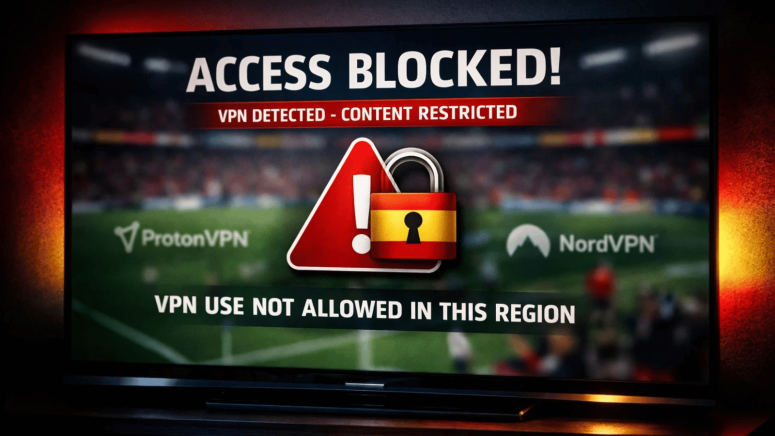
- VPN blocking Spain ruling: Court ordered ProtonVPN and NordVPN temporary suspension during LaLiga matches to prevent piracy access attempts.
- Limited scope and enforcement: Block applies during football broadcasts, unclear if all matches or selected high-profile games only currently.
- Impact on legitimate VPN users: Users relying on VPNs for privacy, security, or legal access may face disruptions during enforcement.
A new legal development in Spain has raised concerns about the future of VPN services and online access during football matches. A court ruling obtained following a complaint from LaLiga, whose president is Javier Tebas, and telecom provider Telefónica has resulted in temporary blocks on two popular VPN services. The ruling was issued by the Commercial Section of the Court of First Instance in Córdoba and targets VPN usage during football match broadcasts.
The decision is part of ongoing efforts to reduce online piracy, especially illegal streaming of football matches.
Court Orders Temporary Blocking of ProtonVPN and NordVPN
The court ruling specifically affects ProtonVPN and NordVPN, two of the most widely used VPN providers. These precautionary measures require temporary suspension of access to these services during football matches, with the goal of preventing users from bypassing geographical restrictions to access pirated streams.
VPNs, or Virtual Private Networks, are tools that encrypt a user’s internet connection. They are commonly used to improve privacy, especially on public Wi-Fi networks. VPNs also allow users to connect through servers in different countries, making it appear as though they are browsing from another location. This feature can be used to access region-restricted content, including streaming services.
According to the complaint, some users have allegedly used VPN services to connect to servers in other countries and watch football matches through foreign broadcast platforms that may offer the content for free or at lower cost.
The block is described as temporary and applies only during football matches. However, it remains unclear whether it covers all LaLiga matches or only selected high-profile games. If applied broadly, users could lose access to these VPN services for several hours each week.
Legal documents related to the ruling have reportedly been translated into English and French and sent to the affected companies. Proton, which operates ProtonVPN, is based in Switzerland, while NordVPN operates from Panama. The information was first reported by El Economista on February 17, 2026.
Impact on Legitimate VPN Users
The ruling could also affect users who rely on VPNs for legitimate purposes. Many individuals use VPNs to secure their internet connection, especially on public networks such as those in cafes, airports, or hotels. Others use VPNs to access legal content that may only be available in certain countries.
At present, the block appears limited to ProtonVPN and NordVPN. However, users still have access to other VPN providers, both free and paid.
This type of direct action against VPN services is relatively uncommon. In France, authorities previously required VPN providers to block access to certain piracy-related websites. Those VPN companies appealed the decision, and the legal process remains ongoing.
Broader Context and Recent Blocking Measures
In recent months, Spain has increased its efforts to prevent piracy, especially during football matches. These efforts have included blocking websites suspected of providing illegal streams. However, some of these blocks have also affected legitimate platforms.
One example involved the online store Miravia, which was temporarily inaccessible as part of anti-piracy enforcement. Similar disruptions have affected social media platforms, online stores, and other unrelated services.
These unintended effects have raised concerns about collateral impact on users who are not involved in piracy but depend on VPN services for privacy, security, or lawful access.
ProtonVPN Responds to Reports
ProtonVPN has stated that it was not aware of any legal proceedings prior to media reports and has not received formal notification of any judgment or court order.
The company also emphasized that any judicial action taken without proper notification would violate basic principles of due process. According to ProtonVPN, courts must provide affected parties with an opportunity to respond before issuing binding rulings.
At this stage, it remains unclear how and when the blocking measures will be implemented, and whether the affected VPN providers will challenge the decision.
Related





Get expert insights on threats, breaches, scams, and security trends — delivered every Monday.
Most Popular





Get expert insights on threats, breaches, scams, and security trends — delivered every Monday.
Most Popular