



Windscribe on Privacy-First Innovation, AI-Resistant Security, and Expanding Censorship-Resistant Infrastructure
Published on January 21, 2026


Key Takeaways
- Windscribe is embedding AmneziaWG Advanced Imitation into its apps, providing users with industry-leading anti-censorship capabilities.
- The VPN adds IPv6 egress, configurable double-hop, and zero-knowledge connection setups, further minimizing exposure and strengthening user anonymity across all networks.
- Servers operate entirely from RAM with no persistent logs, preventing sensitive data exposure.
- Multi-hop routing, decoy traffic, and browser fingerprinting protections safeguard against correlation, timing attacks, and AI-driven traffic analysis.
- Dedicated alternate servers in high-restriction regions, such as Myanmar, ensure connectivity, while operational security and anti-abuse measures maintain user privacy and service integrity.
As censorship, AI-driven traffic analysis, and deep packet inspection grow more sophisticated, VPN users need more than just encrypted connections; they need a VPN that can adapt and resist. For Windscribe, 2026 is shaping up to be a year of bold innovation.
In our conversation with Yegor from Windscribe, he revealed how lessons from past audits, court cases, and server compromises are driving smarter, more resilient design choices. From RAM-only server stacks to decoy traffic, multi-hop anonymity, and advanced browser fingerprinting defenses, every change is built around one principle: privacy without compromise.
With dedicated censorship-resistant networks already deployed in regions like Myanmar, Windscribe is proving that protecting user freedom isn’t just a promise; it’s a mission.
This interview takes a deep dive into Windscribe’s 2026 roadmap, showing how the company balances cutting-edge privacy technology with real-world usability and a commitment to keeping the internet open for everyone.
Rachita Jain: What is the main technical goal your VPN is pursuing in 2026, and what concrete changes, such as new features, cryptographic mechanisms, or architectural shifts, are you launching to achieve it? Why is this necessary now?

Our top priority right now is to integrate AmneziaWG Advanced Imitation features into our client apps. This is our top priority because in our testing, AmneziaWG has had unmatched anti-censorship capabilities, and we believe that the most important feature a VPN service can offer is the ability to get online, no matter how restrictive a network might be.
Besides this, we’re also working on IPv6 egress connectivity, configurable double-hop, and zero-knowledge connection configs.
Rachita Jain: Which specific lessons from past VPN breaches, audits, or law-enforcement cases are directly shaping your 2026 architecture, product design, or feature roadmap? What decisions would you not have made five years ago?
Yegor Sak: If we could do things differently, we’d not use Boringtun for our WireGuard implementation. It caused jitter for our users and unpredictable speeds (super fast when only a few clients were connected, but slow as the number of clients per host increased - it didn’t scale well at all).
Our audits and the Greek court case have only bolstered our no-log claims. We can’t give up what we don’t possess.
Rachita Jain: If one of your VPN servers were compromised today, what user information could realistically be inferred, and how do the concrete changes planned for 2026, including infrastructure or feature changes, further reduce that exposure?
Yegor Sak: Our software stack operates completely from RAM. As such, no useful information would be retrieved from our servers the moment they’re powered down. One may attempt a tedious cold-boot / RAM dumping with liquid nitrogen, which would still reveal no user-identifiable data, as our stack is configured never to write user-sensitive information to log files, even in RAM. Regardless, we’re working on a novel solution to guard against even this.
Rachita Jain: Beyond encrypting payloads, what concrete steps are you taking in 2026 to defend against traffic correlation, fingerprinting, and timing attacks, and how do these protections affect real-world users?
Yegor Sak: Our browser extension offers comprehensive protection against fingerprinting and we’ve always recommended it to be used in conjunction with our desktop apps. We as well offer a decoy traffic mode in our apps to guard against traffic correlation attacks. Windscribe was the first VPN to offer this feature.
Further, our multi-hop solution will ensure that an adversary can never see what destination IPs the user is connecting to (even if all netflows were logged), and the exit server never sees the user's true source IP address.
Rachita Jain: Are you planning any protocol-level changes or departures in 2026, beyond OpenVPN or WireGuard, or any significant modifications to how these protocols are used? What limitations of current protocols are driving those decisions?
Yegor Sak: AmneziaWG. We already offer QUIC obfuscation (and the ability to obfuscate traffic as ANY UDP based protocol), but this requires the use of Amnezia’s app. We’re looking to integrate these into our client apps.
Rachita Jain: As censorship, deep packet inspection, and AI-driven traffic analysis improve in 2026, what specific techniques are you deploying to make VPN traffic harder to identify or classify, and are any of these changes user-configurable or enabled by default?
Decoy traffic inside the tunnel (user-configurable, since it increases data usage dramatically) is already available, and we’re experimenting with other novel solutions that will further obfuscate the fact that the user is using a VPN.
Rachita Jain: How are you changing abuse-prevention, fraud-detection, and operational monitoring systems in 2026 to avoid creating hidden logs, persistent identifiers, or long-lived behavioral profiles?
Yegor Sak: Abuse is a fact of reality, especially when it comes to running a freemium VPN. It’s quite challenging to prevent abuse while sticking to the promises made in our privacy policy, but it's not impossible. I cannot share the exact details of how the anti-abuse system works (for obvious reasons), however, rest assured, it does not violate our privacy policy. As a result of recent efforts, we’ve reduced account login brute forcing by 99.99%, which helps keep people’s accounts secure (even if they used an insecure password).
Rachita Jain: Several governments are openly restricting or blocking VPN use. In 2026, are you changing how your network detects, routes around, or responds to blocking attempts, and where do you draw the line between legal compliance and technical resistance?
Yegor Sak: We operate an entire alternate server network exclusively for censored regions. We will, of course, extend the use of this network to whichever countries need them. Most recently, we deployed this alternate censorship-resistant network for users in Myanmar.
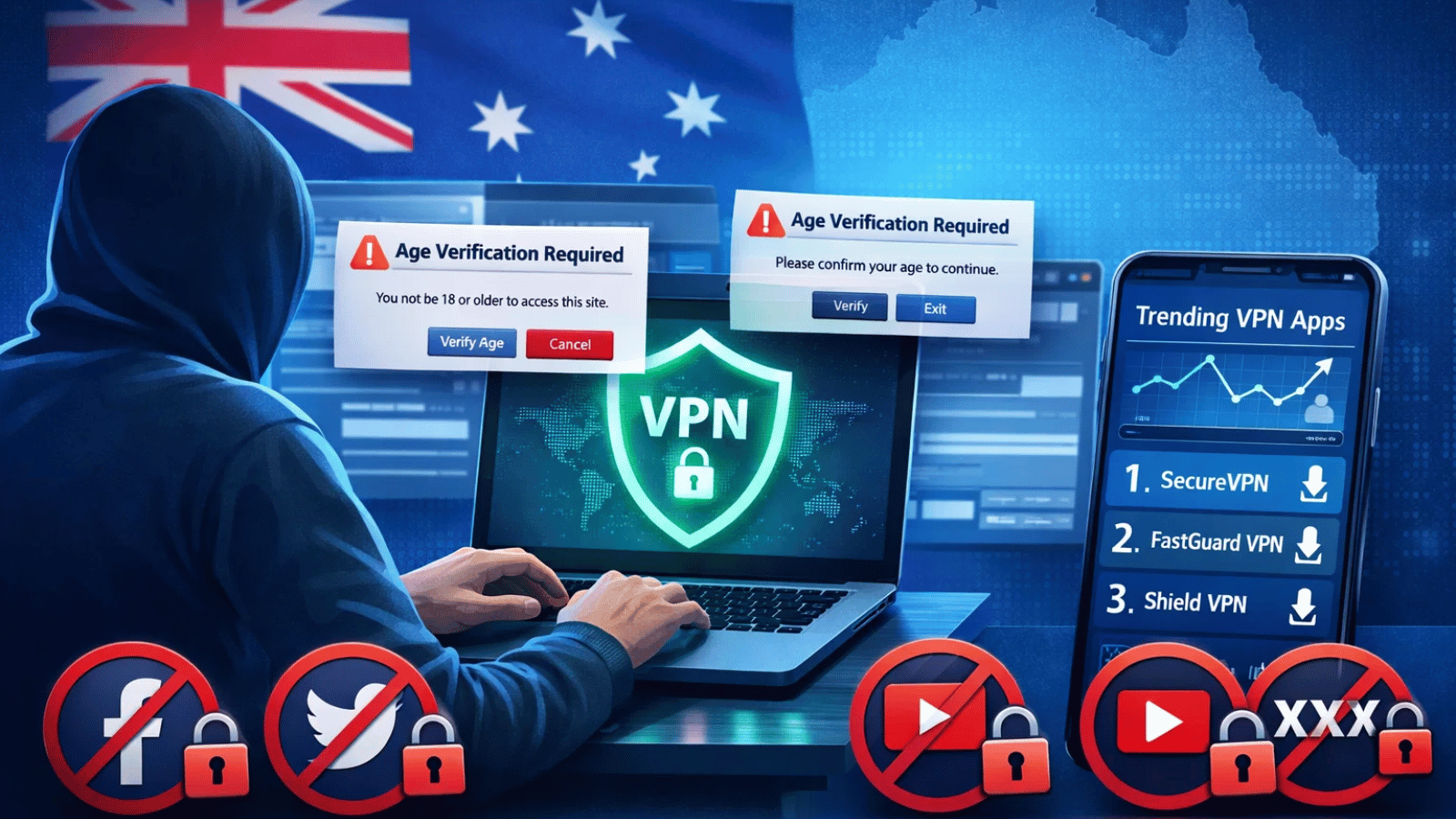
Rachita Jain: Some governments argue VPNs should help enforce age limits, content restrictions,or online-safety rules. What is your position on this in 2026? How does it influence your product, UI, or infrastructure decisions, and how do you prevent such systems from weakening user privacy?
Yegor Sak: We’re a Canadian company subject to Canadian laws. As such, Canadian laws permit us to maintain independence when it comes to product direction. If this changes, we will not hesitate to move the company to a jurisdiction that better aligns with our product philosophy.
Related






Get expert insights on threats, breaches, scams, and security trends — delivered every Monday.
Most Popular



Get expert insights on threats, breaches, scams, and security trends — delivered every Monday.
Most Popular