



Missouri’s Statewide Online Age-Verification Law Takes Effect: What Residents Should Know
Published on December 1, 2025


- Law Activation: Missouri’s online age-verification law now active for sites with one-third harmful content.
- Verification Process: Users must submit ID, digital ID, or transaction data to access restricted sites.
- Privacy Concerns: Critics warn data collection risks grow as breaches highlight vulnerabilities in verification systems.
Missouri has officially become the 25th U.S. state to enforce age-verification requirements for accessing online content deemed harmful to minors. The law, Missouri 15 CSR 60-18, went into effect on Sunday, November 30, 2025.
Under the new rules, adults must verify their age before entering websites or platforms where at least one-third of the content is considered inappropriate for minors. This mirrors legislation already implemented in several other states, forming a growing national push for stricter online safety measures.
How the Law Works
Missouri’s age-verification guidelines follow the same structure seen across the country. Any site meeting the “one-third harmful content” threshold must use approved verification tools.
Accepted verification methods include:
- Digital IDs
- Government-issued IDs
- Transactional or credit-based data
The law also sets requirements for certain mobile operating systems to support digital age-verification solutions.
Platforms that fail to comply may face civil penalties of up to $10,000, and violations are categorized as “unfair, deceptive, fraudulent, or otherwise unlawful.” Missouri Attorney General Catherine Hanaway previously described the law as a “milestone” for families concerned about children’s exposure to harmful online material.
Why the Missouri’s Online Age-Verification Law Is Generating Debate
Supporters say the measure is necessary to shield minors from unsafe online environments. Opponents warn that the verification process creates significant risks.
To confirm a user’s age, some verification vendors require selfies, ID scans, or credit card information. Critics argue that this sensitive data could become a target for cybercriminals. While some companies say they delete data immediately, others retain it, raising questions about security standards.
The concerns intensified after a high-profile breach in October, when hackers accessed a database connected to Discord’s age-verification system. The intrusion exposed government-issued IDs and personal details. Although Discord was not directly at fault, the incident highlighted how vulnerable these systems can be.
Rising Interest in Online Privacy Tools
Across states adopting age-verification laws, including Arizona, Michigan, Ohio, and Wisconsin, VPN demand has risen sharply. Many users are seeking ways to protect their privacy or avoid submitting personal documents to third-party verification services.
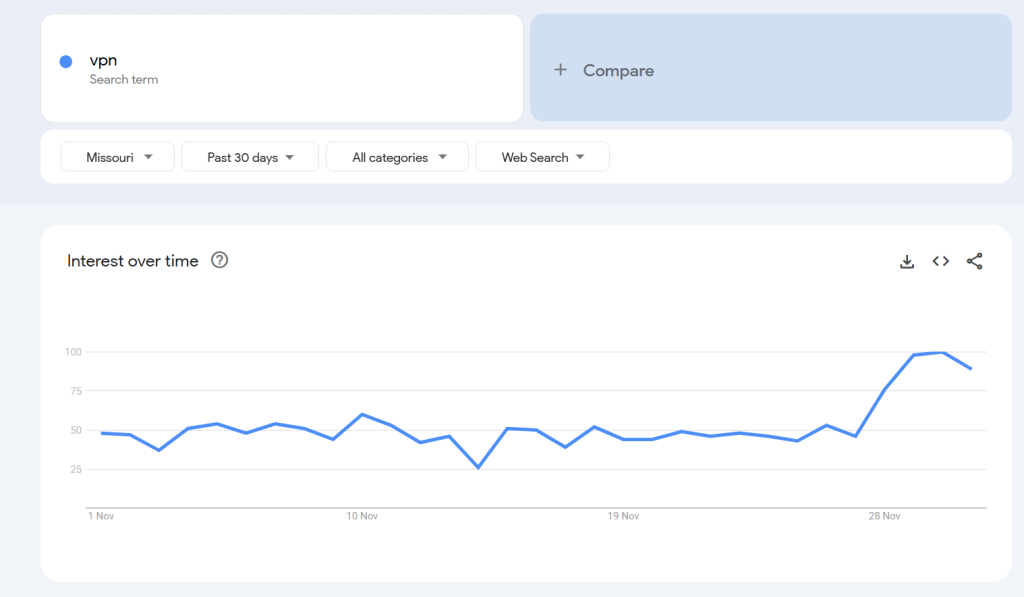
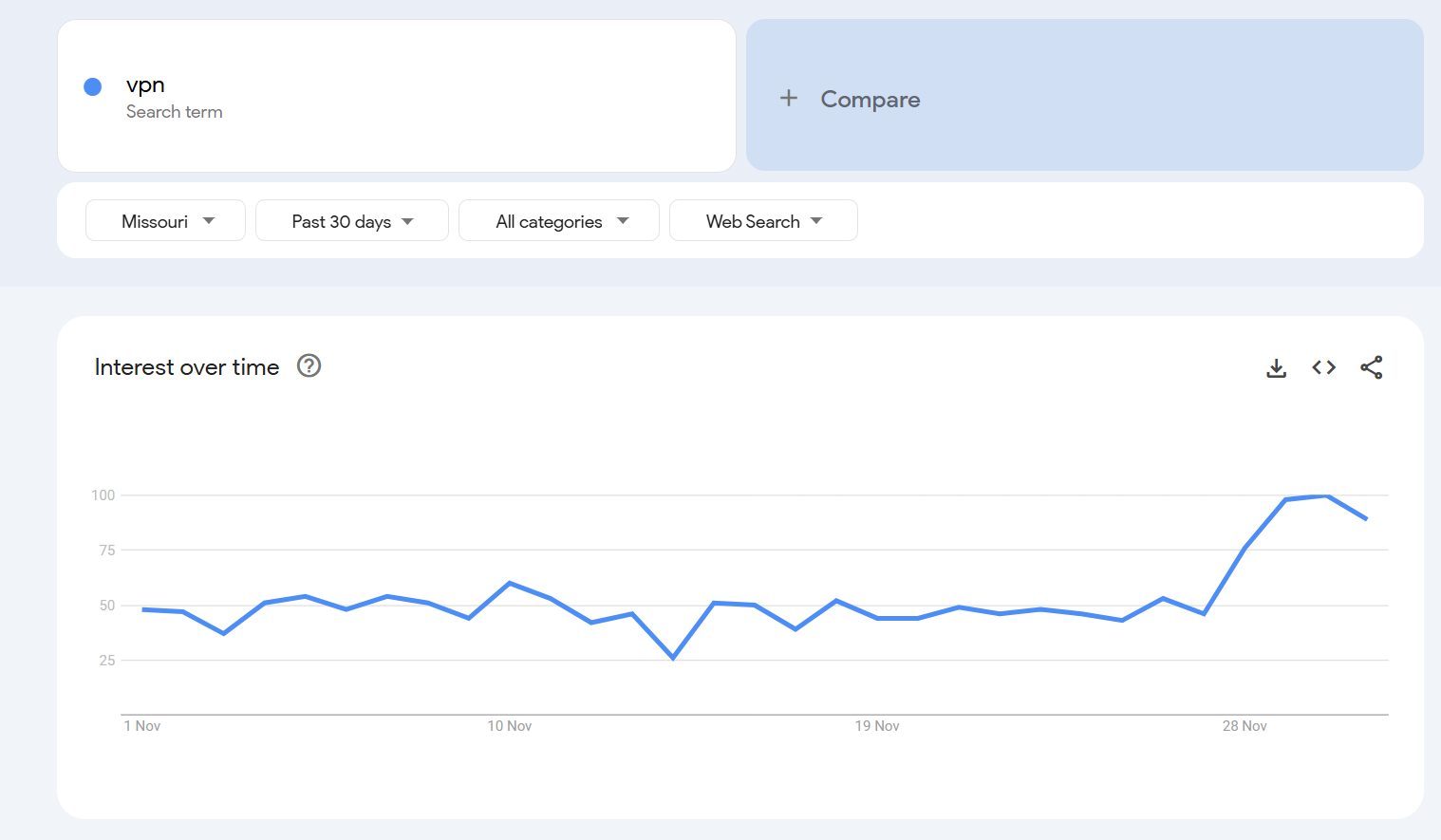
Google Trends data shows Missouri searches for “VPN” remained steady through most of the past two weeks but spiked on November 27, just days before the law went live.
VPN usage itself does not disable age-verification requirements, but the tools help users secure their online traffic by encrypting data and masking IP addresses. As a result, more residents are paying attention to privacy protection in general.
For those considering a VPN, the ongoing Black Friday promotions remain some of the best opportunities of the year.
What This Means for Missouri Residents
With Missouri’s law now active, any adult accessing qualifying websites should expect to go through age-verification steps. Platforms that fall under the regulation must adopt verification tools and follow security standards outlined in the bill.
As other states continue rolling out similar laws, debates over privacy, cybersecurity, and online safety are expected to continue. For now, Missouri joins nearly half the country in enforcing age-verification rules aimed at protecting minors, while also prompting broader conversations about digital privacy.
Related





Get expert insights on threats, breaches, scams, and security trends — delivered every Monday.
Most Popular





Get expert insights on threats, breaches, scams, and security trends — delivered every Monday.
Most Popular