



Türkiye Plans Social Media Ban for Children Under 15
Published on January 8, 2026

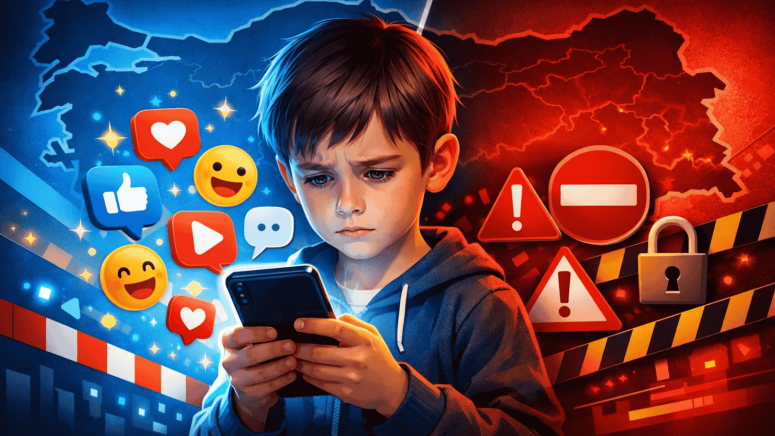
Key Takeaways
- Türkiye social media ban proposal: Government plans to restrict under-15 access, shifting child safety responsibility from parents to platforms.
- Privacy and enforcement concerns: Age verification may require IDs or biometrics, increasing data collection, surveillance risks, and misuse.
- Effectiveness and alternatives debated: Blanket bans ignore positive uses, are easy to bypass, and overlook safer, less intrusive solutions.
Türkiye is planning one of its strictest social media rules so far. The government wants to ban children under the age of 15 from using social media platforms. The announcement was made by the Ministry of Family and Social Services on Tuesday.
According to reports by Turkish Minute, Family and Social Services Minister Mahinur Özdemir Göktaş said the proposed bill will be submitted to parliament by the end of January. If approved, social media companies will not be allowed to offer their services to children below 15 years of age.
Under the proposal, companies will also be required to put strong filtering systems in place to stop minors from seeing harmful content. The responsibility of protecting children would shift largely from parents to social media platforms themselves.
What the Proposed Law Includes
If the bill becomes law, social media platforms will have to make sure that users under 15 cannot access their services. This goes beyond simply stopping children from creating accounts. Platforms would need reliable ways to verify users’ ages and monitor content more closely.
To do this, companies may have to introduce strict age verification systems. This could include checking government-issued IDs, using biometric data, or collecting other sensitive personal information. Such systems would apply not only to children, but also to adults, to confirm they meet the age requirement.
The government says the aim is to protect children from online dangers such as harmful content, addiction, psychological stress, and predatory behavior.
Global Context On Türkiye Social Media Ban
Türkiye is not alone in considering tighter rules for children online. Several countries are debating or already enforcing similar measures. Australia has recently introduced a ban on social media use for children under 16. Parts of the United States have also begun placing age restrictions on certain websites, while some European countries are discussing comparable laws.
While there is broad agreement on the need to protect children online, experts continue to debate how these rules should be implemented and what impact they may have.
Privacy and Practical Concerns
One major concern surrounding Türkiye’s proposal is data privacy. Large-scale age verification would require social media companies to collect and store sensitive personal data from millions of users. This raises fears about data misuse, surveillance, and security breaches.
Critics argue that protecting children should not come at the cost of increased data collection on adults. There are also concerns that such rules may be difficult to enforce in practice. Children may still find ways around the ban by using adult accounts, shared devices, or tools like VPNs.
Impact on Education and Social Use
Another issue raised is that social media is not used only for entertainment. Many children use online platforms for learning, communication, and staying connected with schools, teachers, and communities. A complete ban does not distinguish between harmful and beneficial use.
Parents and educators also rely on these platforms to share information and support children. A blanket restriction could limit these positive uses while failing to fully stop harmful ones.
The Bigger Picture Behind Türkiye Social Media Ban
Türkiye’s proposed under-15 social media ban highlights a growing global challenge: how to protect children online without creating new risks. While the intention behind the law is to improve child safety, concerns remain about privacy, enforcement, and unintended consequences.
As discussions around internet regulation continue worldwide, Türkiye’s proposal adds to the wider debate on how governments, companies, and families should share responsibility for children’s online safety.
Related






Get expert insights on threats, breaches, scams, and security trends — delivered every Monday.
Most Popular




Get expert insights on threats, breaches, scams, and security trends — delivered every Monday.
Most Popular