



Senegal Confirms National ID Agency Breach After Ransomware Attack, Threat Actors Claim Stealing 139 GB of Data
Published on February 10, 2026


Key Takeaways
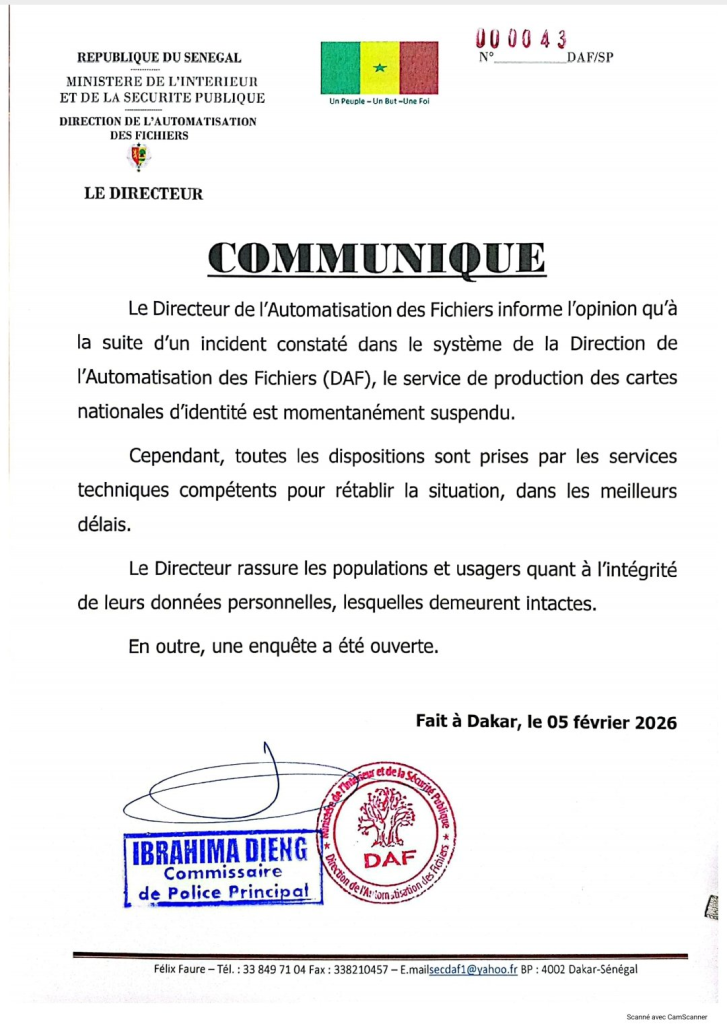
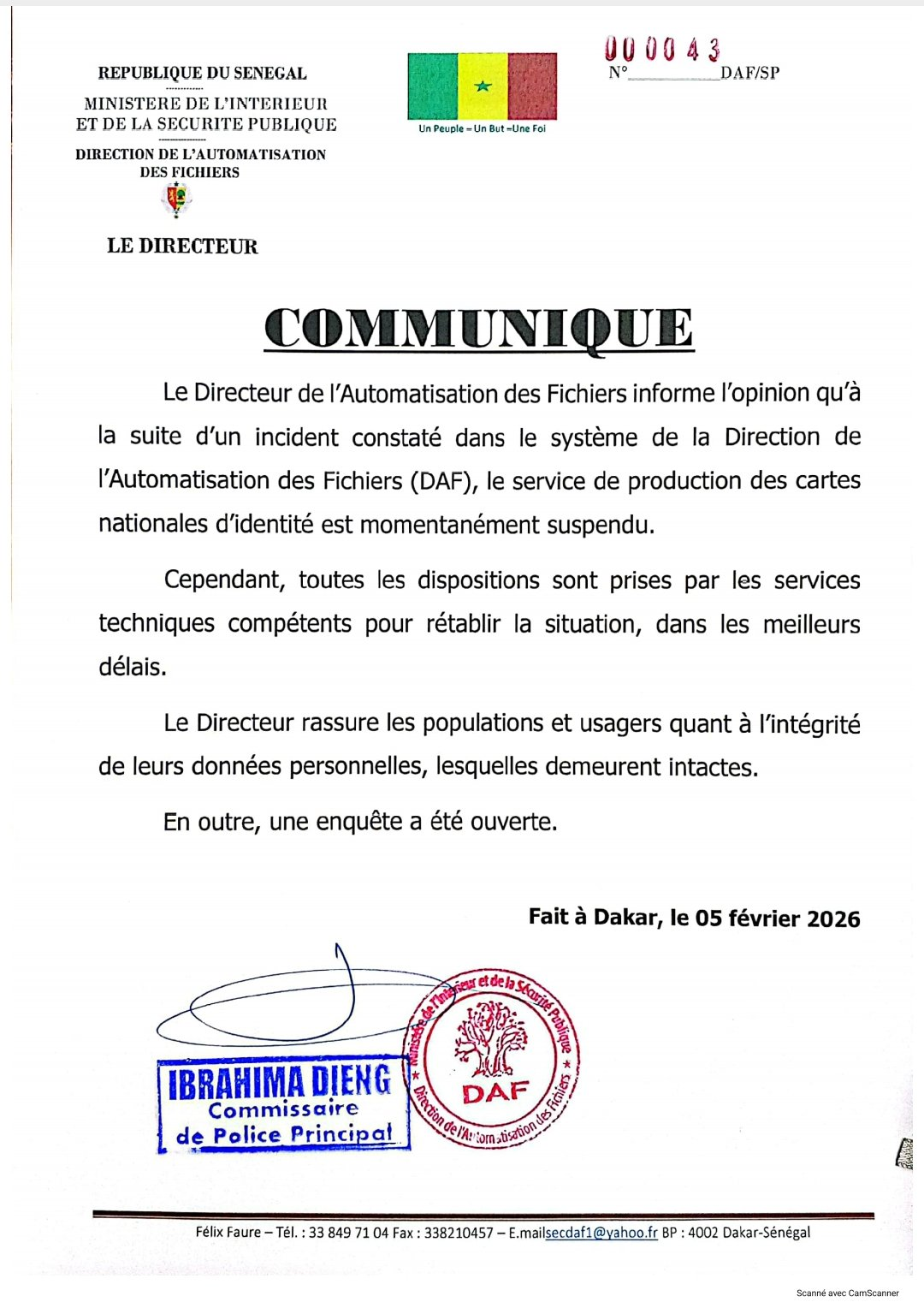
- System Disruption: A cybersecurity incident forced the temporary suspension of operations at Senegal's Directorate of File Automation (DAF), the agency managing national ID cards and passports.
- Ransomware Claim: A group known as Green Blood Group has claimed responsibility, alleging the theft of 139 GB of data, including citizen database records and biometric information.
- Third-Party Confirmation: The breach appears to have been confirmed via an email from IRIS Corporation Berhad, which detailed the initial server compromise on January 19.
The government of Senegal has confirmed a significant cybersecurity incident affecting its Directorate of File Automation (DAF), the office responsible for managing national ID cards, passports, and other sensitive biometric data. The attack forced the agency to suspend its operations, disrupting services for the country's 19.5 million residents.
Yet, a senior police official stated that the "integrity" of citizen data remains intact as they work to restore systems.
Green Blood Group Ransomware Claims
The public disclosure follows claims of a major data breach by a ransomware actor, identifying itself as the Green Blood Group, which emerged recently and targets Senegal, India, and Colombia. The group alleges it exfiltrated 139 GB of data from DAF's servers, including:
- citizen database records,
- immigration documents,
- biometric data.
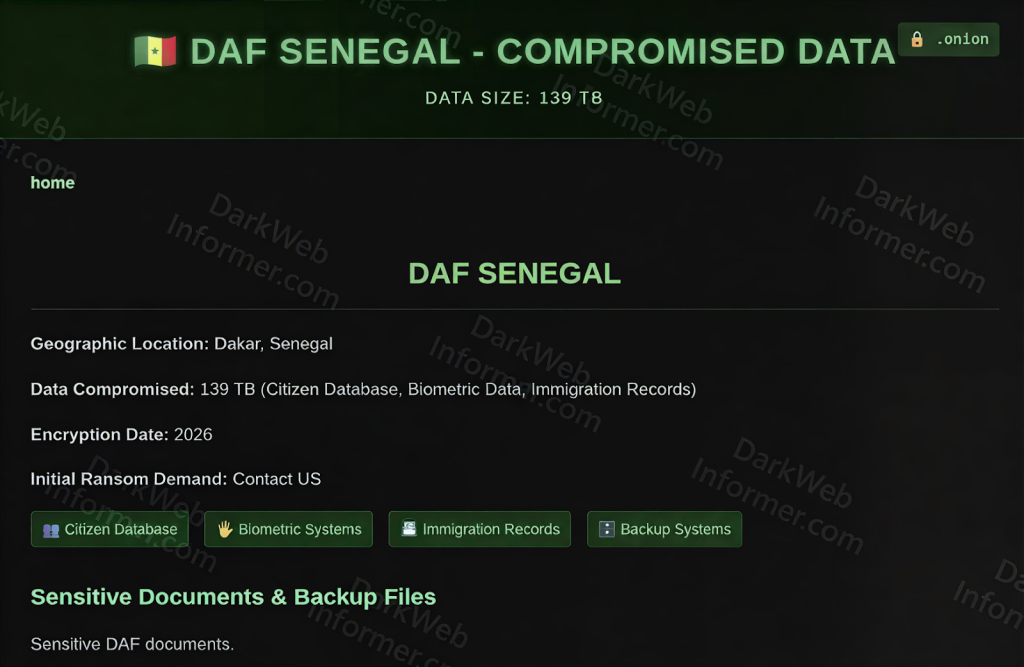
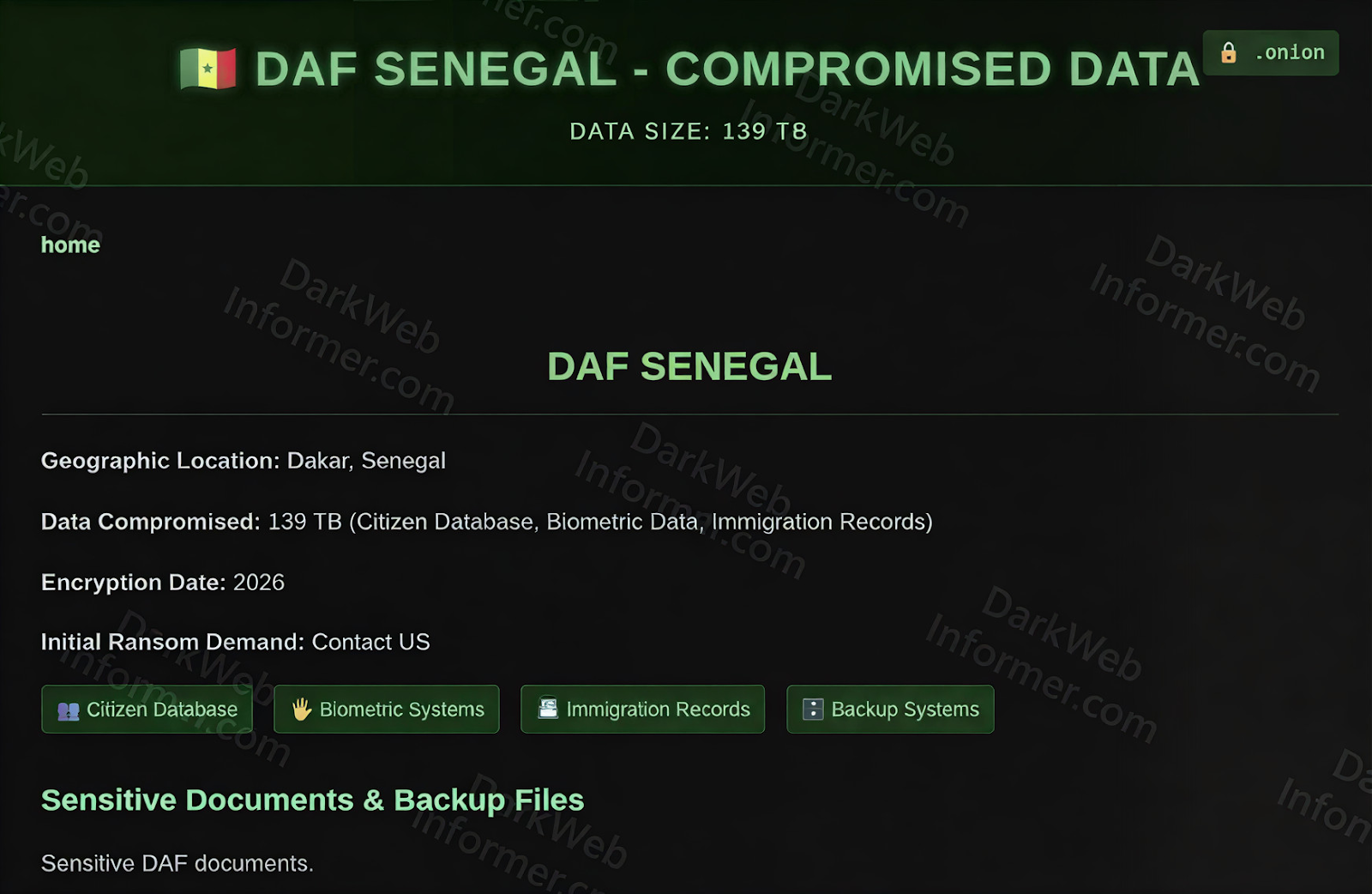
As proof, the hackers shared data samples and an email from a senior manager at IRIS Corporation Berhad, a Malaysian technology firm contracted for Senegal's digital ID cards. The email, dated January 20, alerted Senegalese officials that two DAF servers had been breached a day earlier, with card personalization data stolen from one.
The DAF website remained offline as of February 9, 2026.
Implications for Biometric Data Security
This breach underscores the critical vulnerabilities surrounding biometric data security, particularly within national identity systems. The targeting of government ID databases is a growing trend, with similar incidents reported in countries like Argentina and Estonia.
The compromise of such sensitive information poses substantial risks, from mass identity theft to threats against national security.
The incident in Senegal serves as a stark reminder for governments globally to reinforce their defenses and audit the security postures of third-party technology partners involved in critical infrastructure projects.
Related






Get expert insights on threats, breaches, scams, and security trends — delivered every Monday.
Most Popular
Get expert insights on threats, breaches, scams, and security trends — delivered every Monday.
Most Popular