


From National Security to Enterprise Risk: Turning Data Into Decisions and Proving Excellence Has No Gender
Published

Key Takeaways
- Hayun believes that strategy is the art of choosing what problems to solve first.
- Security teams are not lacking signals; they are drowning in them. It is context that matters.
- At Tenable, teams focus on context because an issue only carries weight when it is tied to tangible business impact.
- Collaboration thrives when a team moves as a single unit with a shared sense of agency.
- When building security products under pressure, there is no room for ego.
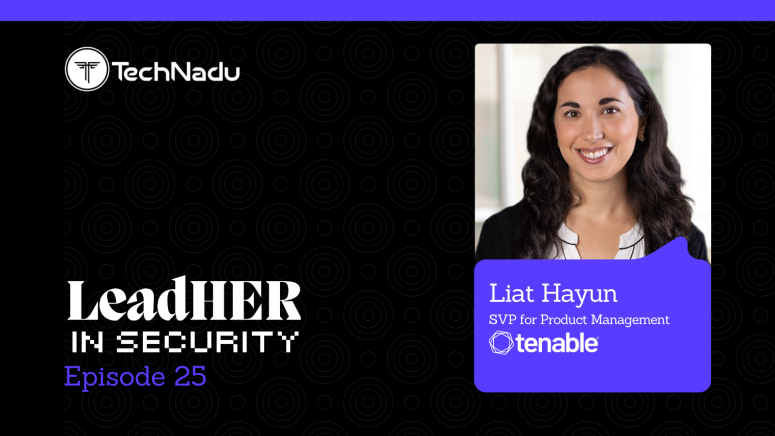
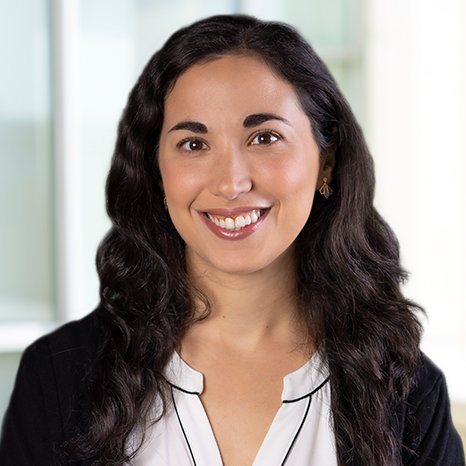
In this edition of TechNadu’s LeadHer in Security spotlight for International Women’s Day, Liat Hayun, SVP for Product Management at Tenable, reflects on what it takes to build security products, translating C-suite anxiety into product execution, and reducing noise without missing threats.
From leading software groups in the IDF to building Cortex XDR at Palo Alto Networks and co-founding Eureka Security, Hayun has moved from strength to strength across national security and enterprise cybersecurity, serving as a role model for women advancing in security leadership.
Hayun learned to take ownership in complex environments where ambiguity is the norm. She applies that mindset to one of cybersecurity’s most persistent problems, navigating the gap between visibility and action.
Hayun’s leadership offers a visible example of a woman’s journey that continues to strengthen cybersecurity by driving product strategy, owning high-impact decisions, and applying the right mindset to complex security challenges.
Vishwa: You were part of the Talpiot program at the Hebrew University of Jerusalem. What skills do you think helped you succeed there, and what did you take away from the experience?
Liat: Success in Talpiot isn’t just about academic rigour but about agency. The program trains you to remove the phrase, “someone should fix this,” from your vocabulary and replace it with "I am the only one who will fix this.”
It demands a high level of ownership of a problem, taking you to complex territories far outside your comfort zone. My biggest takeaway was the realisation that no challenge is out of your league. You learn to master new domains because you understand problem-solving is a conscious choice, not just a technical skill.
Vishwa: Being awarded the Israel Defense Prize for your IDF service, what was the recognition broadly for, and what did it mean to you as a woman working in technical cybersecurity roles?
Liat: While the prize recognised a major technical contribution to national security, for me it was a definitive “proof of concept”. In a field like cybersecurity, which remains heavily male-dominated, this was a reminder that excellence has no gender.
I’ve always been driven by the idea of leaving footprints. If my trajectory makes it easier for the next generation of women to see themselves as technical architects and leaders, then that is more than the award itself.
Vishwa: As the SVP for Product Management at Tenable, what helps you decide what really matters to customers when it comes to reducing their risk exposures?
Liat: I focus on the space between all the noise and actual business risk. Security teams today aren’t suffering from a lack of data; they are drowning in it. We prioritise risk through the lens of business context by questioning if the data is actually critical and if it is truly exposed.
A vulnerability in a vacuum is just a line of code, and it only becomes a priority when it touches an organisation’s crown jewels. At Tenable, we are obsessed with context because an issue only matters when it is tied to tangible business impact.
Vishwa: Working with strong teams has been a consistent part of your career. What helps collaboration work well when building security products under pressure?
Liat: It boils down to radical transparency and a partnership mindset. When building security products under massive pressure, there is no room for ego. It’s the foxhole mentality of knowing that the person next to you will offer you an unfiltered, uncomfortable truth because they have your back.
Collaboration thrives when a team moves as a single unit with a shared sense of agency. That level of trust is what keeps a team from cracking under pressure when the stakes are high.
Vihwa: When you talk about helping fellow security leaders tackle meaningful gaps, what kinds of challenges come up most often?
Liat: A persistent struggle is the gap between visibility and action. Many security leaders know they have sensitive data in the cloud, but they don’t have the governance structures to secure it without bringing the business to a standstill.
There’s also perennial friction between security and DevOps teams. My goal is to help them find a common language.
This transforms security from a blocker of growth into a foundational element that enables development to scale safely and quickly.
Vishwa: How do you translate what CISOs and security teams are struggling with into product or strategy decisions inside Tenable?
Liat: The solution is to act as a translator between C-suite anxiety and engineering execution. When a CISO tells me they are losing sleep over how AI is being used in their environment, it becomes a product blueprint.
Strategy is the art of choosing what problems to solve first. We focus on turning those high-level concerns into functional capabilities, such as automated discovery and real-time policy enforcement. We win when we solve problems that move the needle on their bottom lines.
Vishwa: When you identify an operational security gap, what steps help you decide whether it needs a new technology approach or a change in security process?
Liat: I always start by diagnosing whether we are facing a blindspot or a broken habit. In most enterprises, technology and processes are in a feedback loop. Technology must be the engine that automates processes at scale. Conversely, a solid process is a diagnostic tool that reveals exactly where current tools are falling short.
The goal is perfect alignment, where every tool accelerates the human process, and every process improvement makes technology more effective and secure.
Vishwa: When you evaluate whether a detection is actionable, what criteria help reduce noise without missing real threats?
Liat: In my experience, actionability is defined by exposure integrity. It calls for moving past the binary of finding issues and fixing them and starts asking, “Does this specific issue create a clear path to a survival-level threat?” To reduce alert fatigue and noise, I focus entirely on the blast radius of a potential threat.
If a detection does not tell you exactly what is at risk and why it warrants immediate attention, it is not actionable. At Tenable, we want to provide the context that lets teams ignore background noise and focus exclusively on threats that move the needle on business risk.
Related

Get expert insights on threats, breaches, scams, and security trends — delivered every Monday.
Most Popular






Get expert insights on threats, breaches, scams, and security trends — delivered every Monday.
Most Popular