


Australia Enforces Age Verification for Search Engine Users
Published on January 3, 2026

Key Takeaways
- Mandatory Age Checks: Australia enforces age verification, which implies that search engines now require logged-in users to confirm age for search results.
- Compliance and Penalties: Google and Microsoft must comply by June 2026 or face penalties reaching about $50 million.
- Privacy and Access Impact: Rules end anonymous logged-in searches, filter minors’ results, and expand identity checks across internet services.
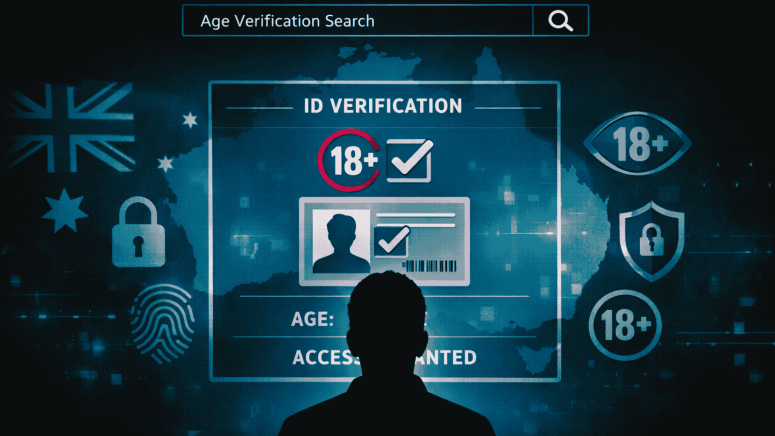
Australia has introduced a new rule that requires search engines to verify the age of users who are signed in. The move is part of the country’s growing push to regulate online content in the name of digital safety.
The requirement came into effect on December 27 and is included under a newly registered industry code overseen by the eSafety Commissioner. Companies now have six months to fully comply with the rule.
What the New Rule Means for Search Users
Under the new framework, search engines like Google and Bing must check the age of logged-in users when they search for content that could show adult or “high-impact” material.
To do this, companies can choose from several age-assurance methods. These include asking users to confirm their age through pop-up prompts or requiring proof such as official ID documents, credit card details, or digital identity systems.
Guidelines shared by the eSafety Commissioner suggest limited real-world options. These include facial recognition-based age estimates, scanning photo IDs, parent verification for children, or using third-party services that already store age data.
All of these methods involve collecting personal information and remove the option of fully anonymous searches for logged-in users.
For people who are not signed in, search services will still work. However, certain content may appear blurred. Users under 18 who are logged in will automatically see filtered search results, with content the government considers harmful removed.
It is still unclear how these rules will affect privacy-focused or anonymous search engines.
Penalties for Australia's Age Verification for Search Engines
Google, which holds more than 90 percent of Australia’s search market, and Microsoft are the main companies affected. If they fail to comply with the new rules by June 27, 2026, they could face fines of up to around $50 million per violation.
Although the code officially took effect at the end of 2025, it did not receive much public attention. This is partly because it was introduced through administrative regulation rather than a new law, meaning there was no full parliamentary debate.
Part of a Broader Push to Regulate Online Access
The new search engine rules are not an isolated step. Over recent years, the Australian government has steadily expanded the powers of the eSafety Commissioner and pushed for stricter age limits on social media platforms.
Julie Inman Grant, the eSafety Commissioner, briefly mentioned the new measures during a speech at the National Press Club. She said the provisions would work alongside upcoming social media age limits and stressed the importance of a “layered safety approach.” She also pointed to app stores and devices as key gateways where age checks could be applied.
Her comments suggest that age and identity verification could eventually extend beyond search engines to other parts of the digital ecosystem, including apps and operating systems.
While the government describes these measures as protective, critics point out that they build an infrastructure where identity checks become necessary to access large parts of the internet. This raises concerns about data privacy, anonymity, and freedom of information.
For many, the changes signal a shift toward conditional internet access, where browsing and searching freely may increasingly depend on government-approved identification.
Related



Get expert insights on threats, breaches, scams, and security trends — delivered every Monday.
Most Popular






Get expert insights on threats, breaches, scams, and security trends — delivered every Monday.
Most Popular