



Badr Satellite Breach Disrupts Iranian State TV, Protest Footage Broadcast
Published on January 20, 2026

Key Takeaways
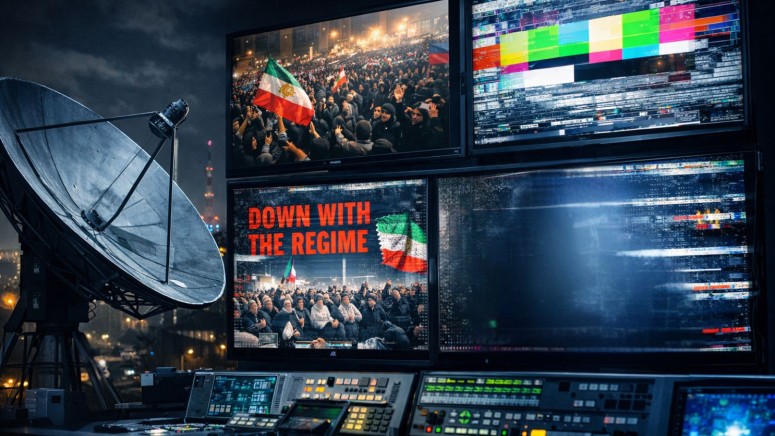
- Broadcast Interruption: Several Iranian state television channels carried on the Badr satellite were hacked on Sunday.
- Protest Content Aired: The unauthorized broadcast replaced state programming with footage of ongoing Iranian protests and messages from opposition figures.
- Opposition Message: The hacked transmission included a direct appeal from Iran’s exiled Crown Prince, Reza Pahlavi, urging citizens to join demonstrations.
A broadcast signal intrusion targeted Iranian state television channels, interrupting their programming with content related to widespread civil unrest. The attack, confirmed on Sunday, January 18, 2026, replaced scheduled content with images and videos from recent local demonstrations.
This Badr satellite breach represents an operational security issue for Iran's state broadcaster, which relies on the infrastructure for national distribution.
Exiled Leader’s Message Aired in Hacked Broadcast
During the disruption, a message from Iran's exiled Crown Prince, Reza Pahlavi, was featured. The video directly appealed to the Iranian public to join the protest movement and encouraged members of the military to align with the demonstrators.
The incident highlights the use of technical exploits to counter state-sanctioned narratives, as opposition movements succeeded in bypassing the government's stringent information controls by broadcasting this message on official state channels through a hack.
Implications of the Broadcast Signal Intrusion
The hacking of Iranian state TV channels underscores the digital dimension of the ongoing conflict between the government and opposition groups. By commandeering a key satellite distribution network, the hackers could deliver unfiltered, anti-government messaging directly to a national audience.
This event not only serves as a significant victory for the opposition but also exposes vulnerabilities within Iran's state-controlled media apparatus.
The broadcast of protest footage and calls for dissent on state-run frequencies represents a direct challenge to the regime's authority and control over public information.
A SpearSpecter cyberespionage campaign linked to the IRGC was observed this month, targeting high-value officials.
Related






Get expert insights on threats, breaches, scams, and security trends — delivered every Monday.
Most Popular
Get expert insights on threats, breaches, scams, and security trends — delivered every Monday.
Most Popular