



Large-Scale Cybercrime Crackdown Leads to Over 1,000 Arrests in Africa
Published on November 27, 2024


- Operation Serengeti dismantled malicious operations focused on ransomware, BEC scams, extortion, and other scams.
- Many African cybercriminals deploy advanced tactics such as AI-powered malware and complex financial laundering mechanisms.
- Over 35,000 victims were identified globally, and more than 1,000 individuals were arrested in connection with this development.
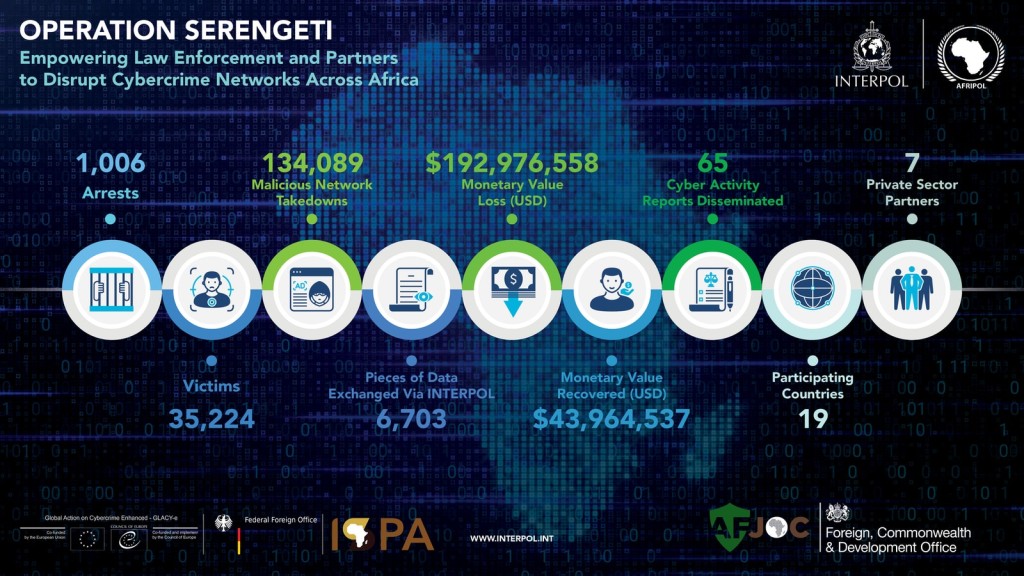
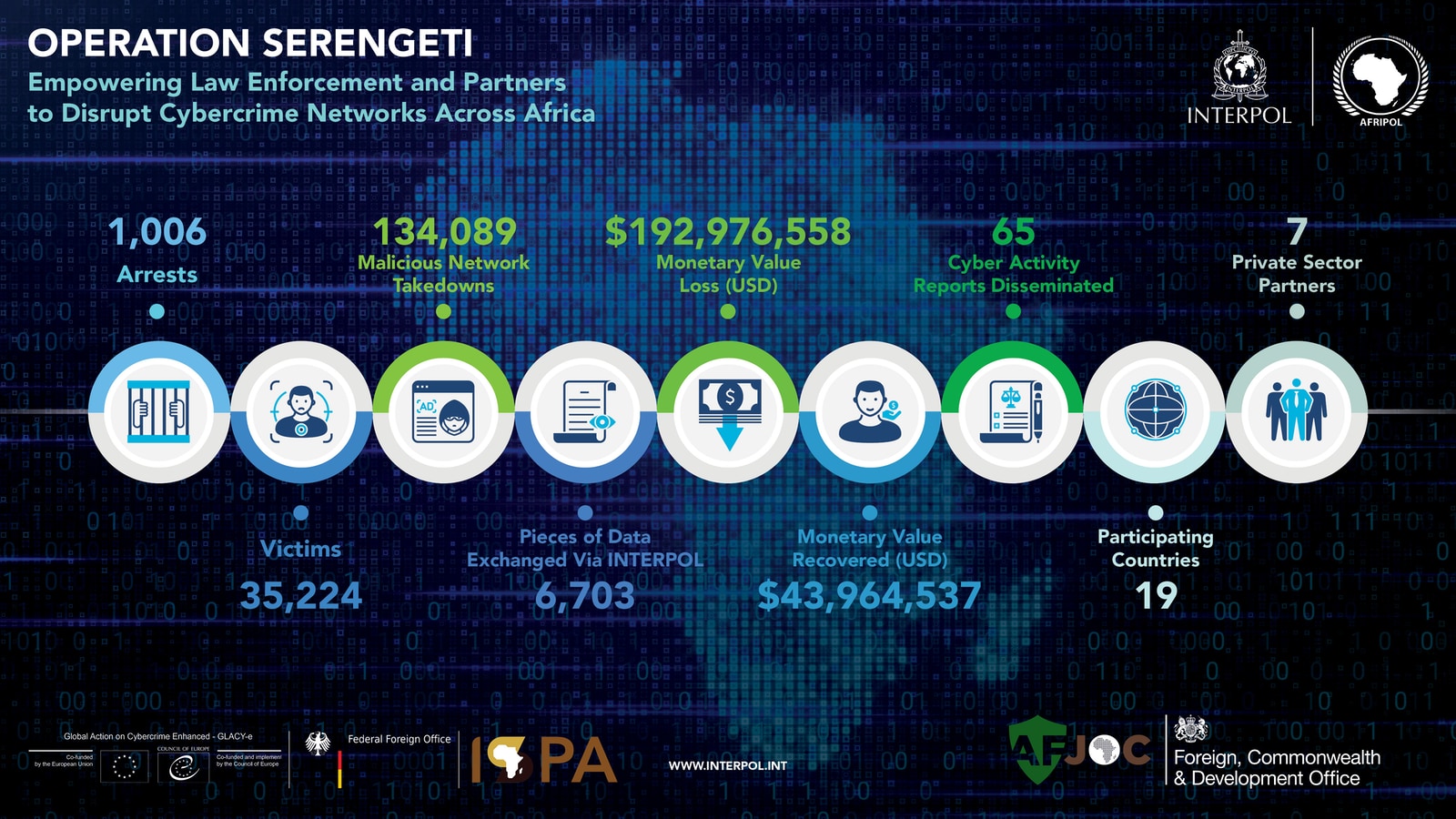
A collaborative initiative led by INTERPOL and AFRIPOL led to the arrest of 1,006 suspects, dismantled 134,089 malicious infrastructures, and curtailed operations of criminal networks responsible for ransomware, business email compromise (BEC), online scams, and digital extortion.
From September 2 to October 31, Operation Serengeti pursued the leading threats in the 2024 Africa Cyber Threat Assessment Report and saw authorities across 19 African nations involved.
Among the key outcomes of the operation are 35,000+ victims identified globally, linked to nearly $193 million in financial losses, and 65 Cyber Analytical Reports produced, enabling intelligence-led operations focusing on high-value targets.
The operation also enhanced public-private sector collaboration, with internet service providers and cybersecurity firms offering critical support in identifying, analyzing, and mitigating ongoing threats.
Considering the growing sophistication of cybercriminals across Africa, many deploy advanced tactics such as AI-powered malware and complex financial laundering mechanisms.
AFRIPOL Executive Director Ambassador Jalel Chelba emphasized, "This operation has significantly improved law enforcement capabilities across the African Union in combating cybercrime. Our focus now extends to emerging threats, including AI-powered malware and advanced attack frameworks."
Case highlights from participating countries:
- Kenya: Authorities unraveled a $8.6 million credit card fraud scheme. Stolen funds were laundered using SWIFT transfers and channeled to digital asset platforms in jurisdictions worldwide. Nearly two dozen perpetrators have been caught.
- Senegal: A $6 million Ponzi scheme targeting 1,811 victims resulted in the arrest of eight individuals, including five Chinese nationals. Investigators uncovered over 900 SIM cards, $11,000 in cash, and various digital assets linked to the operation.
- Nigeria: A single perpetrator behind numerous cryptocurrency investment scams was arrested. The fraudulent schemes are estimated to have accrued over $300,000, exploiting victims via messaging platforms with false promises of significant returns.
- Cameroon: Authorities disrupted a multi-level marketing human trafficking scam, which exploited victims from seven countries. Captives were coerced into recruiting others to regain freedom. Initial estimates revealed $150,000 in illicit profits.
- Angola: An international ring operating a fraudulent virtual casino targeting Brazilian and Nigerian gamblers was dismantled. The casino’s pyramid scheme victimized scores of members, yielding hundreds of thousands of dollars. Over 150 arrests were made, with substantial digital evidence seized.
Partnerships with private sector entities such as Fortinet, Kaspersky, and Group-IB drove Operation Serengeti's success. Participating countries, including Nigeria, South Africa, and Zimbabwe, exemplified cross-border collaboration in addressing overlapping cybercrime networks.
This year, an internationally coordinated operation targeted global malware droppers that facilitated cyberattacks, leading to the arrest of four people and the disruption of more than 100 internet servers in Europe, the UK, the US, and elsewhere.
Related






Get expert insights on threats, breaches, scams, and security trends — delivered every Monday.
Most Popular

Get expert insights on threats, breaches, scams, and security trends — delivered every Monday.
Most Popular